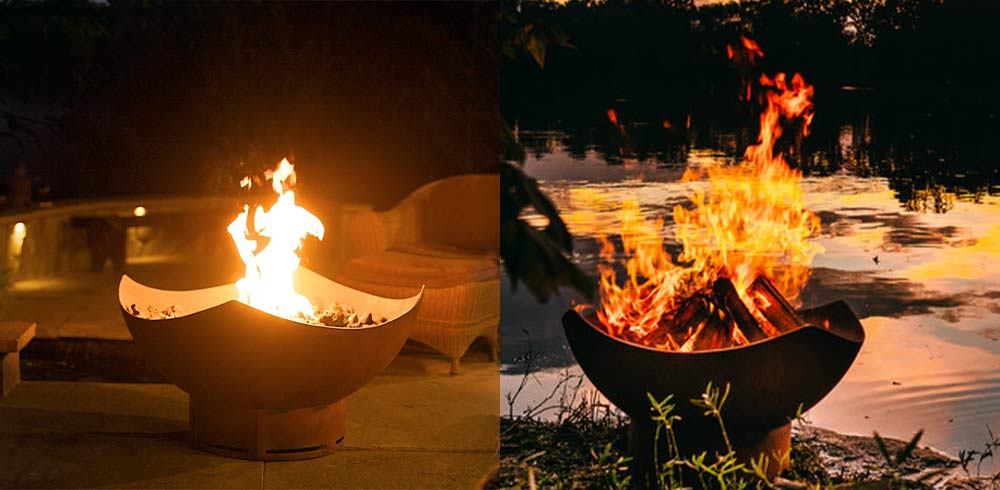
Wood fire pits and gas fire pits create very different outdoor fire experiences. Wood delivers the sights, sounds, aroma, and hands-on feel of a traditional campfire, while gas fire pits prioritize easy ignition, controlled flames, lower cleanup, and greater design flexibility.
If you have already narrowed your decision to wood-burning or gas-burning, this guide compares the differences that matter most in everyday use, including ignition, flame experience, heat, smoke, maintenance, convenience, customization, cost, and patio suitability.
Gas fire pits may operate on either propane or natural gas depending on the model and installation. For this comparison, both are grouped together because their overall flame experience and day-to-day operation are similar. If you need help deciding between the individual fuel sources, see our wood vs. natural gas vs. propane fire pit comparison.
At Fire Pit Direct, we help customers compare both wood-burning fire pits and gas fire pits. Neither option is automatically better for every outdoor space. The right choice depends on the experience you want and how much effort you want to put into starting, maintaining, and cleaning up after the fire.
Quick Comparison: Wood vs. Gas Fire Pits
| Feature | Wood Fire Pits | Gas Fire Pits |
|---|---|---|
| Ignition | Requires firewood, kindling, and manual fire starting | Match-lit, push-button, or electronic ignition depending on the system |
| Fire Experience | Natural flame variation, crackling sounds, aroma, smoke, and embers | Controlled flame with minimal smoke during normal operation |
| Heat | Can produce intense radiant heat depending on the size of the fire | Predictable heat output based largely on burner design and BTU rating |
| Convenience | Requires fire building, tending, extinguishing, and cleanup | Quick startup and shutdown |
| Smoke & Embers | Produces smoke, sparks, and embers | Minimal smoke and no burning wood embers during normal operation |
| Customization | Wide variety of enclosure styles and artistic designs | Wide variety of burners, ignition systems, controls, and decorative media |
| Maintenance | Ash and debris removal plus firewood storage | Less routine cleanup, but burners and components still require inspection |
| Best For | Traditional campfire atmosphere and hands-on fire building | Easy operation, controlled flames, and modern outdoor living spaces |
Fire-Building Experience and Ignition
Wood Fire Pits

Starting a wood fire pit is part of the experience. You gather dry firewood and kindling, establish airflow, light the fire, and gradually build it until it reaches the flame size you want.
For people who enjoy tending a traditional fire, that process can be part of the appeal. For others, especially when the wood is damp or time is limited, the extra effort can make spontaneous fires less convenient.
Gas Fire Pits

Gas fire pits are designed for much faster startup. Depending on the system, ignition may be match-lit, push-button, spark-assisted, or fully electronic. Some advanced systems can also integrate with wall switches, timers, remotes, or automation controls.
Once the fire is finished, the burner can typically be shut down immediately rather than waiting for logs and embers to burn out.
Important: Gas fire pits must be installed and operated according to the manufacturer's instructions. Gas supply work should be completed by a qualified professional when required by the installation or local code.
Ignition Advantage: Gas Fire Pits
Gas offers the easier everyday experience when quick startup and shutdown are priorities. Wood is better suited to homeowners who enjoy the process of building and tending a traditional fire.
Flame Experience and Atmosphere
Wood Fire Pits
For many people, the biggest reason to choose wood is not a technical specification. It is the experience. Burning logs create constantly changing flames, glowing embers, crackling sounds, wood smoke, and the familiar aroma of a campfire.
Because a wood fire changes as logs ignite and burn down, it feels more organic and unpredictable. That atmosphere can be difficult to fully reproduce with a gas burner.
Gas Fire Pits
Gas fire pits create a cleaner and more controlled flame presentation. Rather than burning logs, flames emerge from burner ports positioned beneath or around approved decorative media.
The appearance can range from contemporary flames rising through colorful fire glass to a more traditional design using ceramic logs and lava rock. Gas does not create the same crackling, smoke, or changing ember bed as real wood, but it can provide an attractive flame without many of the byproducts of wood combustion.
Atmosphere Advantage: Wood for Tradition, Gas for Control
If your goal is to recreate a classic campfire, wood has the advantage. If you prefer a controlled flame that fits neatly into a designed outdoor living space, gas may be the better fit.
Smoke, Sparks, and Embers
Wood Fire Pits

Smoke, sparks, and glowing embers are natural parts of a wood-burning fire. Wind can shift smoke toward seating areas, and burning wood may release embers beyond the immediate fire pit area.
That does not automatically make a wood fire pit unsuitable, but it means placement, surrounding materials, weather conditions, and active supervision are especially important.
Gas Fire Pits

Gas burners do not create burning wood embers and produce minimal smoke during normal operation. This can make them more comfortable for seating areas where users want to avoid smoke drifting toward furniture, clothing, or guests.
Gas still involves an open flame, so proper installation, ventilation, clearances, approved media, and operating procedures remain essential.
Smoke and Ember Advantage: Gas Fire Pits
For homeowners who want an outdoor fire without wood smoke, ash, or flying embers, gas offers the simpler experience.
Safety and Flame Control
Wood Fire Pits
Wood-burning fire pits require active supervision because the flame is affected by the amount of wood being burned, airflow, wind, and surrounding conditions. Sparks or embers may leave the fire pit, and the fire must be fully extinguished before it is left unattended.
Accessories such as compatible spark screens can help contain embers on certain wood-burning models, but users should always follow the fire pit manufacturer's instructions and local burning requirements.
Gas Fire Pits
Gas fire pits provide more direct control over fuel flow and flame output. Depending on the ignition system, a fire pit may include features such as thermocouples, flame-sensing technology, pilot systems, emergency shutoffs, or automatic controls.
Accessories such as timers and switches can also provide additional control when they are approved for the specific system.
However, gas fire pits still require correct installation and operation. Improper gas pressure, blocked ventilation, incompatible components, incorrect fire media, or insufficient clearances can create hazards.
Control Advantage: Gas Fire Pits
Gas systems generally provide more precise flame and fuel control, while wood fires require more active management. Neither type should be treated as risk-free, and the manufacturer's installation and operating instructions should always take priority.
Customization Options
Wood Fire Pits

Wood fire pits are available in many sizes, shapes, materials, and artistic designs. Sculptural models can function as outdoor artwork even when they are not in use, while traditional bowls and rings provide a more classic campfire appearance.
The primary customization happens through the fire pit enclosure itself because the fuel remains real firewood.
Gas Fire Pits

Gas systems provide additional opportunities to customize both the enclosure and the fire itself. Depending on the project, buyers may be able to choose different burner shapes, burner sizes, ignition systems, controls, flame configurations, and approved decorative media.
Options such as fire glass, lava rock, and ceramic log sets can dramatically change the finished look of a gas fire feature.
Customization Advantage: Gas Fire Pits
Wood fire pits offer plenty of enclosure styles, but gas systems generally provide more ways to customize the burner, controls, flame presentation, and decorative media.
Convenience and Everyday Use
Wood Fire Pits

Using a wood fire pit requires keeping dry fuel available, building the fire, tending it while it burns, allowing the fire to die down, and cleaning up afterward. Firewood also needs to be stored somewhere that protects it from excessive moisture.
For people who enjoy that ritual, the added effort is worthwhile. For homeowners who primarily want to turn on a fire for an hour while entertaining, it may feel less practical.
Gas Fire Pits

Gas fire pits are designed around convenience. Once the system has been properly installed and fuel is available, users can start the flame without gathering wood or building a fire.
There is also far less cleanup after each use because there is no pile of ash or partially burned wood remaining in the fire pit.
Convenience Advantage: Gas Fire Pits
For quick fires, entertaining, and frequent use, gas is generally easier to incorporate into an everyday outdoor living routine.
Maintenance Requirements
Wood Fire Pits
Wood-burning fire pits require ash and debris removal as material accumulates. The fire bowl or enclosure should also be inspected for deterioration, moisture issues, or other maintenance needs according to the manufacturer's recommendations.
Keeping dry firewood available adds another ongoing task, especially in climates with frequent rain or high humidity.
Gas Fire Pits
Gas fire pits generally require less routine cleanup, but they are not maintenance-free. Burner ports should remain clear of debris, ignition components should be inspected as recommended, and approved fire media may occasionally need cleaning or repositioning.
Gas connections, hoses, regulators, valves, vents, and other components should also be maintained according to the manufacturer's instructions.
Maintenance Advantage: Gas Fire Pits
Gas typically requires less cleanup between fires, while wood requires more regular ash removal and fuel management.
Heat Output and Warmth
Wood Fire Pits

A large wood fire can produce substantial radiant heat, particularly as a strong bed of burning logs and embers develops. Because users can continue adding fuel, the size and intensity of the fire can vary considerably.
Actual warmth depends on the fire pit design, amount and type of wood, wind, outdoor temperature, seating distance, and other environmental conditions.
Gas Fire Pits

Gas fire pit heat output is more predictable because burner performance is typically rated in BTUs. Higher-output burners can provide substantial warmth, but the amount of heat users actually feel will still depend on burner design, flame height, fire pit construction, weather, and seating distance.
Heat Advantage: Depends on the Fire Pit
A large wood fire can produce intense radiant heat, but it is more accurate to compare individual fire pits rather than assume every wood model will be hotter than every gas model. When shopping for gas, BTU output can be a helpful starting point for comparing potential heat performance.
Cost Considerations
Wood Fire Pits
Simple wood-burning fire pits can have relatively low upfront costs because they do not require gas burners, valves, regulators, or ignition systems. Premium wood-burning fire pits and sculptural designs can still represent a significant investment.
Long-term costs also depend on how much firewood costs in your area and how frequently you use the fire pit.
Gas Fire Pits
Gas fire pits may require a larger initial investment because the finished system can include a burner, ignition components, valves, controls, gas plumbing, and professional installation.
Fuel costs depend on whether the fire pit operates on propane or natural gas, local fuel pricing, BTU consumption, and frequency of use.
Cost Advantage: Depends on the Project
A basic wood-burning fire pit may cost less upfront, while a custom gas installation can cost considerably more. However, purchase price is only one part of the comparison. Consider fuel, installation, maintenance, convenience, and how often you expect to use the fire pit.
Which Is Better for a Patio?
Patios are one area where the differences between wood and gas become particularly noticeable.
Gas fire pits are often appealing for finished outdoor living spaces because they produce minimal smoke during normal operation, do not create ash piles or burning wood embers, and are available in fire tables and other designs that integrate with outdoor seating areas.
Wood fire pits can also work well on appropriate patios, but placement must account for sparks, embers, smoke, nearby combustible materials, and the specific requirements of the fire pit manufacturer.
Never assume a fire pit is approved for a particular patio, deck, covered area, or surface simply because it uses gas. Installation requirements vary significantly by product. Always follow the manufacturer's manual for required clearances, ventilation, overhead restrictions, floor protection, and approved installation locations.
Cooking and Roasting
Wood Fire Pits
Wood fires are closely associated with traditional campfire cooking, roasting marshmallows, and cooking over glowing embers. However, whether a specific fire pit is intended for cooking depends on the product design and manufacturer's instructions.
Gas Fire Pits
Many decorative gas fire pits are designed primarily for heat and ambiance rather than cooking. Food, grease, and other debris can damage fire media or burner components, and cooking over a gas fire pit should never be assumed to be acceptable.
If cooking is important to you, select a product specifically designed or approved for that purpose and follow the manufacturer's instructions.
Cooking Advantage: Wood, When the Fire Pit Is Designed for It
Wood provides the more traditional campfire cooking experience, but the specific appliance should always be approved for cooking before food is placed over the flame.
Wood vs. Gas Fire Pits: Which Should You Choose?
The choice between wood and gas ultimately comes down to the kind of experience you want from your outdoor fire feature.

Choose a wood fire pit if:
- You want the traditional sights, sounds, and aroma of a real wood fire.
- You enjoy building and tending a fire.
- You want the ability to create a large, naturally changing flame.
- You are comfortable storing firewood and cleaning ash.
- Wood burning is appropriate and permitted for your outdoor space.

Choose a gas fire pit if:
- You want faster startup and shutdown.
- You prefer a controlled flame with minimal smoke.
- You want less cleanup after each fire.
- You want more choices for burners, ignition systems, controls, and decorative media.
- You plan to use the fire pit frequently for outdoor entertaining.
If you decide gas is the better option but still need to determine which gas supply makes sense for your property, our fire pit fuel types guide explains the differences between natural gas, propane, and wood.
Wood vs. Gas Fire Pit FAQs
Are wood fire pits hotter than gas fire pits?
A large wood fire can produce intense radiant heat, but heat performance varies significantly by fire pit. Gas fire pits are available across a wide range of BTU outputs, so it is better to compare the specific models, burner output, fire pit design, weather conditions, and seating distance rather than assume every wood fire pit will be hotter.
Are wood fire pits cheaper than gas fire pits?
Basic wood-burning fire pits are often less expensive upfront because they do not require gas burners, ignition components, or gas plumbing. Gas installations can have higher initial costs, but total ownership cost depends on the specific fire pit, installation requirements, local fuel prices, maintenance, and frequency of use.
Which requires more maintenance, wood or gas?
Wood fire pits generally require more routine cleanup because burning wood creates ash and debris. Gas fire pits avoid ash cleanup but still require periodic inspection and maintenance of burners, ignition components, gas connections, ventilation areas, and fire media according to the manufacturer's instructions.
Can you cook over a wood or gas fire pit?
Cooking should only be done when the specific fire pit is designed or approved for it. Wood fire pits are more commonly associated with campfire cooking, while many decorative gas fire pits are intended only for heat and ambiance. Always check the manufacturer's instructions before cooking over any fire feature.
Which fire pit is better for a patio?
Gas fire pits are often popular for patios because they provide controlled flames, minimal smoke, and less cleanup. However, both wood and gas fire pits must meet the manufacturer's requirements for clearances, ventilation, surface protection, and approved installation locations.
Do gas fire pits look as realistic as wood fires?
Gas fire pits can create impressive flames and can be paired with ceramic logs, lava rock, or other approved media to achieve different looks. However, they do not fully reproduce the constantly changing logs, embers, smoke, aroma, and crackling sounds of a real wood-burning fire.
Are gas fire pits easier to use than wood fire pits?
Gas fire pits are generally easier to start and shut down because they do not require gathering firewood, building a fire, or waiting for burning logs and embers to extinguish. The exact operating process depends on the ignition system installed on the fire pit.
Find the Right Fire Pit for Your Outdoor Space
Wood and gas fire pits can both create inviting outdoor gathering areas, but they appeal to different priorities. Wood is about the traditional campfire experience, while gas focuses on control, convenience, lower cleanup, and design flexibility.
Before choosing either option, review the installation requirements for the specific fire pit you are considering. Manufacturer instructions should determine required clearances, ventilation, approved surfaces and locations, fuel requirements, and other safety considerations. Local codes or burning restrictions may also apply.
If you need help comparing models, planning a fire pit project, or finding compatible components, contact our product specialists for expert guidance.