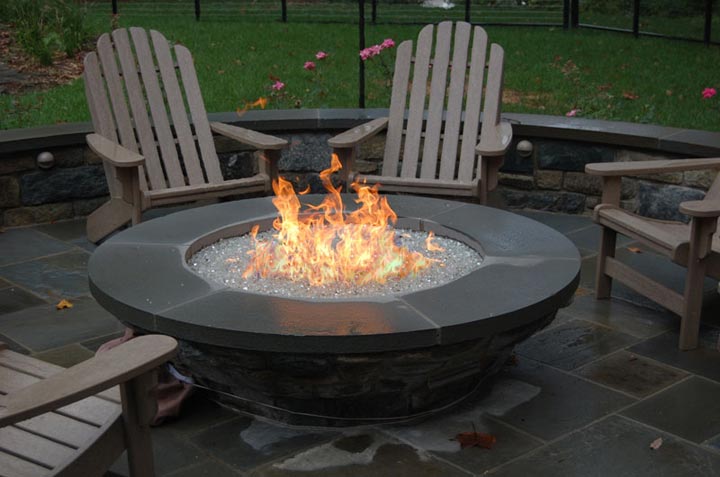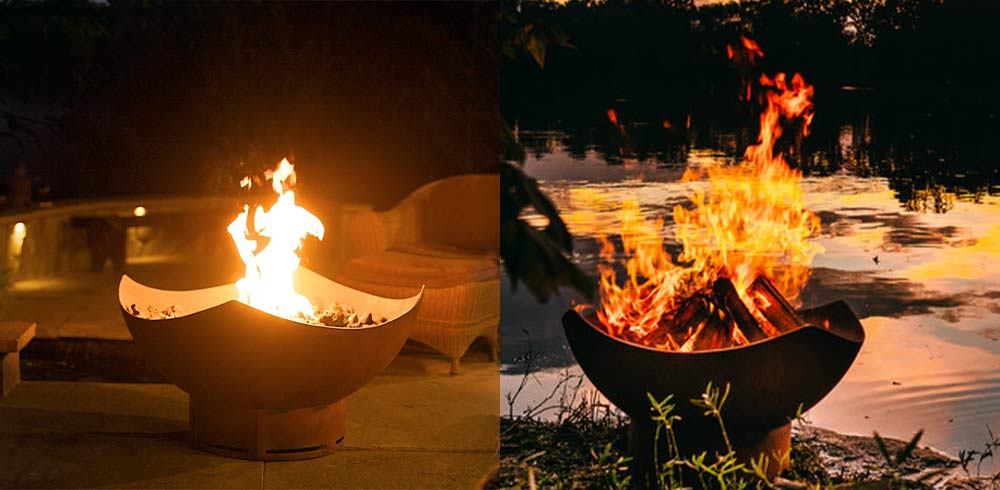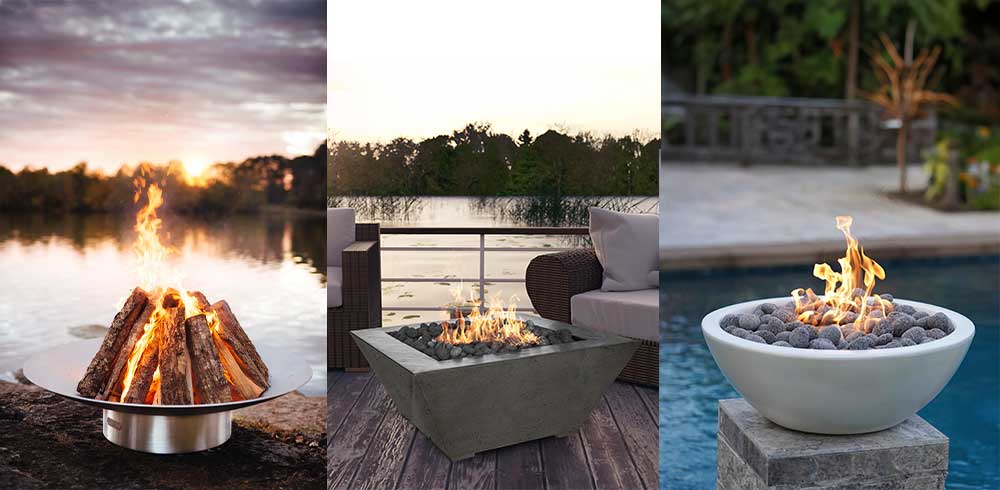
Choosing the right fire pit fuel starts with understanding the differences between wood, natural gas, and propane. Wood offers the traditional campfire experience, natural gas provides a permanent and convenient fuel supply, and propane gives you gas-burning convenience without requiring a dedicated natural gas line.
The best option depends on your outdoor space, available fuel sources, installation plans, and how you want to use your fire pit. Some homeowners prioritize the crackle and atmosphere of a wood fire, while others prefer the easy ignition and lower maintenance of gas.
Fire Pit Direct offers fire pits in three primary fuel types: wood, natural gas, and propane. This guide compares all three options to help you determine which fuel source makes the most sense for your project.
Wood vs. Natural Gas vs. Propane Fire Pits
If you are comparing fire pit fuel types, the biggest differences involve fuel supply, installation, maintenance, placement flexibility, and the overall fire experience. The table below provides a quick overview.
| Feature | Wood Fire Pit | Natural Gas Fire Pit | Propane Fire Pit |
|---|---|---|---|
| Fuel Supply | Firewood | Permanent natural gas line | Propane tank or installed propane supply |
| Installation | No gas line required, but placement must meet manufacturer and local requirements | Requires access to a properly sized natural gas line | Does not require a natural gas line when using a propane tank |
| Fuel Storage | Requires dry firewood storage | No separate fuel storage | Requires a propane tank or larger propane supply |
| Maintenance | Regular ash, debris, and firewood cleanup | Relatively low ongoing maintenance | Relatively low maintenance, plus tank refills or replacements |
| Placement Flexibility | Varies by model and local wood-burning restrictions | Limited by the location of the gas line | Often more flexible when using a portable propane tank |
| Fire Experience | Traditional flame, crackling sounds, smoke, and aroma | Controlled gas flame with minimal smoke during normal operation | Controlled gas flame with minimal smoke during normal operation |
| Best For | Traditional outdoor fires and campfire atmosphere | Permanent outdoor living spaces with natural gas access | Gas fire pits where flexibility or lack of natural gas access is a priority |
Wood-Burning Fire Pits

Wood-burning fire pits are the traditional option for outdoor fires. Rather than connecting to a gas supply, they burn firewood and create the sights, sounds, and aroma associated with a classic campfire.
Wood can be a good choice when creating an authentic gathering space is the priority and you have room to safely operate the fire pit and store dry firewood. However, wood-burning models require more hands-on fuel management and cleanup than gas alternatives.
Wood Fire Pit Fuel Considerations
- No gas supply required: Wood fire pits do not need a natural gas line or propane tank.
- Firewood storage: You will need a convenient place to keep seasoned firewood dry and accessible.
- More cleanup: Burning wood creates ash and debris that must be removed periodically.
- Smoke and sparks: Wood naturally produces smoke, sparks, and embers, so proper placement is important.
- Local restrictions: Some municipalities, neighborhoods, or homeowners associations regulate or restrict wood-burning fires.
If your decision has already narrowed to a traditional wood-burning fire pit versus a gas fire pit, our wood fire pits vs. gas fire pits guide takes a closer look at the differences in convenience, maintenance, flame experience, and everyday use.
Best For
- Traditional campfire experiences
- Large open outdoor spaces
- Rural properties or areas where wood burning is allowed
- Homeowners who enjoy building and tending a fire
Natural Gas Fire Pits

A natural gas fire pit connects directly to a dedicated natural gas supply. This makes natural gas especially well suited to permanent patios, outdoor kitchens, built-in fire pits, and other spaces where the location of the fire feature has already been planned.
Once installed, the dedicated fuel supply eliminates the need to store firewood or regularly exchange portable propane tanks. Natural gas fire pits use a burner system to create controlled flames and may be paired with compatible media such as lava rock, fire glass, or ceramic log sets.
Natural Gas Fuel Considerations
- Dedicated fuel source: A properly sized natural gas line continuously supplies the fire pit while it is operating.
- No portable fuel storage: There are no propane cylinders or stacks of firewood to store.
- Permanent placement: The location of the gas line plays a major role in where the fire pit can be installed.
- Installation planning: Gas line sizing, pressure, appliance requirements, and local codes should be considered before installation.
- Natural gas availability: This option only works where suitable natural gas service is available.
Natural Gas Is Often Best For
- Permanent patios and outdoor living spaces
- Built-in and custom fire features
- Homes with existing natural gas service
- Frequently used fire pits where avoiding tank refills is a priority
Propane Fire Pits
A propane fire pit provides gas-burning convenience without requiring connection to a residential natural gas line. Depending on the fire pit and installation, propane may be supplied by a standard 20-pound cylinder or a larger propane system.
This makes propane particularly useful for homes without natural gas service or outdoor spaces where installing a new natural gas line is impractical. Many propane fire tables are also designed with compartments that conceal a compatible propane tank within the enclosure.
Propane Fuel Considerations
- No natural gas line required: A propane tank can supply fuel independently of your home's natural gas system.
- Greater placement flexibility: Tank-supplied models may be easier to incorporate into outdoor spaces without existing gas infrastructure.
- Fuel refills: Portable propane tanks eventually need to be refilled or exchanged.
- Tank capacity matters: Larger or higher-output burners may require more fuel than a standard 20-pound cylinder can reliably supply.
- Tank access: If the cylinder is stored within a fire table or enclosure, the design should provide the access and ventilation required by the manufacturer.
Propane Is Often Best For
- Properties without natural gas service
- Patios where adding a permanent natural gas line is impractical
- Fire tables designed with concealed propane storage
- Outdoor spaces where greater placement flexibility is important
Natural Gas vs. Propane Fire Pits
If you have already decided that a gas fire pit is right for your space, the next question is usually whether to use natural gas or propane. Both fuels can provide convenient, controlled flames, but the way the fuel reaches the fire pit is very different.
Natural gas generally makes the most sense for a permanent installation with access to an appropriately sized gas line. Propane is often preferred when natural gas is unavailable or when installing a dedicated line does not make sense for the project.
| Factor | Natural Gas | Propane |
|---|---|---|
| Fuel Source | Dedicated natural gas line | Portable cylinder or larger propane supply |
| Fuel Refills | No portable tank to refill | Portable tanks require refilling or replacement |
| Installation | Requires a properly sized gas line at the installation location | Tank-supplied models do not require a natural gas line |
| Placement | Typically fixed by gas line location | Often offers greater flexibility depending on the model and fuel setup |
| Best Application | Permanent, frequently used fire features | Locations without natural gas or where a new gas line is impractical |
How to Choose the Best Fire Pit Fuel Type
Rather than choosing a fuel based on one feature alone, consider how the fire pit will fit into your overall outdoor space. The following questions can help narrow down your options.
Do You Have Natural Gas Available?
If your home already has natural gas service and you are planning a permanent fire pit, natural gas may provide the most convenient long-term fuel supply. If natural gas is unavailable, propane or wood may be more practical.
Do You Want a Permanent or Flexible Installation?
Natural gas works especially well for permanent fire pits because the unit connects to a fixed gas line. Propane can provide greater flexibility when a portable cylinder is used, while the placement of wood-burning fire pits depends heavily on manufacturer clearances and local fire regulations.
How Much Fuel Management Do You Want?
Wood requires purchasing, transporting, storing, and loading firewood. Portable propane requires periodic tank refills or exchanges. Natural gas eliminates both of those fuel-management tasks once the system is properly installed.
What Kind of Fire Experience Do You Want?
Wood provides the traditional campfire experience with naturally changing flames, smoke, aroma, and crackling sounds. Natural gas and propane provide controlled burner flames with minimal smoke during normal operation and typically require less cleanup.
Are There Local Fuel or Burning Restrictions?
Local regulations may affect where certain fire pits can be installed or whether wood burning is permitted at all. Before purchasing or installing any outdoor fire feature, review local requirements along with the manufacturer's installation manual, fuel requirements, ventilation requirements, and specified clearances.
Which Fire Pit Fuel Should You Choose?
Each fuel type works best in a different situation. A simple way to narrow down your decision is to start with your available fuel supply and how permanent you want the installation to be.
- Choose wood if the traditional campfire experience is your priority and you are comfortable storing firewood, tending the fire, and cleaning ash and debris.
- Choose natural gas if you have natural gas available and want a permanent fire pit with a continuous fuel supply and minimal ongoing fuel management.
- Choose propane if you want the convenience of a gas fire pit but do not have natural gas available or want greater flexibility in where the fire pit is located.
There is no single fuel source that is right for every fire pit. The best choice depends on the property, installation, available utilities, desired fire experience, and the requirements of the specific fire pit you select.
Frequently Asked Questions About Fire Pit Fuel Types
Do I need a gas line for a fire pit?
You need a gas line if you are installing a natural gas fire pit. Many propane fire pits can instead operate from a compatible propane cylinder or larger propane supply, while wood-burning fire pits do not require a gas connection. Always verify the fuel requirements of the specific fire pit before purchasing.
Is natural gas cheaper than propane?
Natural gas is often less expensive to operate than propane, but actual fuel costs vary by location, utility rates, propane pricing, and how frequently the fire pit is used. The cost of installing a new natural gas line should also be considered when comparing the two fuels.
Do propane fire pits produce as much heat as natural gas fire pits?
Both propane and natural gas fire pits are available in a wide range of heat outputs. The performance of an individual fire pit depends on factors such as its burner, BTU rating, available gas pressure, fuel supply, and system design. A standard propane cylinder may not be suitable for every high-output burner.
Can I use a standard propane tank with a propane fire pit?
Many propane fire pits are designed to operate with a standard 20-pound propane cylinder, but not all models are. Larger burners and higher-BTU fire features may require a different propane supply. Always follow the manufacturer's fuel and regulator requirements for the specific model.
Can I convert a propane fire pit to natural gas?
Some fire pits can be converted between propane and natural gas using manufacturer-approved components or conversion kits, but other models are designed for only one fuel type. Never assume a fire pit is convertible. Check the manufacturer's instructions before making any fuel conversion and use a qualified professional when required.
Which fire pit fuel requires the least maintenance?
Natural gas and propane fire pits generally require less routine cleanup than wood-burning fire pits because they do not create ash or burned wood debris. Natural gas also eliminates the need to exchange portable fuel tanks, although every fire pit still requires periodic inspection, cleaning, and maintenance according to the manufacturer's instructions.
Which fire pit fuel is best if I do not have natural gas?
Propane is often the most straightforward gas option for properties without natural gas service because compatible fire pits can operate from propane tanks or larger propane supplies. Wood may also be an option where wood-burning fires are permitted and appropriate for the space.
Find the Right Fuel Type for Your Fire Pit
Wood, natural gas, and propane can all create an inviting outdoor gathering space, but each fuel source comes with different installation and ownership considerations. Start by identifying the fuels available at your property, then consider how permanent you want the installation to be and how much fuel storage or maintenance you are comfortable managing.
Once you know which fuel makes the most sense, you can narrow your search to fire pits designed specifically for that fuel and compare sizes, styles, ignition systems, heat output, and other features.
Always follow the manufacturer's installation and operating instructions for your specific fire pit, including fuel supply requirements, ventilation, clearances, and approved installation locations. Local codes and regulations may also apply.
If you need help choosing a fire pit or determining which fuel option works best for your project, contact our product specialists for expert guidance.