.png)
Choosing the right BTU rating for a fire pit is not as simple as matching a fire pit size to a single number. Two fire pits with similar overall dimensions can have dramatically different BTU ratings depending on the burner design, ignition system, fuel type, and how the fire feature is engineered.
There is no universal formula that says a certain fire pit size requires a specific number of BTUs. Instead, the right output depends on factors such as burner size and design, desired flame height, seating distance, wind exposure, fuel type, gas supply, and how much warmth you want from the fire.
This guide explains what BTUs mean, how they affect fire pit performance, and what to consider when comparing outdoor fire pits, gas fire pit burners, and gas fire pit kits.
How Many BTUs Do I Need for a Fire Pit?
The right BTU rating depends on how you want the fire pit to perform.
| Your Priority | What to Focus On |
|---|---|
| Ambiance | Flame appearance, burner design, and an output appropriate for the fire feature rather than the highest BTU rating available |
| Balanced Warmth and Flame | BTU rating, burner size, seating distance, wind exposure, and available gas supply |
| High-Output Fire Feature | A high-output burner or fire pit designed for the application, plus a fuel system capable of supporting the required input |
BTUs are useful for comparing products, but they should be treated as one part of the decision rather than the only number that matters.
What Is a BTU?
BTU stands for British Thermal Unit, a measurement of heat energy. On a gas fire pit or burner, the BTU rating describes the amount of fuel energy the system is designed to use under specified operating conditions.
In general, a higher BTU rating means the burner has the potential to consume more fuel and produce more heat. However, a higher BTU number does not automatically mean a fire pit will feel warmer, look better, or be a better fit for your outdoor space.
The actual experience around the fire also depends on the burner layout, flame pattern, wind, seating distance, fire media, fuel supply, and other installation conditions.
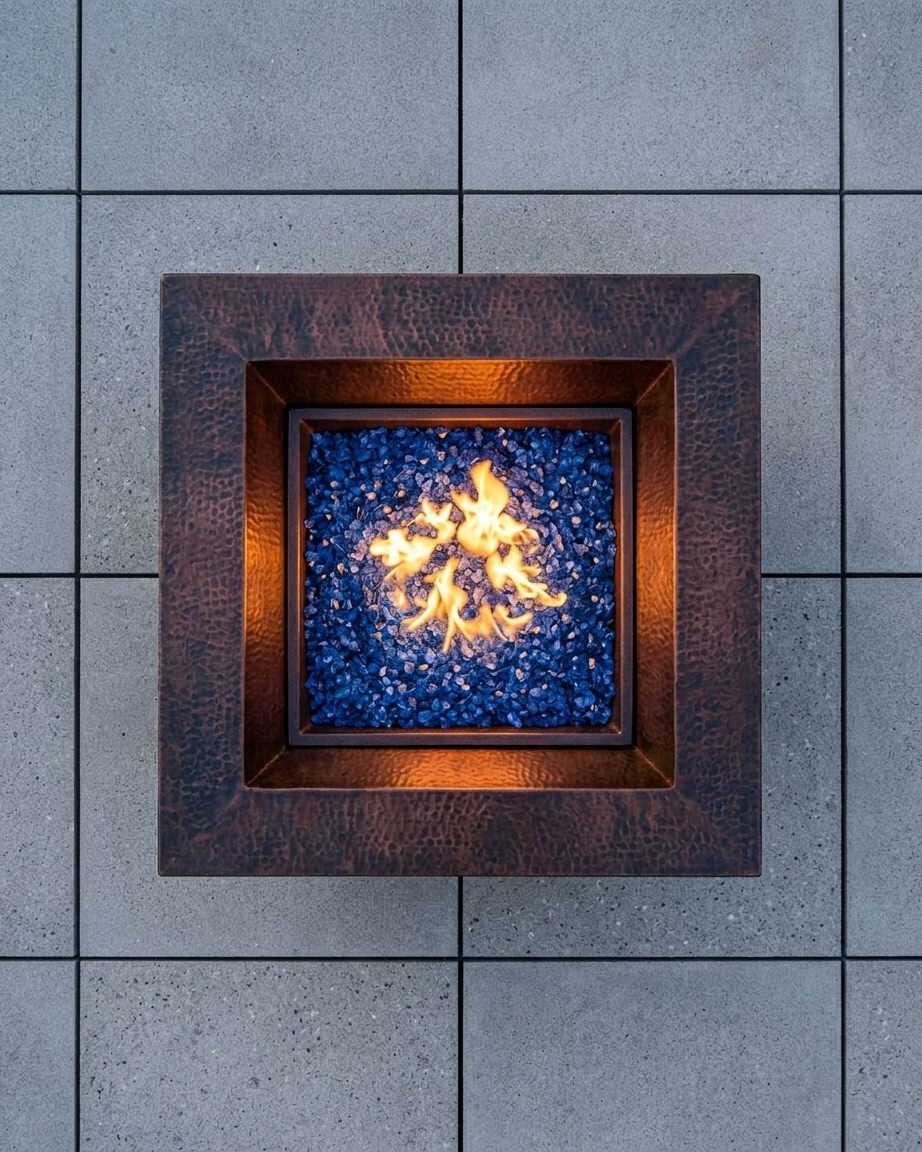
Why Fire Pit Size Alone Does Not Determine BTUs
One of the biggest misconceptions about fire pit BTUs is that the overall width or length of the fire pit tells you how much output it needs.
Real products show why that does not work.
| Fire Pit | Overall Size | Burner / Configuration | BTU Rating |
|---|---|---|---|
| HPC Fire Avera | 48 inches | Match-lit or electronic ignition | 65,000 BTUs match-lit; up to 115,000 BTUs electronic ignition |
| American Fyre Designs Iron Saddle | 60 inches | 36-inch linear burner | 65,000 BTUs standard; 75,000 BTUs with FyreStarter electronic ignition |
| Warming Trends R60 AON | 60 inches | High-output gas burner system | 230,000 BTUs |
| Outdoor GreatRoom Uptown Fire Table | 48.25 x 64.5 inches | 42-inch stainless steel burner | 80,000 BTUs propane; 65,000 BTUs natural gas |
| Prism Hardscapes Tavola 72 Narrow | 72 x 24 inches | Stainless steel burner and burner pan | 65,000 BTUs |
The difference is significant. The 72-inch Prism Hardscapes Tavola is rated at 65,000 BTUs, while the 60-inch Warming Trends R60 AON reaches 230,000 BTUs.
The takeaway is simple: overall fire pit dimensions do not determine BTU output. Burner design, burner dimensions, ignition system, fuel configuration, and the manufacturer's intended performance all affect how a fire feature is engineered.
7 Factors That Affect How Many BTUs You Need
1. Burner Size
The burner is the part of the fire pit that distributes the gas and creates the flame, so its dimensions matter more to BTU output than the outside dimensions of the enclosure alone.
A large fire pit can use a relatively modest burner, while another fire feature with a similar footprint may be designed around a much larger or more powerful burner.
When comparing gas fire pit burners, look at the burner's actual dimensions and rated output rather than assuming the fire pit enclosure dictates performance.
2. Burner Design
Burner design affects how fuel is distributed and how the flame appears across the fire feature.
Two burners can have similar dimensions while producing very different flame patterns or operating at different BTU ratings. Burner shape, port layout, construction, and system design all influence how the fire looks and performs.
This is one reason a BTU number should not be viewed in isolation. A well-designed burner matched to the fire feature can be more important than simply selecting the largest available output.
3. Desired Flame Height and Appearance
Not every fire pit owner wants the same type of flame.
Some outdoor spaces call for a subtle flame that primarily provides ambiance. Others are designed around a much larger, more dramatic fire presentation.
If flame appearance is your primary goal, compare the burner design and manufacturer's flame characteristics along with the BTU rating. A higher rating provides greater potential fuel input, but it does not by itself tell you exactly how the flame will look.
4. Seating Distance
How far people sit from the fire affects how much warmth they feel.
A smaller conversation area with seating close to the burner may feel comfortable with a different fire pit than a large patio where chairs are positioned farther from the flame.
When planning the space, consider both the fire pit dimensions and the full seating arrangement. The best BTU rating is not just about the fire itself. It is also about how people will use the surrounding area.
5. Wind Exposure
Wind can move flames away from the seating area and make a fire pit feel less consistent, even when the burner has a high BTU rating.
A fire pit installed in a sheltered courtyard may behave differently from the same system on an open patio or exposed rooftop.
Placement should be considered first. For compatible gas fire features, a glass wind guard can help shield the flame from crosswinds and create a more consistent flame presentation.
6. Outdoor Temperature and Climate
Your expectations for warmth also depend on the climate and time of year.
A homeowner using a fire pit primarily for ambiance on warm summer evenings may prioritize flame appearance over maximum heat. Someone planning to extend patio use into cooler spring and fall weather may care more about higher output and seating placement.
Climate should influence the buying decision, but it should not be converted into a universal rule such as adding a fixed percentage of BTUs. The fire pit, burner, fuel supply, wind exposure, and overall installation still need to be considered together.
7. Gas Supply
A burner can only perform as designed if the fuel system can supply what it requires.
This is one of the most important considerations when shopping for a high-BTU fire pit or building a custom gas fire feature.
A burner rated for 200,000 BTUs does not automatically mean your installation will deliver 200,000 BTUs. The gas supply must be capable of providing the required volume and pressure under the conditions specified by the manufacturer.
Can Your Gas Line Supply Enough BTUs?
Gas-line capacity is an important part of fire pit performance. The amount of fuel available to the burner can be affected by the installation, including the gas supply, line sizing, pressure, run length, and other connected appliances.
If a burner does not receive the fuel supply it requires, you may experience a smaller flame or lower performance than expected even if the burner itself carries a high BTU rating.
This is why choosing the burner and planning the gas line should not be treated as separate decisions.
Firepits Direct recommends working with a qualified gas professional for gas-line connections and sizing. A professional can verify that the gas supply is appropriate for the selected burner and installation before the project is completed.
This is particularly important for high-output gas fire pit burners and custom installations.
.png)
Does a Higher BTU Fire Pit Produce More Heat?
A higher BTU rating generally means a fire pit has the potential to use more fuel and produce more heat, but the number does not tell you exactly how warm the fire pit will feel from your seat.
Several factors affect usable warmth, including:
- Burner configuration
- Flame height
- Wind
- Outdoor temperature
- Seating distance
- Fire pit shape
- Fire media
- Fuel delivery
For this reason, two fire pits with different BTU ratings can both be excellent choices for different outdoor spaces.
The goal should be to select the output and burner design that match your application, not simply to buy the largest number available.
Does Ignition Type Affect Fire Pit BTUs?
It can, depending on how the manufacturer has designed the system.
The HPC Fire Avera 48-Inch Fire Pit is a good example. Its match-lit configuration delivers 65,000 BTUs, while the electronic ignition configuration provides up to 115,000 BTUs.
The American Fyre Designs Iron Saddle also varies by configuration, with a standard output of 65,000 BTUs and an upgraded FyreStarter electronic ignition option reaching 75,000 BTUs.
This does not mean electronic ignition always produces more BTUs. It shows that BTU ratings need to be checked for the exact product configuration you are purchasing.
Natural Gas vs. Propane Fire Pit BTUs
Natural gas and propane can both power high-performance outdoor fire pits, but individual products may have different BTU ratings depending on the fuel configuration.
For example, the Outdoor GreatRoom Uptown Fire Table is rated at 80,000 BTUs with propane and 65,000 BTUs with natural gas.
That does not mean propane fire pits are universally more powerful than natural gas models. Output depends on how the specific burner and fuel system are engineered.
When choosing fuel, consider:
Natural Gas
- Connects to a permanent gas supply
- Eliminates the need to refill portable propane tanks
- Works well for permanent installations
- Requires an appropriately sized gas supply
Propane
- Can provide more flexibility when natural gas service is unavailable
- May use a portable or larger permanent propane supply depending on the installation
- Requires monitoring and refilling of the fuel supply
- Must use components designed for propane
Do not assume natural gas and propane components are interchangeable. Select the correct fuel configuration and use only manufacturer-approved conversion components when conversion is permitted.
Why Isn't My Fire Pit Producing a Large Flame?
If a gas fire pit is not producing the flame you expected, the BTU rating may not be the problem by itself.
Possible factors include:
- Insufficient gas supply
- Fuel pressure that does not meet the manufacturer's requirements
- Gas-line capacity limitations
- A control valve that is not fully open
- Improperly installed fire media
- Blocked or obstructed burner ports
- Wind affecting the flame
- Propane supply issues
- Incorrect system configuration
Fire media can have a particularly noticeable effect if it is installed incorrectly. Fire glass, lava rock, gas logs, and other fire pit media should be arranged according to the burner manufacturer's instructions so they do not interfere with burner operation.
If a newly installed gas fire pit is not performing as expected, consult the manufacturer's instructions and have the gas supply checked by a qualified professional before modifying the system.
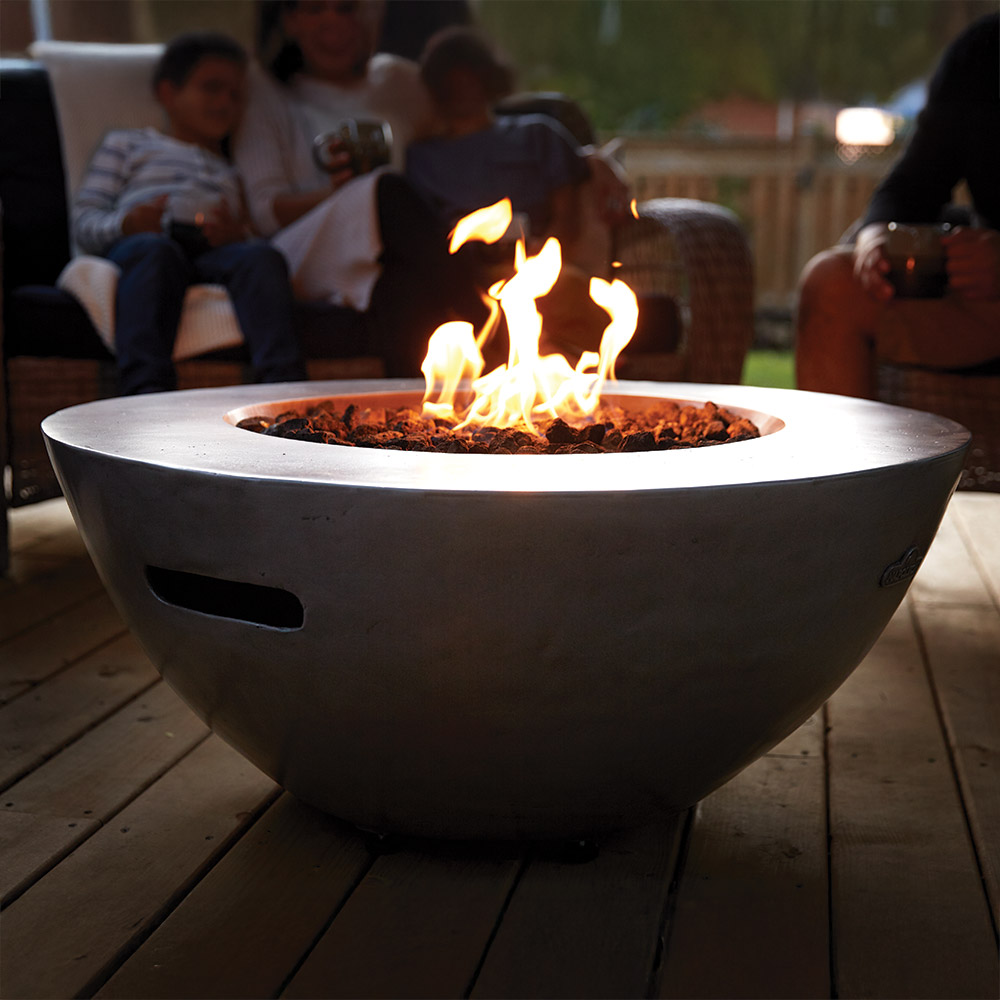
Is There Such a Thing as Too Many BTUs?
More BTUs are not automatically better.
A burner needs to be appropriate for the fire pit, enclosure, ignition system, fire media, clearances, and fuel supply. Installing a higher-output burner simply to create more heat can create compatibility and installation problems if the rest of the fire feature was not designed for that output.
You should also consider the way the space will actually be used. A very high-output fire feature may make sense in a large open area where a dramatic flame is part of the design. A smaller patio intended primarily for ambiance may not need the same level of output.
Choose a burner because it is appropriate for the project, not because it has the highest BTU rating.
Complete Fire Pit vs. Custom Burner: How BTUs Affect Your Choice
Your buying process will look slightly different depending on whether you are choosing a complete fire pit or building a custom feature.
Complete Outdoor Fire Pits
With a finished outdoor fire pit, the manufacturer has already selected the burner and engineered the fire feature around a particular range of operating conditions.
Your job is primarily to compare the fire pit's BTU rating, fuel type, overall dimensions, ignition system, flame characteristics, and installation requirements against your outdoor space and intended use.
Custom Gas Fire Pit Burners
When building a custom fire feature, you have more flexibility but also more decisions to make. You'll need to choose an appropriate gas fire pit burner or gas fire pit kit and ensure the enclosure, ventilation, fuel supply, media, ignition system, and clearances are compatible with that system.
For custom projects, the manufacturer's specifications should be the primary guide rather than trying to calculate BTUs from the enclosure dimensions alone.
How to Choose the Right BTU Fire Pit
Instead of searching for one universal BTU number, work through these questions:
- What do you want from the fire? Decide whether ambiance, balanced warmth, or a high-impact flame is your priority.
- Are you buying a complete fire pit or a burner? A finished fire pit already has a matched burner, while a custom project requires more component planning.
- How large is the burner? Look at actual burner dimensions rather than only the outside dimensions of the fire pit.
- How far will people sit from the flame? Seating distance affects how much warmth users feel.
- How exposed is the location? Wind can significantly change the flame experience.
- What fuel are you using? Choose a natural gas or propane system specifically designed for that fuel.
- Can your gas supply support the burner? Have a qualified gas professional verify fuel capacity before installing a high-output system.
- What does the manufacturer require? Always follow the specific product's installation, fuel, clearance, and operating requirements.
Once these questions are answered, you can compare BTU ratings in the context of the complete fire feature instead of treating BTUs as a standalone sizing formula.
Frequently Asked Questions About Fire Pit BTUs
How Many BTUs Is Good for an Outdoor Fire Pit?
There is no single BTU rating that is best for every outdoor fire pit. The appropriate output depends on the burner design, intended flame, seating distance, outdoor conditions, fuel system, and the manufacturer's design. Fire pits of similar overall size can have very different BTU ratings.
Is 50,000 BTUs Enough for a Fire Pit?
It can be for some fire pits and applications, but the BTU rating should be evaluated alongside burner size, fire pit design, seating distance, wind exposure, and fuel supply. A specific product's manufacturer specifications are more useful than applying one universal BTU threshold.
Is 100,000 BTUs a Lot for a Fire Pit?
100,000 BTUs is a higher output than many outdoor fire pits, but there are also systems designed for significantly greater output. The better question is whether that rating matches the burner, fire feature, gas supply, and type of flame you want.
Do Larger Fire Pits Need More BTUs?
Not necessarily. A physically larger fire pit can use a smaller burner and have a lower BTU rating than a smaller high-output fire feature. Burner design and system engineering are more important than overall enclosure size alone.
Does a Higher BTU Rating Mean a Bigger Flame?
A higher BTU rating can provide greater fuel input, but flame height and appearance also depend on burner design, fuel pressure, controls, fire media, wind, and other installation factors. BTUs alone do not determine exactly how large the flame will be.
Does Propane Produce More BTUs Than Natural Gas in a Fire Pit?
Some individual fire pit models have different BTU ratings depending on whether they are configured for propane or natural gas, but that does not mean one fuel always produces a higher-output fire pit. Compare the specifications for the exact fuel configuration you are considering.
Can My Gas Line Limit My Fire Pit BTUs?
Yes. A burner needs an adequate fuel supply to operate as designed. Gas-line capacity, pressure, run length, and the demands of other connected appliances can affect available fuel. Firepits Direct recommends having a qualified gas professional verify the gas supply for the selected burner.
Final Thoughts
There is no universal equation for determining how many BTUs a fire pit needs. Real fire pits with similar dimensions can range from relatively moderate output to well over 200,000 BTUs because burner design, ignition, fuel configuration, and intended performance vary significantly.
The best approach is to choose a fire pit or burner based on the complete system. Consider the flame experience you want, burner size, seating distance, wind exposure, fuel type, gas supply, and manufacturer requirements before focusing on the BTU number alone.
Explore our outdoor fire pits, gas fire pit burners, and gas fire pit kits to compare available options. If you need help choosing the right product, planning your project, or finding compatible components, contact our product specialists for expert guidance.
Here’s the matching FAQ schema to add at the end of the article code while keeping the visible FAQ section in place.