.png)
Fire pits can create a warm, inviting gathering space, but safe use starts long before the flames are lit. The right placement, fuel setup, weather conditions, clearances, fire media, and shutdown process all matter.
The most important fire pit safety rule is to follow the manufacturer’s instructions for your specific fire feature. Clearance requirements, approved surfaces, fuel setup, ventilation, ignition procedures, and shutdown steps can vary by model. Read the owner’s or installation manual before installation and again before first use.
Use this checklist as a practical guide for planning, operating, and maintaining an outdoor fire pit safely.
Quick Fire Pit Safety Checklist
| Check | What to Confirm |
|---|---|
| Manual | You have reviewed the manufacturer’s installation and operating instructions |
| Local Requirements | The fire pit is permitted for your location and fuel type |
| Placement | The location meets required side, overhead, and combustible clearances |
| Surface | The fire pit is installed on a manufacturer-approved surface |
| Fuel | The correct fuel type and approved components are being used |
| Gas Connections | Gas connections and supply have been installed and checked by a qualified professional where required |
| Burner and Media | Burner ports are clear and fire media is installed according to manufacturer instructions |
| Wind | Conditions are appropriate for safe operation |
| Supervision | A responsible adult will remain nearby while the fire is operating |
| Shutdown | You know the correct shutdown or extinguishing procedure for the fuel type |
| Cool-Down | The fire pit will be allowed to cool fully before covering or handling |
Before You Install a Fire Pit
Safe fire pit use starts with choosing the right location and installation method. Before purchasing or installing a fire feature, review the manufacturer’s installation manual so you understand the required clearances, ventilation, approved surfaces, fuel requirements, and any location restrictions.
You should also check applicable local codes, fire restrictions, permit requirements, and homeowner association rules before beginning the project.
Important installation considerations include:
- Required clearance from combustible materials
- Overhead clearance requirements
- Approved flooring or mounting surfaces
- Ventilation requirements
- Drainage
- Access to shutoff controls
- Fuel availability
- Gas-line or electrical requirements
Do not assume that an outdoor location automatically makes every installation acceptable. A covered patio, deck, pergola, or enclosed outdoor room may have additional requirements depending on the fire pit and manufacturer.
For permanent natural gas or propane connections, Firepits Direct recommends using a qualified professional for gas-line installation and connections.
Read the Owner’s Manual Before First Use
The owner’s manual should not be something you only consult after a problem occurs. Review it before using the fire pit for the first time.
The manual can tell you:
- How to light the fire pit correctly
- How to shut it down
- What fuel is approved
- Required clearances
- What fire media can be used
- How much fire media should be installed
- Whether the fire feature can be used under an overhead structure
- How to inspect and maintain the burner
- What to do if ignition fails
- When professional service is recommended
Keep the manual accessible after installation so you can refer back to it for maintenance, troubleshooting, and seasonal startup.
.jpg)
Before You Light the Fire Pit
Take a quick look at the fire pit before every use. A few simple checks can help identify debris, damage, or installation issues before the burner is lit.
Before ignition:
- Remove leaves, twigs, dirt, and other debris from the burner area
- Confirm burner ports are not obstructed
- Make sure fire media is positioned according to the manufacturer’s instructions
- Check that control knobs or valves are in the correct starting position
- Inspect visible gas hoses or connections for obvious damage where applicable
- Make sure combustible objects have not been moved into the required clearance area
- Check current wind and weather conditions
- Make sure children and pets are not within the immediate fire area
If something appears damaged, loose, blocked, or different from normal, do not operate the fire pit until the issue has been identified and corrected.
Gas Fire Pit Safety
Gas fire pits offer convenient ignition and controlled flames, but they still require proper installation and operating procedures.
Use only the fuel type specified for the fire pit. Natural gas and propane components are not automatically interchangeable, and conversions should only be performed when the manufacturer allows them and with approved components.
Before operating a gas fire pit:
- Follow the manufacturer’s ignition sequence exactly
- Use the correct natural gas or propane configuration
- Do not modify valves, burners, regulators, or safety components
- Keep ventilation openings clear
- Make sure the gas supply is appropriate for the burner
- Know where the gas shutoff is located
- Do not operate the fire pit if you suspect a gas leak
If you smell gas, shut off the fuel supply if it is safe to do so, avoid ignition sources, and follow the safety instructions provided by the manufacturer and gas supplier.
Firepits Direct recommends using a qualified professional for gas-line connections and any gas-system work that requires licensing or specialized expertise.
Wood-Burning Fire Pit Safety
Wood-burning fire pits require a different type of attention because the fire itself must be built, maintained, and extinguished manually.
For safer operation:
- Use clean, dry, seasoned firewood
- Avoid treated, painted, stained, or chemically processed wood
- Do not overload the fire pit
- Keep flames at a manageable level
- Use a spark screen when recommended or appropriate for the fire pit
- Keep combustible materials away from the fire area
- Use long-handled fireplace tools when adjusting logs
- Never leave the fire unattended
Softwoods and resin-heavy wood can create more sparks and smoke, so hardwoods are often preferred for a cleaner and more controlled fire.
Always follow local burn restrictions and weather-related fire advisories before lighting a wood fire.
.jpg)
Fire Pit Placement and Clearance Safety
One of the most common fire pit safety questions is how far the fire pit should be from a house, fence, furniture, or overhead structure.
There is no universal clearance number that applies to every fire pit. Required distances depend on the manufacturer, fuel type, fire pit design, installation method, and local requirements.
Before installation, review the owner’s manual for required clearances from:
- Exterior walls
- Decking
- Fences
- Outdoor furniture
- Overhanging branches
- Pergolas
- Patio covers
- Umbrellas
- Other combustible materials
Do not move furniture, decor, or other objects into the required clearance zone after the fire pit has been installed.
Can You Use a Fire Pit on a Deck?
Some fire pits may be approved for use on certain deck surfaces, while others are not. The answer depends on the fire pit manufacturer, surface material, clearance requirements, and installation method.
Do not assume a fire pit is safe for use on wood, composite, or other combustible decking simply because it has legs or a raised base.
Check the owner’s manual to confirm whether the fire pit is approved for the surface you plan to use and whether additional protection is required.
Can You Use a Fire Pit Under a Covered Patio?
Only if the specific fire pit is approved for that type of installation and all manufacturer clearance and ventilation requirements can be met.
Covered patios, pergolas, gazebos, and similar structures can change airflow and create overhead combustible concerns. Some fire features are designed for approved covered installations, while others require completely open overhead space.
Review the manufacturer’s manual and local requirements before placing a fire pit under any overhead structure.
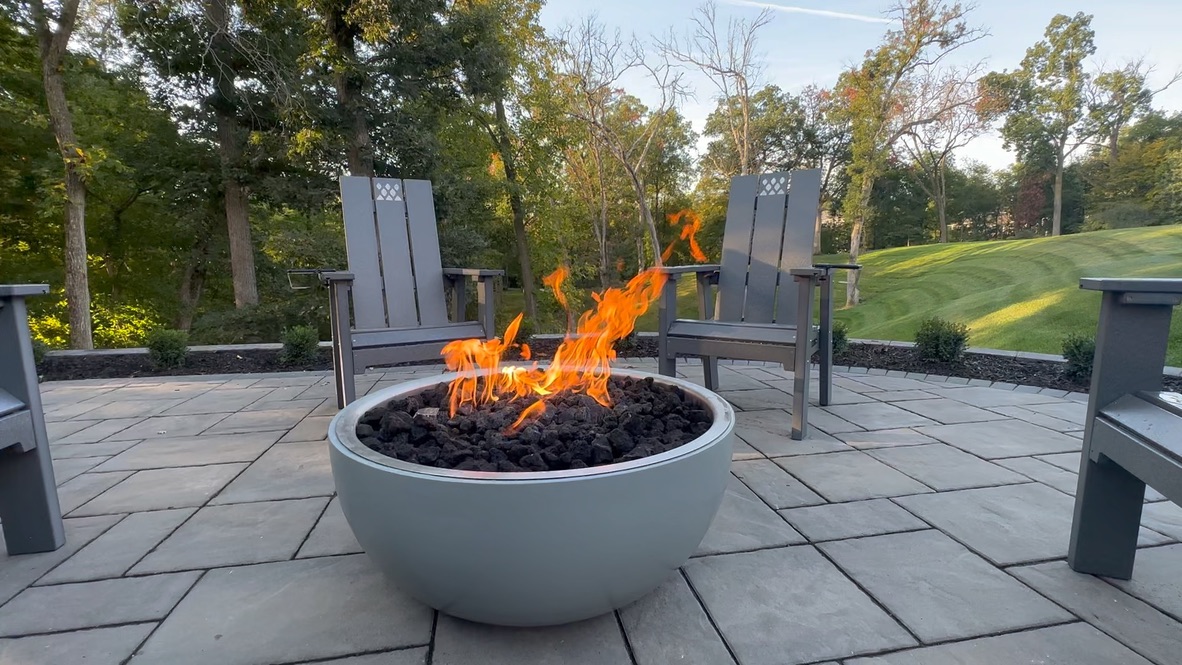
Wind and Weather Safety
Wind can push flames toward people, furniture, structures, or other combustible materials. It can also make gas flames unstable and increase the movement of sparks and embers from wood fires.
If wind conditions make the fire difficult to control, do not use the fire pit.
For compatible gas fire features, a glass wind guard can help reduce the effect of moderate crosswinds on the flame. However, a wind guard is not a substitute for following safe operating conditions or manufacturer restrictions.
Rain, snow, storms, and severe weather can also affect safe operation. Do not use the fire pit in conditions prohibited by the manufacturer.
Fire Media Safety
Fire glass, lava rock, gas logs, and other fire pit media are not just decorative. Their type, quantity, and placement can affect burner performance.
Always use media approved for the fire pit or burner and install it according to the manufacturer’s instructions.
Avoid:
- Using unapproved decorative stones or materials
- Adding more media than recommended
- Blocking burner ports
- Covering ignition or safety components unless instructed
- Mixing media types without confirming compatibility
Natural stones or other materials not designed for high-temperature fire features may not be appropriate for burner use. Choose products specifically intended for fire pit applications.
What Should You Keep Near a Fire Pit?
Before lighting the fire, make sure you are prepared to shut it down or respond to an unexpected situation.
What you keep nearby depends on the fuel type and manufacturer recommendations, but useful preparation can include:
- Easy access to the fuel shutoff for a gas fire pit
- An appropriate fire extinguisher where recommended
- Long-handled fireplace tools for wood fires
- Any extinguishing equipment specified by the manufacturer
- A phone or other way to contact emergency services if needed
Do not assume water is the correct extinguishing method for every fire feature. Follow the manufacturer’s shutdown or extinguishing instructions for your specific model and fuel type.

Fire Pit Safety Around Children and Pets
Fire pits and their surrounding surfaces can remain extremely hot during operation and after the flame has been turned off.
When children or pets are present:
- Maintain close adult supervision
- Keep them outside the active fire area
- Do not allow climbing, sitting, or leaning on the fire pit
- Keep toys and pet items away from the flame
- Remember that glass, metal, concrete, and other surfaces may remain hot after shutdown
Do not assume a fire pit is safe to touch simply because the flame is no longer visible.
Never Leave a Fire Pit Unattended
A burning fire pit should always have responsible adult supervision.
This applies to both gas and wood-burning models. Even a controlled gas flame can be affected by wind, debris, accidental contact, or a change in operating conditions.
If everyone is leaving the area, shut down or extinguish the fire according to the manufacturer’s instructions first.
How to Safely Shut Down a Gas Fire Pit
Follow the exact shutdown procedure in the owner’s manual. For many gas fire pits, this involves turning the burner control to the off position and shutting off the fuel supply as directed by the manufacturer.
After shutdown:
- Confirm the flame is completely extinguished
- Do not touch the burner or media while hot
- Keep children and pets away during cool-down
- Allow the fire pit to cool completely before covering
If the flame does not shut off normally, use the appropriate fuel shutoff and follow the manufacturer’s emergency instructions.
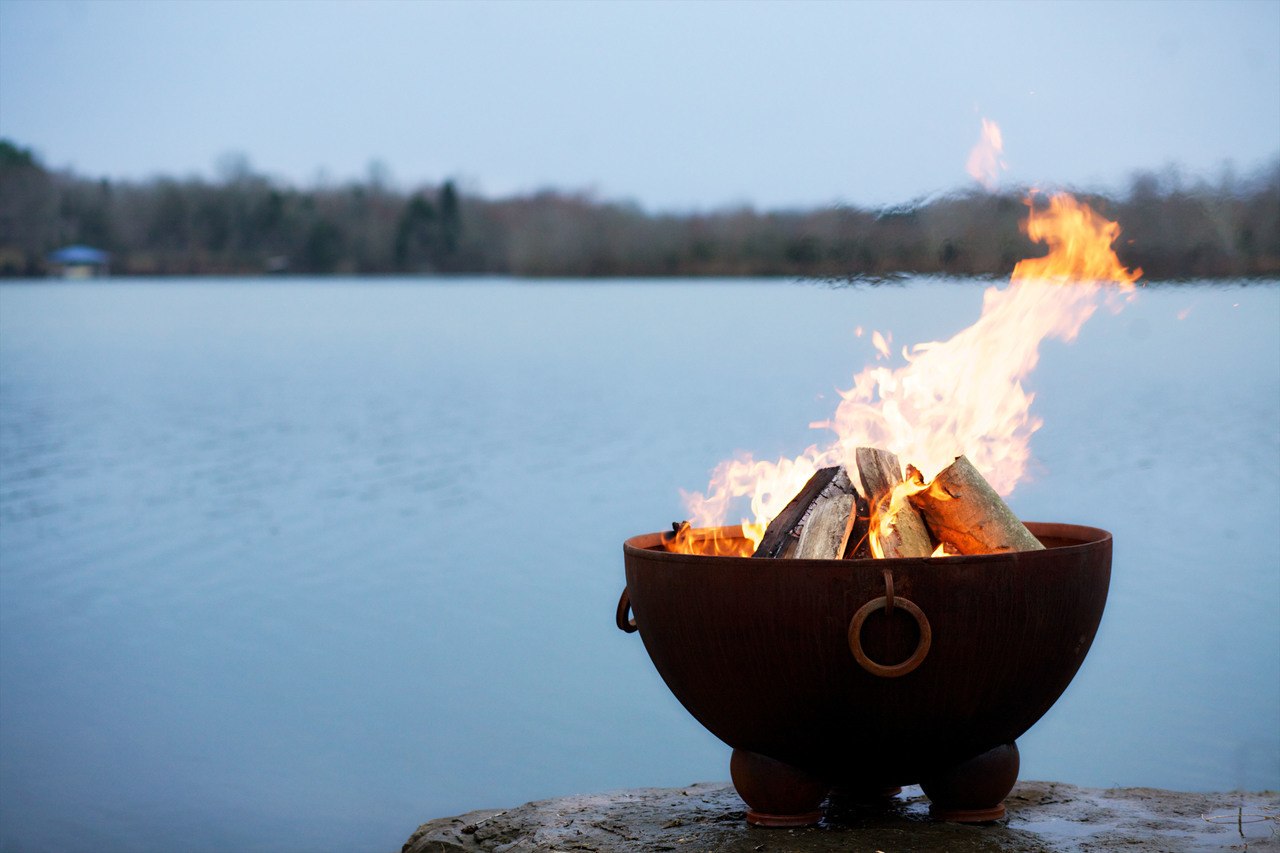
How to Safely Extinguish a Wood Fire Pit
Wood fires can continue producing heat and embers long after the visible flames decrease.
Follow the extinguishing procedure recommended for the specific fire pit. Make sure the fire is fully extinguished and no hot embers remain before leaving the area unattended.
Do not move or dispose of ash until it has cooled completely. Hot embers can remain hidden beneath ash for an extended period.
Let the Fire Pit Cool Before Covering It
Never place a cover over a hot fire pit.
Wait until the burner, media, enclosure, and surrounding surfaces have cooled according to the manufacturer’s instructions before installing any protective cover.
Once cool, a properly fitted soft fire pit cover can help protect the overall fire feature from dirt, leaves, moisture, and other outdoor debris.
For compatible gas fire pits, a metal burner cover can help protect the burner and media area while the fire pit is not operating.
Inspect and Maintain Your Fire Pit Regularly
Routine inspection can help identify wear, blockages, corrosion, or damaged components before they affect operation.
Maintenance may include:
- Removing leaves and debris
- Keeping burner ports clear
- Inspecting visible hoses and fittings where applicable
- Cleaning fire glass or other media as recommended
- Checking drains and ventilation openings
- Inspecting ignition components
- Following seasonal maintenance instructions
- Replacing damaged components with approved parts
Always follow the maintenance schedule and procedures provided by the manufacturer.
Fire Pit Safety by Fuel Type
| Fuel Type | Key Safety Considerations |
|---|---|
| Wood | Use approved firewood, control sparks and embers, never overload the pit, monitor burn restrictions, and fully extinguish the fire before leaving |
| Propane | Use the approved propane configuration, inspect accessible hoses and connections, follow tank placement requirements, and use manufacturer-approved regulators and components |
| Natural Gas | Use a properly designed fuel supply, keep the shutoff accessible, follow ignition procedures, and use a qualified professional for gas-line installation and connections |
Fire Pit Safety Checklist Before Every Use
Before you light your fire pit, ask yourself:
- Have I reviewed the manufacturer’s operating instructions?
- Are current local conditions and restrictions suitable for fire pit use?
- Is the fire pit area free of combustible objects?
- Are all required clearances still being maintained?
- Are the burner and ventilation openings free of debris?
- Is the fire media installed correctly?
- Is the correct fuel being used?
- Do gas hoses, controls, and visible components appear undamaged?
- Are wind and weather conditions appropriate?
- Do I know how to shut down or extinguish the fire?
- Will a responsible adult remain nearby while the fire is operating?
If you cannot confidently answer yes to these questions, address the issue before lighting the fire.
Frequently Asked Questions About Fire Pit Safety
How Far Should a Fire Pit Be From a House?
There is no universal distance that applies to every fire pit. Required clearances vary by fire pit design, fuel type, manufacturer, installation, and local requirements. Follow the specific side, rear, overhead, and combustible clearances listed in the owner’s or installation manual.
Can You Use a Fire Pit Under a Covered Patio?
Only if the manufacturer approves the fire pit for that type of installation and all required ventilation and clearances can be maintained. Check the owner’s manual and applicable local requirements before installing a fire pit beneath any overhead structure.
Can You Use a Fire Pit on a Wood or Composite Deck?
Some fire pits may be approved for specific deck installations, while others are not. Follow the manufacturer’s instructions for approved surfaces, clearances, and any required heat protection before placing a fire pit on a deck.
Is It Safe to Use a Fire Pit When It Is Windy?
If wind is strong enough to push flames, sparks, or embers unpredictably, do not use the fire pit. Follow manufacturer operating limits and use good judgment based on current conditions. A glass wind guard may help with moderate crosswinds on compatible gas fire features, but it does not make unsafe weather conditions acceptable.
Can You Leave a Gas Fire Pit Unattended?
No. A gas fire pit should be supervised by a responsible adult while it is operating. Shut the fire pit down according to the manufacturer’s instructions before leaving the area.
When Can You Cover a Fire Pit After Use?
Only after the fire pit has been completely shut down and all surfaces have cooled according to the manufacturer’s instructions. Covering a hot fire pit can damage the cover and create a safety hazard.
Final Thoughts
Fire pit safety starts with proper planning and continues every time you light the fire. Check local requirements, read the manufacturer’s manual, maintain all required clearances, use the correct fuel and fire media, pay attention to wind and weather, supervise the fire, and follow the proper shutdown procedure.
Because every fire feature is different, manufacturer instructions should always take priority over generalized safety advice. If you are still choosing a fire feature, explore our selection of outdoor fire pits. If you need help choosing the right product, planning your project, or finding compatible components, contact our product specialists for expert guidance.
Here’s the matching FAQ schema to add at the end of the article code while keeping the visible FAQ section in place.