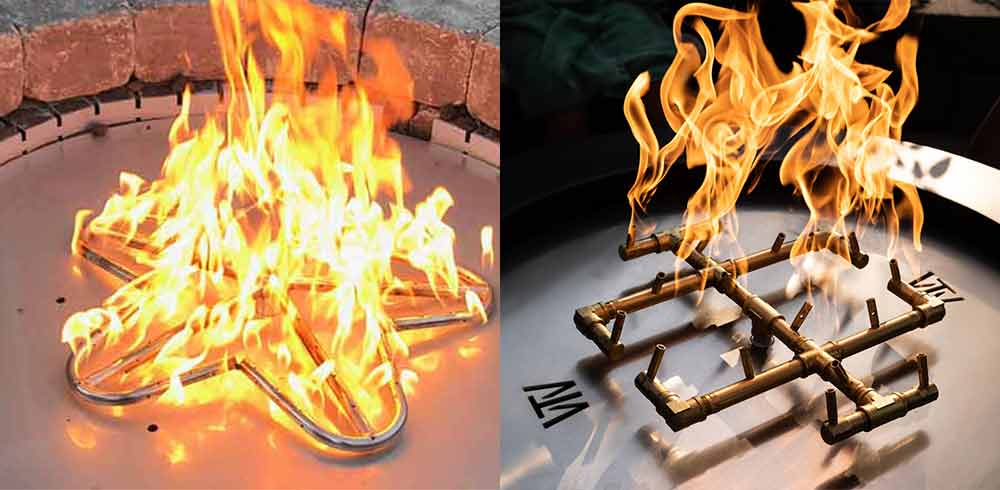
When choosing a burner for your fire pit, the material it's made of plays a major role in performance, durability, maintenance, and overall value. Two of the most popular materials used in fire pit burners are stainless steel and brass. Each has its own advantages, and the best choice depends on your environment, budget, design preferences, and how often you plan to use your fire feature.
In general, stainless steel burners are a great choice for homeowners who want reliable performance, a modern look, and a more budget-friendly option. Brass burners are often preferred for long-term durability, corrosion resistance, and demanding outdoor environments, especially in areas with moisture, salt air, or heavy use.
Stainless Steel vs. Brass Fire Pit Burners at a Glance
| Feature | Stainless Steel Burners | Brass Burners |
|---|---|---|
| Durability | Strong and dependable, especially when made from high-grade stainless steel. | Excellent long-term durability and resistance to wear. |
| Corrosion Resistance | Good resistance, though harsh conditions can still cause staining or corrosion over time. | Naturally rust-resistant and well-suited for moisture-prone environments. |
| Heat Performance | Reliable flame performance and even heat distribution. | Excellent heat conductivity with consistent flame performance. |
| Maintenance | Requires periodic cleaning to maintain its appearance. | Low-maintenance and will naturally develop a patina over time. |
| Appearance | Sleek, modern, and polished. | Warm, traditional, and distinctive. |
| Cost | Typically more budget-friendly. | Usually a higher upfront investment with strong long-term value. |
Durability and Longevity

Stainless Steel
Stainless steel is known for its strength and corrosion resistance, making it a popular choice for outdoor fire pit applications. A well-maintained stainless steel burner can provide years of reliable use, especially when it is made from high-grade stainless steel such as 304 or 316.
However, not all stainless steel is created equal. Higher-grade stainless steel offers better resistance to heat, moisture, and corrosion, while lower grades may show wear more quickly in harsh outdoor conditions.

Brass
Brass burners are known for exceptional durability and natural resistance to rust. Because brass is made from copper and zinc, it performs especially well in outdoor environments where moisture, humidity, or salt air may be a concern.
In terms of long-term performance, brass burners often outlast stainless steel burners because they are less prone to oxidation and wear. This makes brass a strong choice for homeowners who want a premium burner material with excellent longevity.
Heat Conductivity and Performance

Stainless Steel
Stainless steel burners provide dependable heat distribution and consistent flame patterns. For many residential fire pits, a quality stainless steel burner offers more than enough performance for regular outdoor use.
Over time, stainless steel can discolor from repeated heat exposure. In some cases, excessive heat or poor maintenance may also contribute to warping or surface wear, especially with lower-grade stainless steel.

Brass
Brass is an excellent conductor of heat and delivers steady flame performance. It also holds up well under repeated high-temperature use, which makes it a preferred option for fire pits that see frequent operation.
Because brass maintains its structure well over time, it is often selected for premium fire features, commercial installations, coastal properties, and other demanding applications.
Aesthetics and Design

Stainless Steel
Stainless steel burners offer a clean, sleek appearance that works especially well in modern outdoor fire features. Their bright, polished finish gives the burner a refined look, especially when paired with contemporary fire pit designs.
Stainless steel can also be cleaned and polished to help maintain its appearance, though some discoloration from heat is normal with regular use.

Brass
Brass burners offer a warm, classic look with a distinctive golden tone. Over time, brass develops a natural patina that many homeowners appreciate for its character and aged appearance.
If your fire pit design leans traditional, rustic, or high-end, brass can add a premium visual element while still delivering excellent performance.
Maintenance and Care

Stainless Steel
Stainless steel burners require routine cleaning to help preserve their finish and prevent buildup. While stainless steel resists rust, exposure to moisture, debris, chemicals, or salt air can still cause staining or corrosion over time.
For best results, keep the burner clear of debris, protect the fire pit when not in use, and clean the burner according to the manufacturer’s recommendations.

Brass
Brass burners are relatively low-maintenance because they do not rust. They can be left to develop a natural patina, or they can be polished occasionally if you prefer to maintain their original shine.
Like any fire pit burner, brass should still be kept free of debris and protected from unnecessary exposure when the fire pit is not in use.
Which Burner Material is Better for Coastal Areas?
For coastal homes or outdoor spaces exposed to salt air, humidity, or frequent moisture, brass is often the stronger choice. Its natural resistance to rust and corrosion makes it especially well-suited for harsh environments where metal components can wear more quickly.
High-grade stainless steel can still perform well in many outdoor settings, but it may require more attention in coastal areas. If you live near saltwater or have a fire pit that is exposed to the elements year-round, brass may offer better long-term peace of mind.
Cost Considerations
Stainless steel burners are generally the more affordable option, which makes them a practical choice for many residential fire pit projects. They provide strong performance, a modern appearance, and reliable durability at a lower upfront investment.
Brass burners typically cost more, but the added durability can make sense for homeowners who want a longer-lasting burner, especially in demanding environments. If you are building a premium fire feature or want to reduce the likelihood of replacing parts later, brass may be worth the higher initial investment.
Best Uses for Stainless Steel and Brass Burners
Choose a Stainless Steel Burner If:
- You want a reliable burner at a more budget-friendly price point.
- You prefer a sleek, modern appearance.
- Your fire pit is in a covered or moderately protected outdoor space.
- You plan to use your fire pit for casual residential entertaining.
- You are choosing a quality burner for a standard backyard fire pit project.
Choose a Brass Burner If:
- You want maximum durability and long-term performance.
- Your fire pit is located near saltwater, humidity, or frequent moisture.
- You are building a premium or high-use outdoor fire feature.
- You prefer a burner material that will not rust.
- You like the look of brass or the natural patina it develops over time.
Are Brass Burners Better Than Stainless Steel Burners?
Brass burners are often considered the premium option because they offer excellent corrosion resistance, strong heat performance, and long-term durability. However, that does not mean brass is the best choice for every fire pit.
Stainless steel burners remain a dependable and popular choice for many homeowners. They are strong, attractive, and typically more affordable. If your fire pit is used in a standard backyard setting and properly maintained, a stainless steel burner can be an excellent option.
FAQs About Stainless Steel and Brass Fire Pit Burners
Do stainless steel fire pit burners rust?
High-quality stainless steel is resistant to rust, but it is not completely immune to corrosion. Moisture, salt air, chemicals, and lack of maintenance can cause staining or surface corrosion over time.
Are brass fire pit burners worth the extra cost?
Brass burners can be worth the higher upfront cost if you want excellent durability, low maintenance, and strong corrosion resistance. They are especially useful in coastal areas or high-use fire features.
Which burner material lasts longer?
Brass typically offers the longest lifespan because it naturally resists rust and handles outdoor exposure well. However, high-grade stainless steel can also last for many years with proper care.
Which burner material is best for coastal climates?
Brass is generally the better choice for coastal climates because it resists rust and corrosion from salt air and moisture. Stainless steel can still be used, but it may require more regular maintenance.
Do brass burners change color over time?
Yes. Brass develops a natural patina as it ages. Some homeowners like this look, while others prefer to polish brass occasionally to maintain its original shine.
Does burner material affect flame performance?
Burner material can affect long-term performance, durability, and heat handling. However, burner design, gas supply, installation quality, and fire pit setup also play major roles in flame performance.
Final Thoughts
Both stainless steel and brass burners offer strong advantages depending on your priorities. Stainless steel is a great choice if you want dependable performance, modern styling, and a more budget-friendly option. Brass is often the better choice if you want maximum durability, excellent corrosion resistance, and long-term value in demanding outdoor environments.
If you need help choosing the right product, planning your project, or finding compatible components, contact our product specialists for expert guidance.