
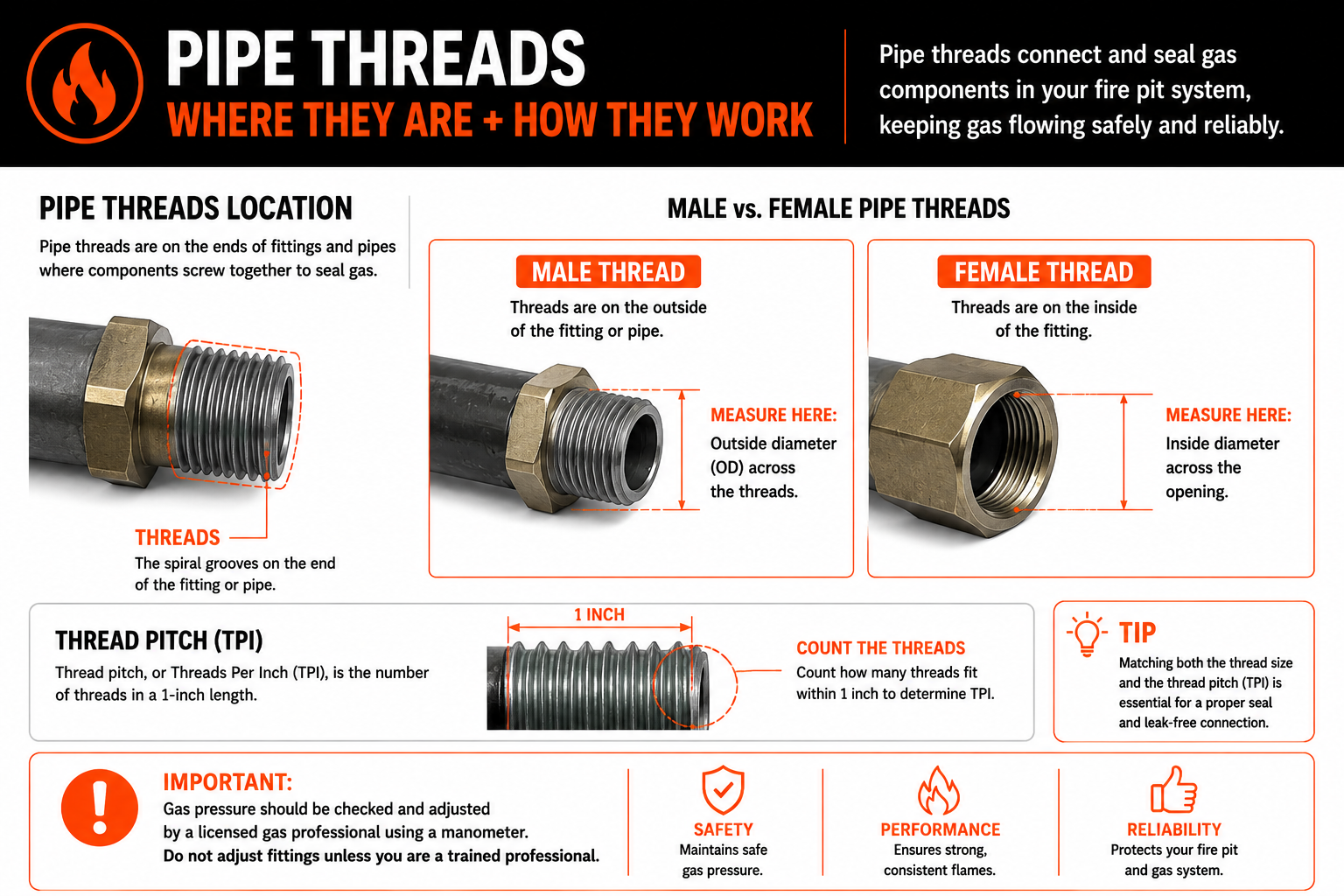
Pipe threads and fitting sizes refer to the physical dimensions of the fittings, but they do not always match the actual measurement of the pipe. In the plumbing industry, thread size is usually referred to as nominal pipe thread size, which is based on the inner diameter of the pipe rather than the outside measurement of the fitting.
Quick answer: To find the correct pipe thread size, measure the outside diameter of a male fitting or the inside/top diameter of a female fitting, then compare that measurement to a nominal pipe size chart. The measured diameter is not always the same as the listed pipe thread size.
This distinction can get confusing because pipe sizing uses several similar terms, including NPT, NPS, OD, ID, TPI, and pipe schedule. If you are not sure what to measure, it is easy to end up with incorrectly sized fittings for your gas fire pit, burner, regulator, or other project components.
Let's begin by looking at a couple of NPT pipe fittings. NPT refers to National Pipe Threads, which is a term defined by ANSI, the American National Standards Institute. NPT fittings are the most common threads used for general purposes and feature tapered threads used for joining and sealing fittings for use with fluids like air or gas.
Quick Pipe Thread Measurement Guide
| What You Measure | Where to Measure | What It Helps Identify |
|---|---|---|
| Outside diameter | Across the outside of a male fitting | The actual fitting size to compare with nominal pipe size |
| Inside/top diameter | Across the opening of a female fitting | The matching thread size for female fittings |
| Threads per inch | Along the threaded section | The thread pitch or TPI count |
| Pipe schedule | Pipe wall thickness | How thick the pipe wall is, even when nominal size stays the same |
What are NPT Threads?
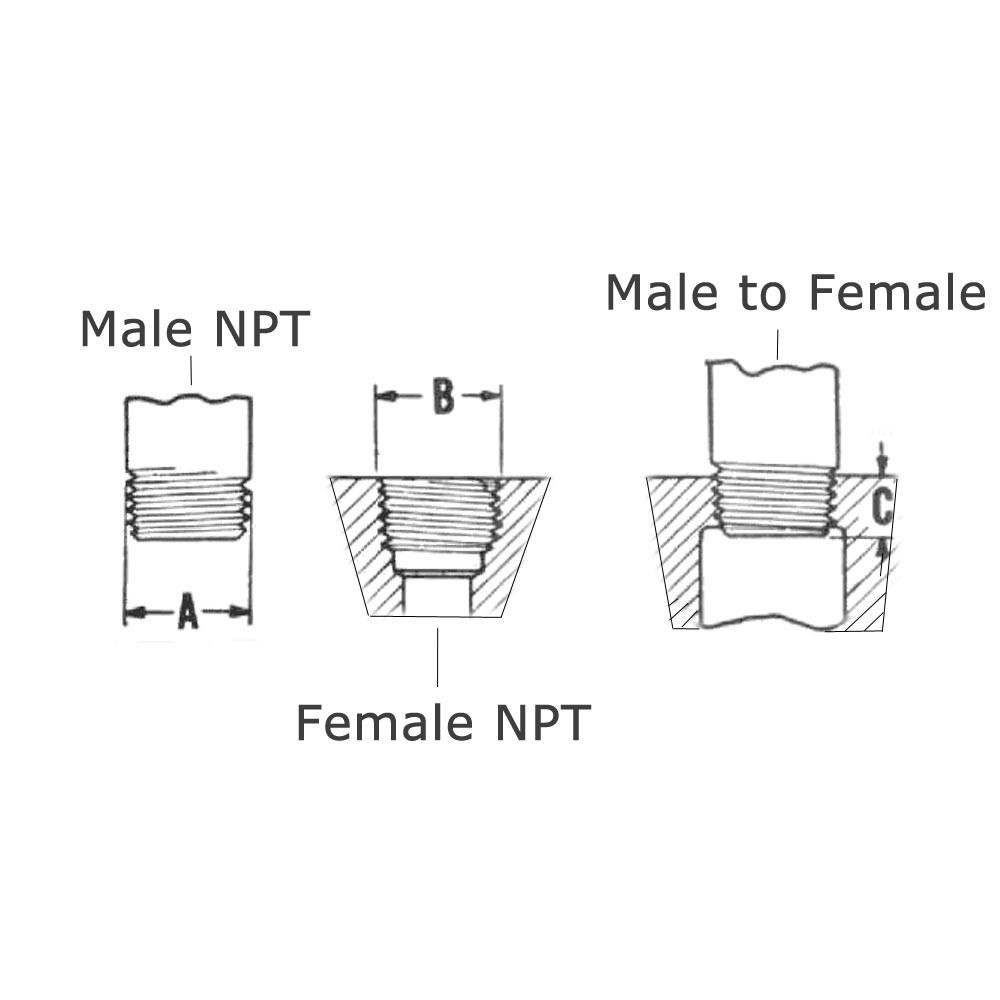
Measurement A shows the outside diameter, or OD, of a male pipe fitting. Measurement B shows the top diameter of a female fitting. This measurement indicates the actual physical size of the fitting. From there, you can correlate that size with its nominal pipe size, or NPS, which is the size more commonly used when identifying pipe and fitting sizes.
Most often, when we say 1/2-inch in reference to a pipe size or fitting size, we are referring to the nominal size, not the actual diameter shown in Measurement A or Measurement B.
US Pipe Thread Sizing Information
| OD Fraction Inch | OD Decimal Inch | Pipe Thread Size (Nominal Pipe Size) |
Threads Per Inch |
|---|---|---|---|
| 5/16 | 0.3125 | 1/16 | 27 |
| 13/32 | 0.405 | 1/8 | 27 |
| 35/64 | 0.540 | 1/4 | 18 |
| 43/64 | 0.675 | 3/8 | 18 |
| 27/32 | 0.840 | 1/2 | 14 |
| 1-3/64 | 1.050 | 3/4 | 14 |
| 1-5/16 | 1.315 | 1 | 11-1/2 |
| 1-21/32 | 1.660 | 1-1/4 | 11-1/2 |
| 1-29/32 | 1.900 | 1-1/2 | 11-1/2 |
| 2-3/8 | 2.375 | 2 | 11-1/2 |
| 2-7/8 | 2.875 | 2-1/2 | 8 |
| 3-1/2 | 3.5 | 3 | 8 |
| 4 | 4.0 | 3-1/2 | 8 |
| 4-1/2 | 4.5 | 4 | 8 |
| 5-5/8 | 5.563 | 5 | 8 |
| 6-5/8 | 6.625 | 6 | 8 |
| 8-5/8 | 8.625 | 8 | 8 |
| 10-3/4 | 10.75 | 10 | 8 |
| 12-3/4 | 12.75 | 12 | 8 |
What is Pipe Schedule?
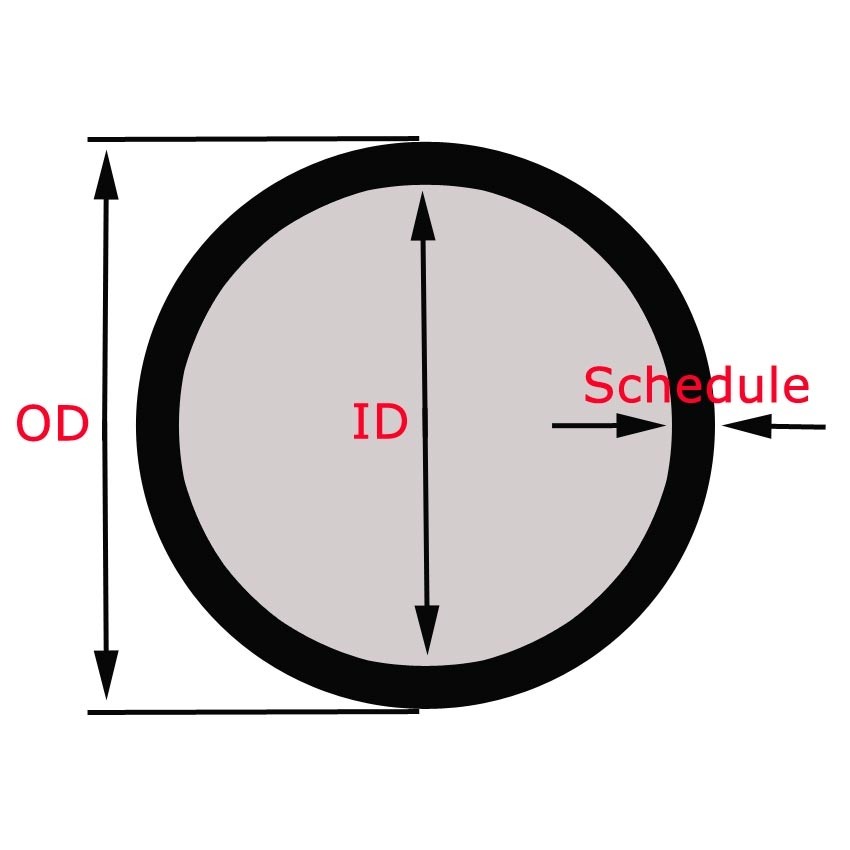
One thing that causes confusion for many people, in or out of the industry, is pipe thickness. Pipe thickness can vary even when the NPS stays the same. Referred to in the industry as schedule, pipe thickness indicates how thick the walls of the piping actually are, while the inner diameter, or ID, is still the most common distinction for joining two fittings.
What is Threads per Inch or Thread Pitch?
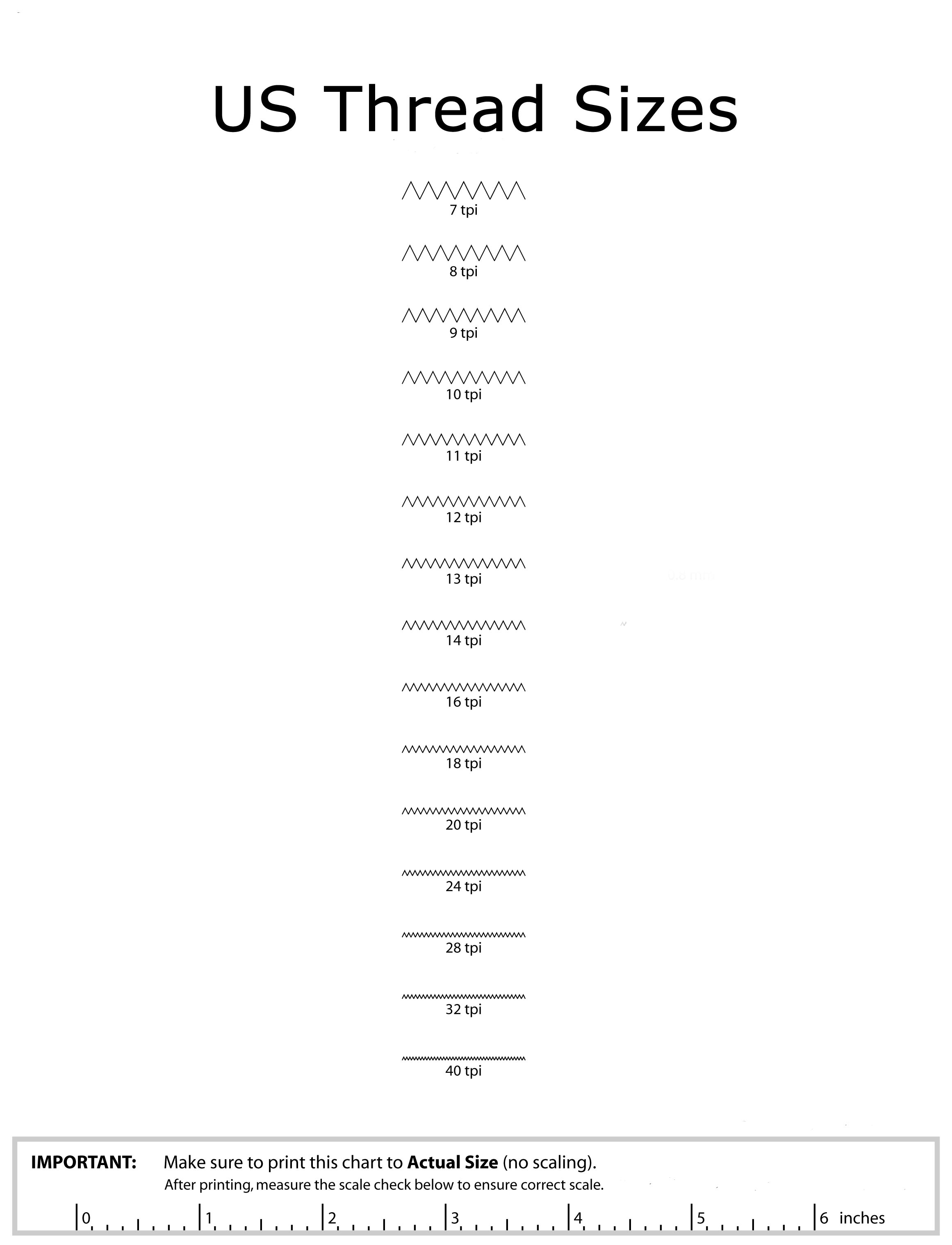
Measurement C shows the length of the threads themselves. When you take a closer look at these threads, you can measure the number of peaks and valleys to determine the number of threads per inch, or TPI, also called the pitch of the threads.
NPT threads have a 60° thread angle, flat roots and crests, and a taper rate of 1 in 16 inch. This means the pipe size will drop 3/4-inch over 12 inches. The chart above illustrates the most common TPI counts or thread pitch. Pitch can be measured using this chart, printed to actual size, or by using a thread gauge for more clarity.
Common Pipe Thread Sizing Mistakes
Pipe thread sizing can be tricky because the actual measurement of a fitting often does not match the nominal size used to identify it. Before buying pipe fittings, regulators, burners, or other gas fire pit components, watch for these common mistakes:
- Confusing actual diameter with nominal pipe size: A measured outside diameter may not match the listed pipe thread size.
- Measuring the wrong part of the fitting: Male fittings are measured across the outside diameter, while female fittings are measured across the top opening.
- Mixing thread standards: NPT and BSPT are different thread standards and are not interchangeable without the correct adapter.
- Ignoring thread pitch: Threads per inch can help confirm whether the fitting matches your project needs.
- Overlooking pipe schedule: Pipe wall thickness can vary even when nominal pipe size stays the same.
Other Pipe Thread Sizing Terms You Should Know
| Term | Meaning |
|---|---|
| BSPT | British Standard Pipe Thread. A thread standard primarily used outside the U.S., such as in Europe, Australia, and Asia. Like NPT, BSPT threads taper to form a seal, but the thread angle and pitch differ, making it incompatible with NPT without special adapters. |
| FIP or FPT | Female Iron Pipe or Female Pipe Thread. A designation for fittings with internal threads that accept MIP or MPT pipe or fittings. In the U.S., these commonly consist of NPT threads. |
| MIP or MPT | Male Iron Pipe or Male Pipe Thread. A designation for fittings with external threads that screw into FIP or FPT pipe or fittings. In the U.S., these commonly consist of NPT threads. |
| Adapter | A fitting used to connect two different types or sizes of pipe threads or pipe materials. It allows transition between thread types, such as NPT to BSPT, or between male and female threads. |
| Coupling | A short piece of pipe with internal female threads on both ends. It is used to join two male-threaded pipes of the same size in a straight line or extend pipe length. |
| Nipple | A short, straight piece of pipe with external male threads on both ends. It is used to connect two female-threaded fittings of the same size in a straight line or extend pipe length. |
| Union | A three-piece fitting that connects two pipes but allows for easy disconnection and reconnection without turning the pipes themselves. This is useful in systems that may need maintenance or partial disassembly. |
Remember not to confuse NPS, or nominal pipe size, with National Pipe Size, which is not a real designation. If you do not feel comfortable measuring your fittings or pipe, consult a professional. Always make sure your project meets local codes and standards, especially when working with gas components.
Pipe Thread Size FAQs
What does NPT mean?
NPT stands for National Pipe Threads. NPT fittings feature tapered threads commonly used for joining and sealing fittings for fluids like air or gas. This tapered design helps create a tight seal as the fitting is threaded further into place. NPT is one of the most common threading standards used in gas fire pit components in the U.S.
What is nominal pipe size?
Nominal pipe size, or NPS, is the industry sizing standard used to identify pipe and fitting sizes. It does not always match the actual outside diameter of the fitting. Because of this, relying on the labeled size alone can lead to mismatched connections if not double-checked. Cross-referencing NPS with an actual measurement helps ensure the correct fitting is used.
How do I measure pipe thread size?
Measure the outside diameter of a male fitting or the inside/top diameter of a female fitting, then compare that measurement to a nominal pipe size chart. Using calipers can help achieve a more precise measurement than a standard ruler or tape measure. Taking this extra step helps avoid ordering the wrong size fitting for your fire pit installation.
Are NPT and BSPT compatible?
No, BSPT and NPT use different thread angles and pitch, so they are not compatible without the proper adapter. Forcing incompatible threads together can damage the fitting or create a poor seal that leads to gas leaks. Always confirm which threading standard your components use before assembling any gas connection.
What is the difference between MIP and FIP?
MIP or MPT refers to male-threaded fittings with external threads. FIP or FPT refers to female-threaded fittings with internal threads. A proper connection requires pairing a male fitting with a corresponding female fitting of the same thread standard and size. Mixing up these designations is a common cause of installation delays or leaks.
What is pipe schedule?
Pipe schedule refers to pipe wall thickness. The schedule can change even when the nominal pipe size stays the same. A higher schedule number typically indicates a thicker, more durable pipe wall. Choosing the correct schedule matters for ensuring the pipe can safely handle the required gas pressure.
Final Thoughts
Finding the correct pipe thread size starts with knowing what to measure and understanding the difference between actual fitting diameter and nominal pipe size. This is especially important when selecting fittings for gas fire pit kits, fire pit burners, regulators, and other gas components.
If you are unsure which fittings or thread sizes are right for your project, contact our product specialists for expert guidance.
Ready to Buy the Products You Need for Your Project?