.jpg)
A gas fire table combines the warmth and ambiance of a fire feature with the functionality of an outdoor table, making it one of the most versatile additions to an outdoor living space. Whether you're planning a sleek modern patio or a cozy backyard gathering area, thoughtful fire table design can dramatically improve both appearance and performance.
Unlike a traditional fire pit, a fire table needs to balance aesthetics, tabletop space, heat output, safety, and seating considerations. This guide covers the key design decisions to help you plan the right gas fire table for your outdoor space.
What Is a Gas Fire Table?
A gas fire table is an outdoor fire feature designed with a functional tabletop or ledge surrounding the burner area. These fire features provide warmth and visual appeal while also functioning as a usable table for drinks, plates, and entertaining.
Gas fire tables are available in a wide range of styles, sizes, and configurations, from compact round conversation tables to large rectangular centerpiece installations. Some homeowners purchase complete ready-to-use systems, while others prefer to design a custom enclosure around a burner kit and ignition system.

Choosing the Right Fire Table Shape
The shape of your fire table plays a major role in heat distribution, seating arrangement, and overall style.
| Shape | Best For | Design Style |
|---|---|---|
| Round | Conversation-focused seating | Traditional and social layouts |
| Square | Balanced heat and symmetry | Versatile modern or rustic spaces |
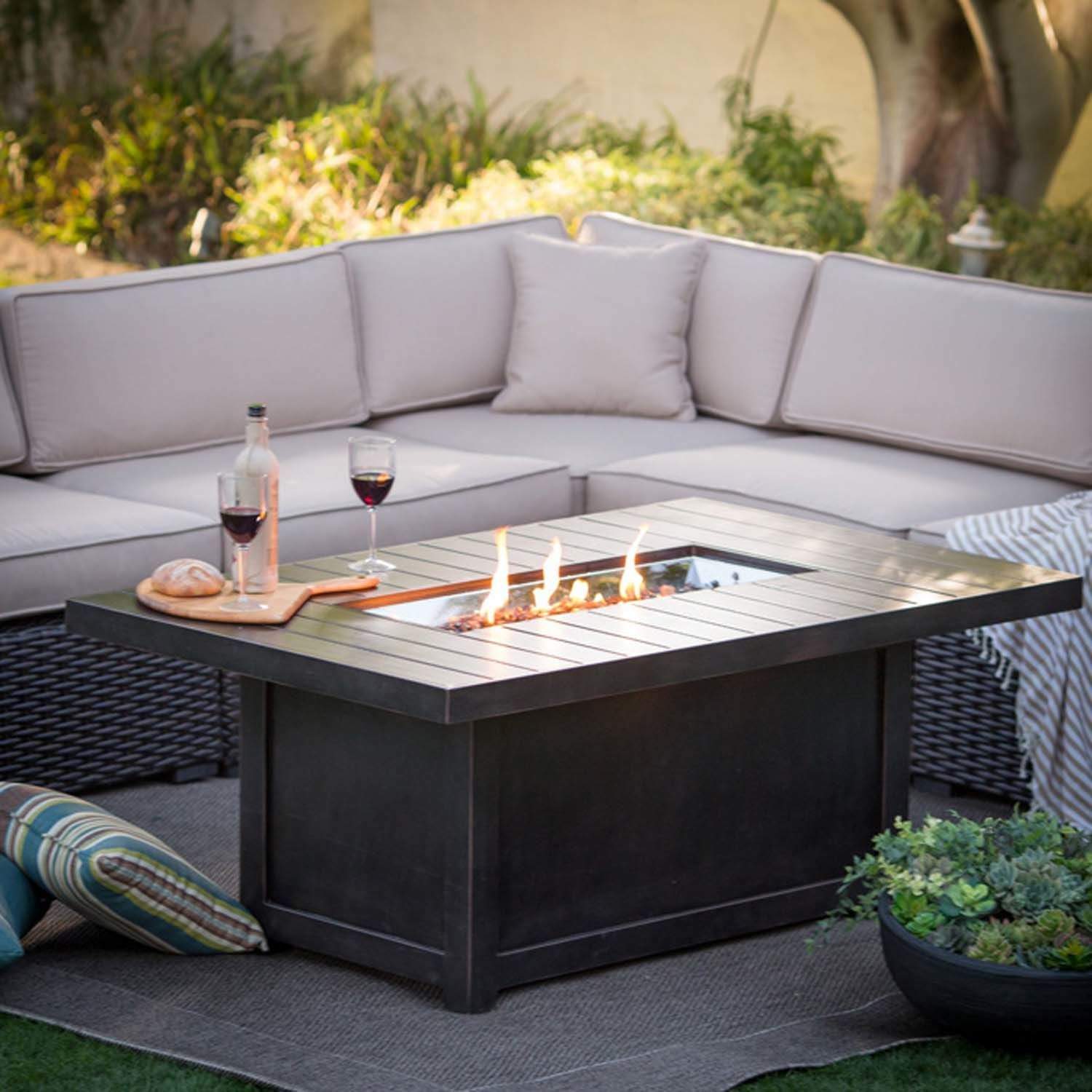
| Rectangular | Larger seating areas and entertaining | Contemporary outdoor spaces |
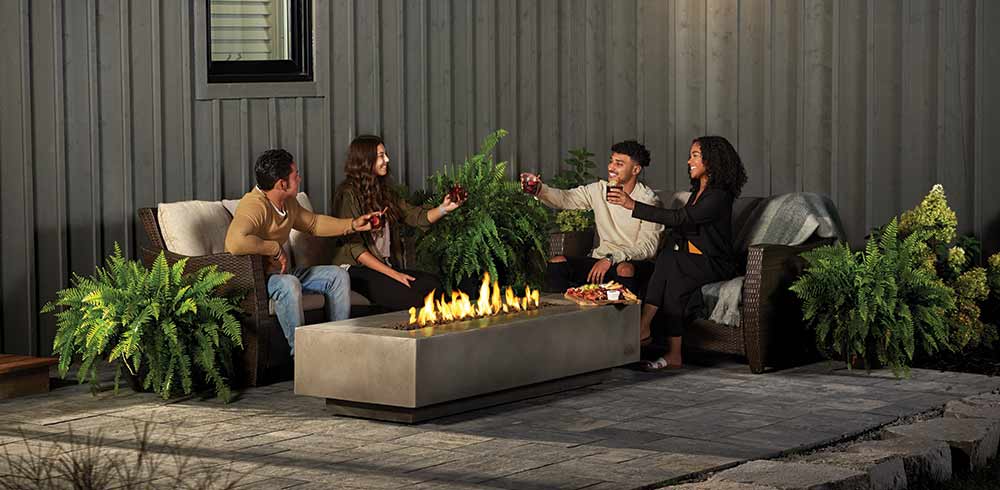
| Linear | Modern flame presentation | Minimalist and luxury designs |
Round fire tables and square fire tables typically create a more centralized gathering experience, while rectangular fire tables often work best for larger patios and contemporary layouts.
Planning Your Tabletop and Ledge Space
One of the most important fire table design considerations is usable tabletop space. Most homeowners want enough room for drinks, plates, or small decorative items while still maintaining a comfortable flame opening.
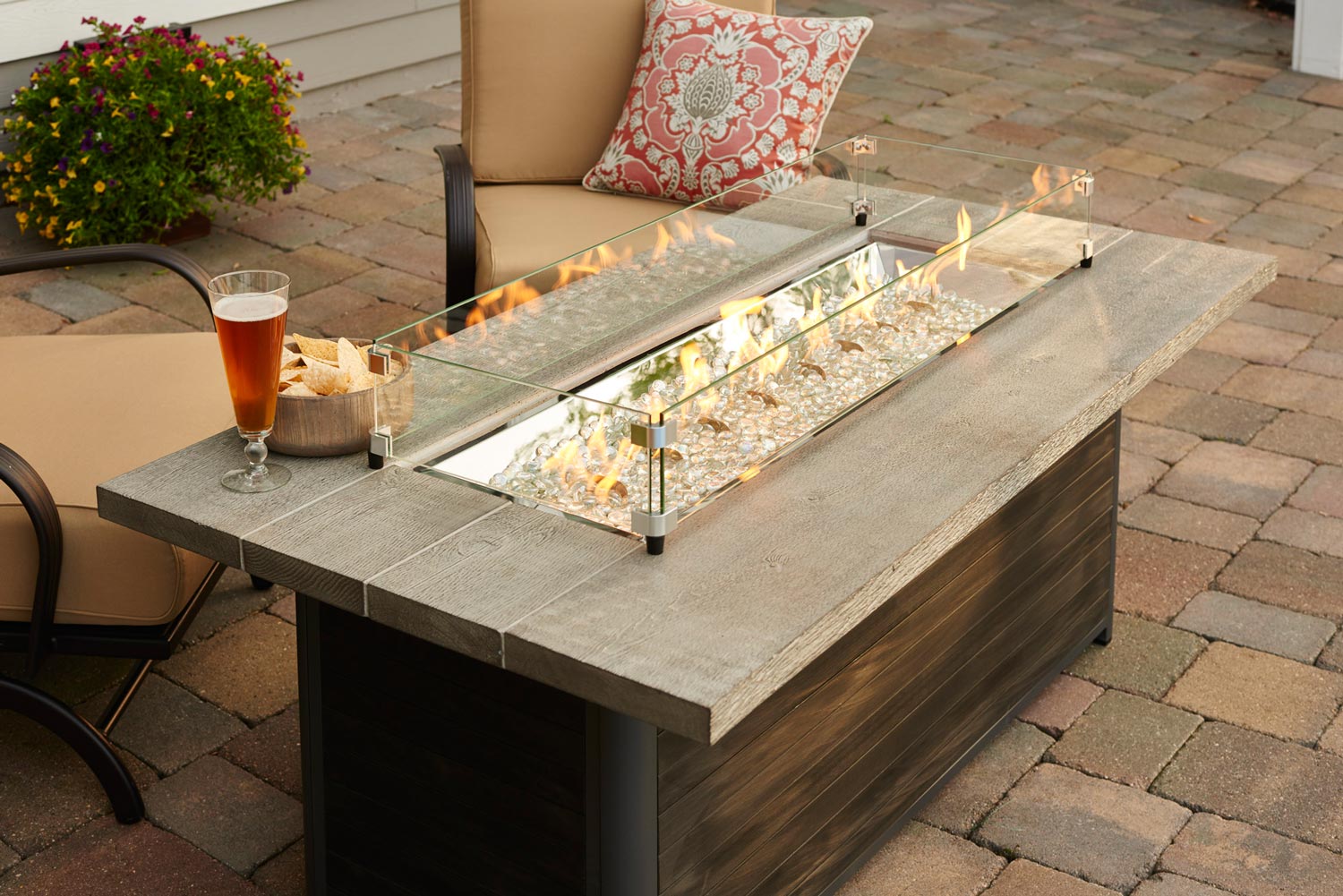
In many cases, allowing approximately 8 to 10 inches of ledge space around the burner area provides a comfortable balance between function and appearance. If you plan to add a glass wind guard, you may want to increase the ledge width to roughly 10 to 12 inches to maintain usable tabletop space.

The larger the flame opening, the less tabletop space you will have available, so finding the right balance early in the planning process is important.
Designing for Heat Output
Heat output is closely tied to burner size, burner shape, and fuel supply capacity. Larger burner systems generally produce more BTUs and greater warmth, but they also require larger openings and more fuel.
If maximizing warmth is your primary goal, consider a larger burner system with a wider center opening. Round and square burners often provide more centralized heat distribution, while linear burners create a more contemporary visual effect.

Keep your fuel supply in mind during planning. Oversizing a burner without adequate gas pressure or fuel delivery can lead to weak flames and disappointing performance.
Fire Media and Appearance Options
Fire media dramatically affects the final appearance of your gas fire table. Different media types can help create modern, rustic, or traditional aesthetics depending on the overall design direction of your outdoor space.
Choosing the Right Fire Table Materials
Material selection impacts not only appearance, but also durability, weight, and long-term performance. Popular fire table materials include concrete, GFRC, stone veneer, pavers, tile, metal, and natural stone.

Each material creates a different design style. Concrete and metal often work well in contemporary outdoor spaces, while stone and pavers typically create a more traditional appearance.
Important Safety Note: Only non-combustible materials should be used near a gas fire feature. Wood framing and combustible materials should never be exposed to burner heat.
Ventilation and Safety Planning
Proper ventilation is one of the most important parts of gas fire table design. Gas systems require airflow to operate safely and efficiently.
Fire Table Cost Considerations
A gas fire table can range from a relatively simple project to a highly customized luxury installation. Final cost depends on burner size and material, ignition system type, gas line installation, material selection, fire media choice, and custom fabrication work.
Popular Fire Table Design Styles
There are countless ways to design a gas fire table, but some of the most popular styles include modern linear, rustic stone, minimalist concrete, and luxury contemporary designs.
Accessories That Can Protect Your Fire Table Design
The right accessories can improve both the appearance and functionality of your gas fire table. One of the most popular upgrades is a glass wind guard, which helps protect the flame from wind while adding a more finished, upscale appearance to the burner area.
To help protect your investment, many homeowners also add a weather-resistant fire pit cover. Covers help shield burners, ignition systems, and fire media from moisture, debris, and harsh weather conditions, helping extend the life and appearance of your fire table over time.
Gas Fire Table FAQs
What Size Should a Fire Table Be?
The ideal fire table size depends on your seating layout and available patio space. Larger tables provide more tabletop space and larger flame presentations, while smaller tables work better for compact patios.
How Much Ledge Space Do You Need Around a Fire Table Burner?
Most fire table designs benefit from approximately 8 to 10 inches of ledge space. If you plan to add a wind guard, consider increasing that spacing to roughly 10 to 12 inches.
Can You Build a Gas Fire Table with Wood?
Combustible materials should never be exposed directly to burner heat. Always follow manufacturer clearance requirements and use appropriate non-combustible materials around the burner area.
Do Gas Fire Tables Need Ventilation?
Yes. Proper ventilation is essential for safe operation and airflow. Ventilation requirements vary depending on the burner system and fuel type.
What Burner Shape Produces the Most Heat?
Larger burners generally produce more heat output regardless of shape, but round and square burners often provide more centralized warmth compared to narrow linear burners.
Final Thoughts
A well-designed gas fire table can completely transform an outdoor living space by combining warmth, functionality, and visual appeal into one centerpiece feature. Taking time to plan your burner size, materials, tabletop spacing, fire media, and ventilation will help ensure your final design performs as beautifully as it looks. If you need help choosing the right product, planning your project, or finding compatible components, contact our product specialists for expert guidance.