
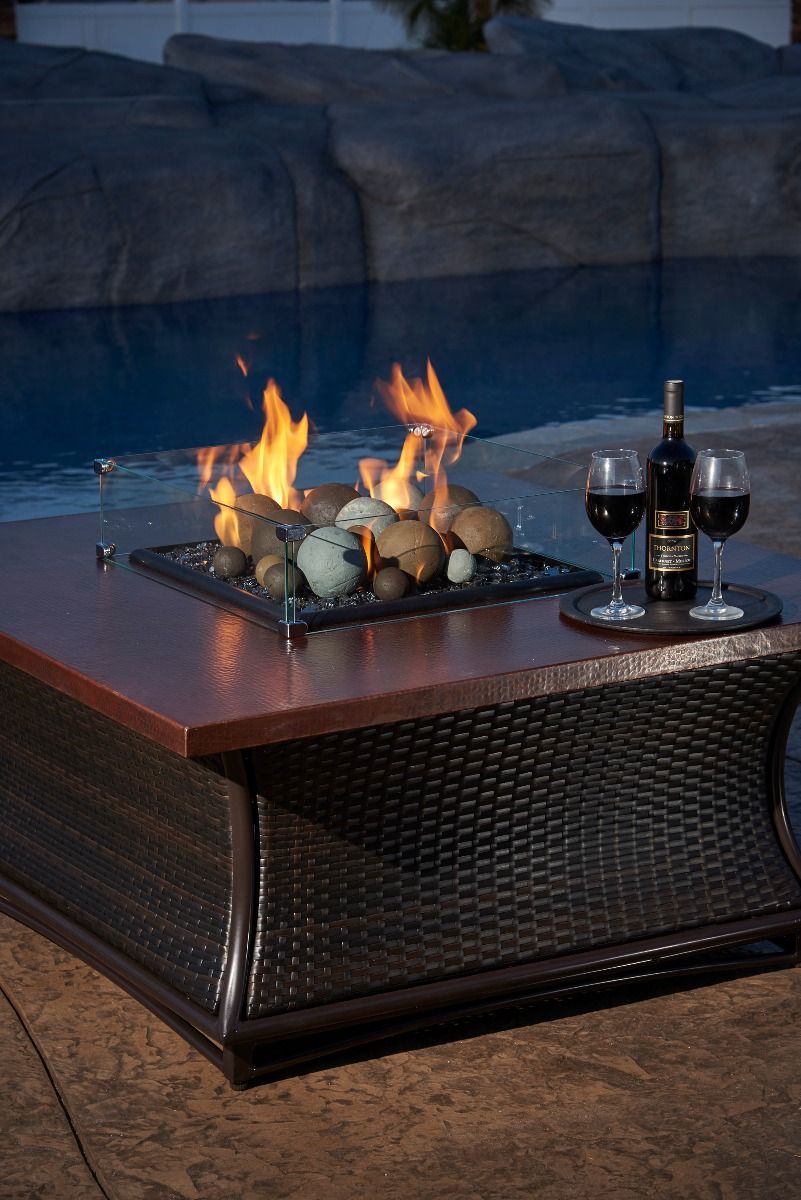
Fire balls are decorative, fire-rated spheres designed for use over gas fire pit burners and fireplace burners. They create a clean, contemporary flame presentation while helping conceal the burner beneath the fire bed. Most fire balls are made from refractory ceramic, although stainless steel options are also available for a more reflective, architectural look.
Available in a variety of sizes, colors, finishes, and configurations, fire balls offer a distinctive alternative to traditional gas logs, lava rock, and fire glass. They are especially popular in modern fire tables, linear fire features, outdoor fireplaces, and custom installations where the fire media is part of the overall design.
What Are Fire Balls?
Fire balls, sometimes called fire spheres or cannon balls, are decorative media placed over or around a gas burner. They are made to withstand the heat produced by properly installed gas fire features and should not be confused with ordinary decorative stones or ceramic home décor.
Most fire balls are manufactured from kiln-fired refractory ceramic similar to materials used in high-temperature applications. This construction allows them to endure repeated exposure to direct flame without the structural deterioration that can occur with non-rated materials.
Fire balls are primarily selected for their appearance, but they can also influence how flames move through the fire bed. The spaces between the spheres allow flames to rise naturally around the media, creating depth and movement while helping conceal visible burner components.
 (1).jpg)
Why Choose Fire Balls for a Gas Fire Feature?
Fire balls are a strong choice for homeowners, designers, builders, and hospitality professionals looking for fire media that feels more sculptural than traditional logs or loose-fill materials. Their rounded shape creates a clean, intentional presentation that works particularly well in contemporary outdoor spaces.
A Modern, Geometric Appearance
The simple spherical shape gives fire balls a distinctive mid-century modern and contemporary look. They can complement minimalist fire tables, linear burners, concrete fire bowls, modern fireplaces, and custom outdoor installations.
Unlike loose media, fire balls create clearly defined shapes within the fire bed. Using several sizes together can make the arrangement feel more organic while maintaining a polished appearance.
Improved Burner Coverage
A layered fire ball arrangement can help disguise burner rings, burner pans, and linear burner tubes. This keeps the focus on the flames and decorative media rather than the mechanical components beneath them.
For greater coverage, fire balls can be arranged over a compatible base layer, such as fire-rated lava rock, when permitted by the burner and fire feature manufacturer.
Natural Flame Movement
The gaps between spherical pieces allow gas and flames to move through the fire bed. This creates a flickering flame pattern that wraps around the fire balls instead of appearing as a single exposed row of burner ports.
Proper placement is important. Fire balls should enhance the flame presentation without tightly blocking burner ports or restricting the flow of gas.
Heat Retention
Refractory ceramic fire balls absorb heat while the fire feature is operating and gradually radiate some of that warmth after the burner is turned off. Their solid ceramic construction gives them more thermal mass than an uncovered burner.
Fire balls should still be considered decorative fire media rather than the primary heat source. The overall warmth of a fire feature depends on the burner, fuel type, BTU output, installation, wind conditions, and surrounding environment.
Long-Term Durability
High-quality fire-rated ceramic balls are designed to withstand repeated heating and cooling cycles. They do not burn like gas logs made from combustible material, and they are less likely to crumble under normal use than lower-quality decorative media not designed for direct flame exposure.
Fire balls can still develop soot, surface discoloration, or small cosmetic changes over time. These changes are especially noticeable on white, cream, and other light-colored finishes.
Ceramic vs. Stainless Steel Fire Balls
Ceramic is the most common material used for fire balls, but it is not the only option. Stainless steel fire balls provide a different visual effect and can be an excellent fit for highly contemporary fire features.
| Feature | Ceramic Fire Balls | Stainless Steel Fire Balls |
|---|---|---|
| Appearance | Soft, solid, or stone-inspired finish | Reflective, metallic, and architectural |
| Color Options | Often available in black, gray, white, tan, brown, and other finishes | Typically selected for its natural metallic appearance |
| Heat Retention | Dense refractory ceramic absorbs and radiates heat | Heats quickly and creates a different radiant effect |
| Best Fit | Modern, transitional, and stone-inspired fire features | Ultra-modern, industrial, and luxury outdoor designs |
| Maintenance Considerations | Light colors may show soot more easily | Reflective surfaces may show fingerprints, soot, or weather exposure |
The right material depends largely on the desired look and the requirements of the fire feature. Always confirm that the media is approved for your burner, fuel type, and installation.
Fire Balls vs. Fire Glass, Lava Rock, and Gas Logs
Each type of fire media creates a different appearance. Fire balls stand out because they are structured and sculptural, while fire glass and lava rock create a lower, more continuous fire bed.
| Fire Media | Appearance | Heat Retention | Maintenance | Best For |
|---|---|---|---|---|
| Fire Balls | Modern, geometric, and sculptural | Excellent with refractory ceramic | Occasional soot removal | Contemporary fire pits, fireplaces, and linear features |
| Fire Glass | Reflective, colorful, and contemporary | Moderate | May need dust, debris, and soot removal | Bright, decorative fire beds with broad color choices |
| Lava Rock | Natural, textured, and understated | Good | May gradually break down or collect debris | Natural designs and economical base layers |
| Gas Logs | Traditional wood-fire appearance | Good with refractory log sets | Occasional soot and dust removal | Traditional fireplaces and rustic fire features |
Fire balls are usually the best choice when the goal is to make the media itself a visible design element. Fire glass provides sparkle and color, lava rock creates a natural base, and gas logs recreate the familiar appearance of a wood fire.
.jpg)
How to Arrange Fire Balls
A thoughtful arrangement can make a significant difference in the finished appearance of a fire feature. The objective is to create visual depth, conceal the burner where appropriate, and preserve the airflow required for safe burner operation.
Start With the Burner Instructions
Before adding any media, review the installation manual for the burner or complete fire feature. Media depth, placement, clearance, and coverage requirements vary by manufacturer and burner design.
Do not assume that every burner can be fully covered. Some systems require burner ports, pilot assemblies, ignition components, sensors, or ventilation openings to remain exposed.
Use a Compatible Base Layer
In some installations, a layer of small fire-rated lava rock can be used beneath the decorative fire balls. The base layer fills empty space, supports the spheres, and can reduce the number of premium decorative pieces needed to complete the design.
Only use a base layer when it is permitted by the burner manufacturer. Do not cover ignition components or restrict airflow.
Mix Multiple Sizes
Combining several diameters creates a more natural, stacked appearance than using a single size. Smaller fire balls fill gaps, while larger spheres add height and visual weight.
A mix of 2-inch, 4-inch, and 6-inch fire balls can work well in larger custom installations. Smaller fire features may need fewer sizes to avoid crowding the burner.
Avoid Overpacking the Fire Bed
Fire balls should not be packed so tightly that they block burner ports or prevent flames from moving freely. Leave visible gaps between pieces and follow the manufacturer's recommended media placement.
After installation, observe the fire while it is operating. Flames should move evenly through the media without producing unusual lifting, delayed ignition, excessive soot, or unstable combustion.
.jpg)
Choosing the Right Fire Ball Size
The best size depends on the dimensions of the fire feature, the burner layout, and the visual effect you want to create.
2-Inch Fire Balls
Smaller fire balls work well as gap fillers, accent pieces, and top-dressing media. They can also be used in compact fire features where larger spheres would overwhelm the fire bed.
4-Inch Fire Balls
Four-inch fire balls are a versatile option for many residential fire pits and linear burners. They are large enough to create a noticeable geometric effect without requiring the depth of larger spheres.
6-Inch Fire Balls
Larger fire balls make a bold statement in wide fire bowls, commercial fire features, and expansive custom installations. They generally need more room around the burner and may be combined with smaller pieces for support and visual balance.
Mixed-Size Arrangements
A mixed arrangement usually creates the most dimensional look. Start with the largest pieces as anchors, place medium fire balls around them, and use smaller spheres to fill selected gaps without completely closing off airflow.
What Are Fire Ball Halves?
Fire ball halves are hemispherical versions of traditional fire balls that feature a flat bottom instead of a fully rounded shape. The flat base allows them to sit securely on a burner pan or approved base media without rolling, making them an excellent choice for creating stable, layered fire media arrangements.
Many installers use half balls as the foundation of a stacked display, placing full fire balls above them to add height and dimension while maintaining stability. Because the flat side rests against the fire bed, the visible portion still provides the same clean, sculptural appearance as a full sphere from most viewing angles. Half balls can also be used on their own to create a distinctive contemporary look with less movement during installation.
For example, the Rasmussen Smooth FireShapes Half Ball Pack is designed for modern gas fire features and can be incorporated into custom fire media layouts alongside full fire balls. As with all decorative fire media, always follow the burner's installation instructions and avoid covering burner ports, pilot assemblies, or ignition components.
Choosing a Fire Ball Color
Color affects both the overall style of the fire feature and how visible normal soot buildup will be.
Black and Dark Gray
Dark fire balls create a dramatic, low-maintenance appearance. They complement concrete, steel, black glass, and dark stone while helping disguise soot marks caused by direct flame contact.
White and Cream
Light fire balls provide a strong contrast against flames and dark burner pans. They work well in bright, modern spaces but are more likely to show soot and carbon buildup over time.
Tan and Brown
Earth-tone fire balls soften the geometric shape and pair well with stone, stucco, pavers, wood accents, and natural outdoor color palettes.
Metallic Stainless Steel
Stainless steel fire balls produce a sleek, reflective effect suited to modern fire features. The metallic surface can reflect surrounding light and flames, making the fire bed feel more architectural.
Popular Fire Ball Brands
Firepits Direct carries fire balls from established manufacturers offering a variety of materials, finishes, sizes, and set configurations. The best choice depends on your burner, installation dimensions, preferred appearance, and required quantity.
| Brand | Notable Style | Featured Product |
|---|---|---|
| Real Fyre | Contemporary fire spheres with a clean ceramic appearance | Real Fyre Contemporary Fyre Spheres |
| American Fire Products | Stone-inspired decorative balls for modern fire features | American Fire Products Lite Stone Balls |
| Rasmussen | Smooth fire balls sized for coordinated burner arrangements | Rasmussen Smooth Fireballs for an 18-Inch Linear Burner |
| Grand Canyon | Cannonball-style sets with a bold, substantial appearance | Grand Canyon Black Cannon Ball Set |
| The Outdoor Plus | Stainless steel fire balls for reflective, architectural installations | The Outdoor Plus Stainless Steel Fire Balls |
| Hargrove | Large cannonball sets for broad fire beds and substantial coverage | Hargrove Colonial Cannon Balls Set |
American Fire Products was previously known as American Fire Glass. Some existing product URLs, packaging, or references may still use the former company name.
Featured Fire Ball Options
Real Fyre Contemporary Fyre Spheres
The Real Fyre Contemporary Fyre Spheres offer a simple, upscale look for modern fire features. The four-piece format makes them useful as a focal point, a supplement to an existing fire bed, or part of a mixed-size arrangement.
American Fire Products Lite Stone Balls
The American Fire Products Lite Stone Balls provide a softer, stone-inspired alternative to perfectly smooth spheres. Their shape and texture can help bridge the gap between a highly geometric design and a more natural outdoor setting.
Rasmussen Smooth Fireballs
The Rasmussen Smooth Fireballs for an 18-Inch Linear Burner are configured for a specific burner length, making them a useful option for customers who want a coordinated arrangement rather than selecting individual pieces.
Grand Canyon Black Cannon Balls
The Grand Canyon Black Cannon Ball Set creates a bold monochromatic look. The dark finish helps the flame stand out and can make routine soot less noticeable than it would be on a lighter surface.
The Outdoor Plus Stainless Steel Fire Balls
The Outdoor Plus Stainless Steel Fire Balls are a distinctive alternative to refractory ceramic. Their reflective finish is well suited to modern fire bowls, linear installations, and custom outdoor spaces featuring stainless steel or other metallic accents.
Hargrove Colonial Cannon Balls
The Hargrove Colonial Cannon Balls Set includes 32 four-inch pieces, making it a strong option for larger fire beds or installations requiring substantial decorative coverage.
How Many Fire Balls Do You Need?
The number of fire balls needed depends on several factors:
- Fire feature dimensions: A wide fire bowl or long linear burner requires more media than a compact fire pit.
- Burner size and shape: Round burners, linear burners, and custom burner layouts create different coverage requirements.
- Fire ball diameter: Larger spheres cover more visible space but may leave larger gaps between pieces.
- Desired arrangement: A minimal design may use a few statement pieces, while a fully layered fire bed requires more.
- Base media: An approved lava rock base can reduce the number of decorative fire balls needed.
- Required clearances: Ignition systems, pilot assemblies, sensors, and burner ports may need to remain uncovered.
There is no universal pieces-per-square-foot calculation that works for every installation because fire balls vary in size and are often stacked rather than installed as a uniform layer. Product set descriptions and burner instructions are the best starting points.
If you are planning a custom fire feature, provide our product specialists with the burner model, fire pit dimensions, preferred fire ball size, and desired appearance. This information will help our team recommend a compatible quantity and layout.
.jpg)
Fire Ball Safety Tips
Decorative media is exposed to direct flame and extreme temperature changes, so material selection and installation are important.
- Use only fire-rated media. Ordinary ceramic décor, landscaping stones, river rocks, and decorative glass may not be safe for use in a fire feature.
- Never use wet media. Trapped moisture can expand rapidly when heated. Make sure fire balls are completely dry before operating the burner.
- Follow burner instructions. Do not exceed the recommended media depth or cover components that need ventilation.
- Confirm fuel compatibility. Use media approved for the specific natural gas or propane installation.
- Do not block ignition components. Pilot assemblies, thermocouples, sensors, and electronic ignition components may require open space.
- Inspect the media regularly. Replace pieces that show significant cracking, breakage, or damage.
- Allow the fire balls to cool completely. Ceramic and stainless steel media can remain hot after the flames are turned off.
Non-rated decorative stones can contain trapped moisture or structural weaknesses that make them unsuitable for direct heat. Even when a material looks similar to fire-rated media, it should not be placed in a fire pit unless it is specifically approved for that purpose.
How to Clean Ceramic Fire Balls
Some soot buildup is normal, particularly where flames make direct contact with the media. Cleaning can restore the appearance of ceramic fire balls and remove loose outdoor debris.
- Turn off the gas supply. Make sure the burner is off and cannot ignite during cleaning.
- Let the media cool completely. Fire balls can retain heat well after the visible flame is gone.
- Remove loose debris. Use a soft-bristled brush or a vacuum with a brush attachment.
- Wipe stubborn areas with water. Use a damp cloth and plain water to remove soot from the surface.
- Avoid chemical cleaners. Cleaning products may damage the finish or produce unwanted fumes when the fire balls are reheated.
- Allow the fire balls to dry fully. Do not return damp media to an operating fire feature.
Light-colored media may not return to its original appearance after extended direct flame exposure. Some discoloration is a normal result of combustion and does not necessarily indicate that the media is damaged.
Ceramic Fire Ball FAQs
What do fire balls do?
Fire balls serve as decorative media for gas fire pits and fireplaces. They create a modern alternative to gas logs, help conceal the burner, and allow flames to move through gaps between the spheres. Refractory ceramic fire balls also absorb and radiate heat while the fire feature is operating.
Are ceramic fire balls safe?
Ceramic fire balls are safe when they are specifically manufactured as fire-rated media and installed according to the burner manufacturer's instructions. Ordinary ceramic spheres, landscaping stones, and decorative rocks should not be substituted for approved fire media.
Do ceramic fire balls retain heat?
Yes. Refractory ceramic absorbs heat from the flames and gradually radiates some of that warmth after the burner is turned off. The amount of warmth produced by the complete fire feature still depends primarily on the burner output, installation, and surrounding conditions.
Can fire balls replace fire glass?
Fire balls can be used instead of fire glass in many compatible fire features, but they should not be treated as a universal replacement. Check the burner instructions to confirm approved media types, required depth, placement, and clearance around ignition components.
Can you mix fire balls with lava rock?
Yes, in many installations fire balls can be placed over a compatible fire-rated lava rock base. The lava rock fills the fire bed and supports the decorative spheres. Confirm that this arrangement is approved for the specific burner before installation.
Can you mix fire balls with fire glass?
Some fire features can use fire balls as an accent over approved fire glass, but compatibility depends on the burner and installation requirements. The combined media should not exceed the recommended depth or restrict gas flow.
Will ceramic fire balls crack?
High-quality refractory ceramic fire balls are designed for repeated exposure to direct flame. However, damage can occur from improper installation, impact, extreme thermal shock, trapped moisture, or use outside the manufacturer's guidelines.
Why are my fire balls turning black?
Black marks are usually soot caused by incomplete combustion or direct flame contact. Some soot is normal, especially on light-colored media. Heavy or rapidly developing soot may indicate improper media placement, restricted airflow, burner issues, or a fuel-related problem that should be inspected.
Can fire balls stay outside year-round?
Outdoor-rated fire balls may remain in an outdoor fire feature, but they should be protected from prolonged moisture, debris, freezing conditions, and severe weather whenever possible. A properly fitted cover can help keep the media and burner dry.
How long do ceramic fire balls last?
Fire-rated ceramic balls are designed for long-term use and can endure repeated heating cycles when installed and maintained correctly. Their service life depends on product quality, exposure, handling, moisture, burner operation, and maintenance.
How do you clean ceramic fire balls?
Allow the fire balls to cool completely, then remove loose soot with a soft brush or vacuum attachment. Wipe stubborn buildup with a damp cloth and plain water. Avoid chemical cleaners, and make sure the fire balls are completely dry before relighting the burner.
Final Thoughts
Fire balls transform a standard gas burner into a distinctive design feature. Ceramic spheres offer a durable, heat-retaining option in a wide range of colors and styles, while stainless steel fire balls provide a sleek metallic alternative for highly contemporary spaces. The right material, size, color, and arrangement can help conceal the burner and create a more intentional flame presentation.
Always select fire-rated media that is compatible with your burner and follow the manufacturer's installation requirements. If you need help choosing the right fire balls, calculating the quantity for your fire bed, or finding compatible components, contact our product specialists for expert guidance.