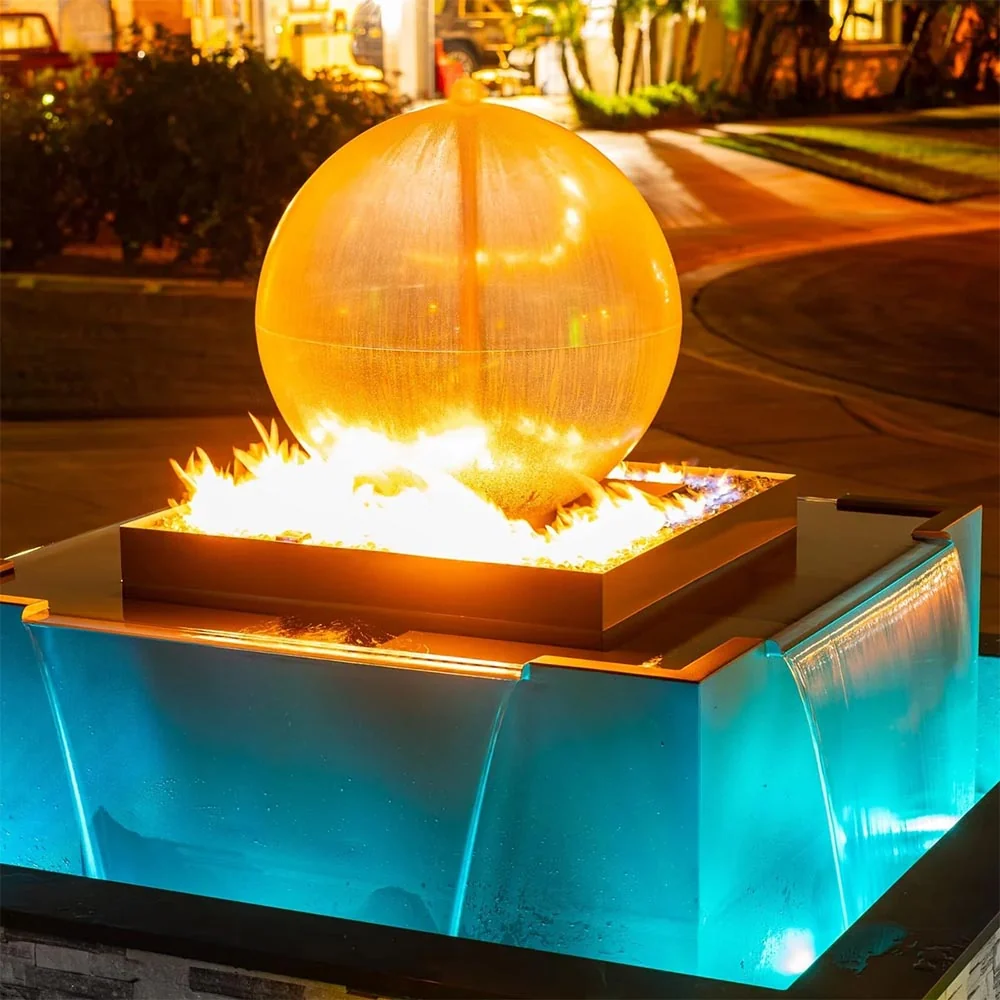
Outdoor fire features do not have to follow the traditional round fire pit or rectangular fire table formula. Sculptural fire pits, oversized fire bowls, fire and water features, fire towers, unusual shapes, distinctive materials, and custom designs can turn live flame into an architectural focal point for an outdoor space.
The right design depends on more than finding the most unusual product. A unique fire feature should still complement the scale of the property, seating layout, architecture, fuel availability, environmental conditions, and the way the space will actually be used.
From artistic fire pits to dramatic fire and water bowls, these ideas show just how many directions you can take an outdoor fire feature.
What Makes a Fire Feature Unique?
A unique fire feature does not need to be unusual simply for the sake of being different. The most successful statement pieces use shape, scale, material, flame placement, fire media, or surrounding architecture to create something memorable while still making sense within the space.
Features that can make an outdoor fire installation stand out include:
- Oversized or unexpected proportions
- Fire combined with moving water
- Sculptural shapes
- Vertical flame presentations
- Oval, linear, cube, or specialty geometry
- Copper, wood-grain concrete, steel, or contrasting finishes
- Art incorporated into the enclosure
- Distinctive fire media
- Integration with pools, hardscape, walls, or custom seating
The goal should be to select a fire feature that feels intentional within the overall outdoor design rather than one that looks unusual in isolation.
1. Fire and Water Features
Few outdoor elements make a stronger visual statement than fire and moving water in the same installation. Fire and water features can create a resort-inspired focal point around pools, large patios, hospitality spaces, and luxury landscapes.
The contrast between flame and cascading water gives these features visual interest even before the fire is turned on.
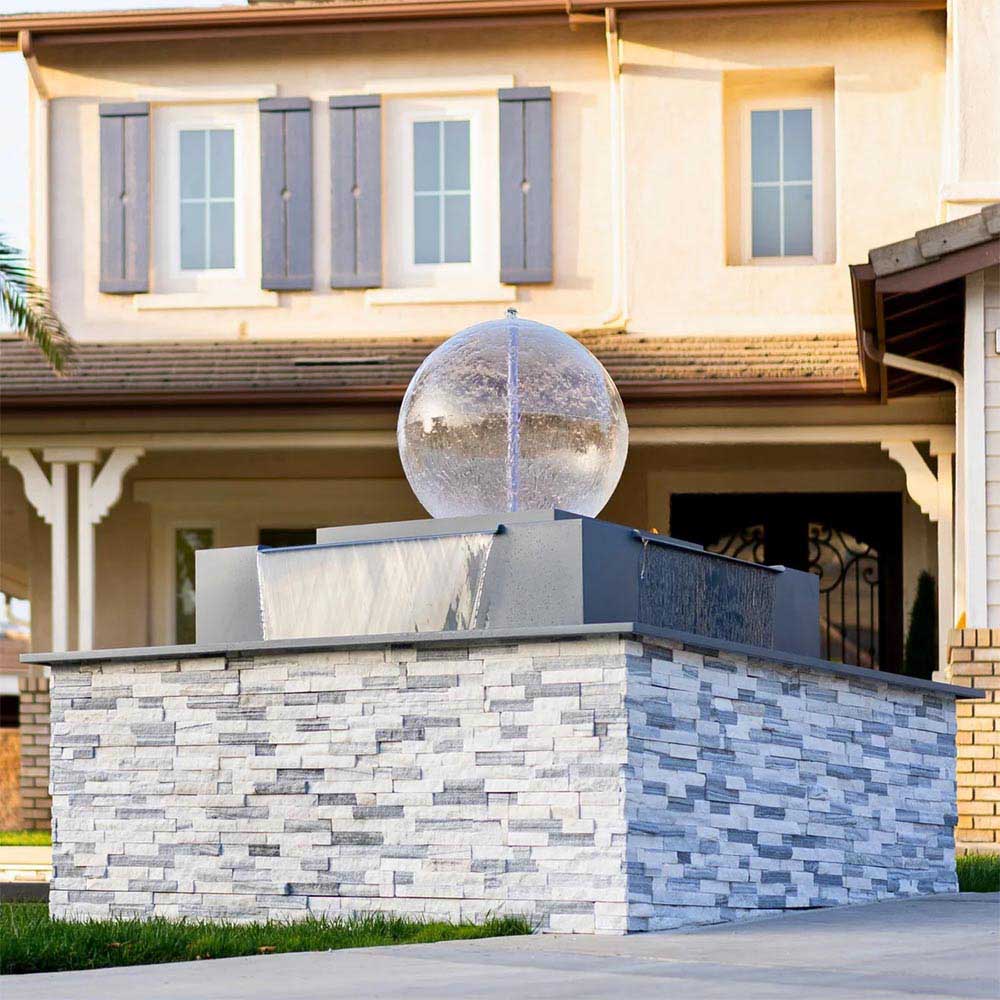
Oversized Atlas Fire and Water Bowls
The Outdoor Plus Atlas series demonstrates how dramatic scale can completely change the role of a fire bowl. Available in both square and round configurations, these oversized powder-coated steel designs combine gas flame with water to create a centerpiece rather than a small decorative accent.
These types of features work particularly well where they can be viewed from multiple parts of a property, such as beside a swimming pool, at the end of a long sightline, or within a large open landscape.
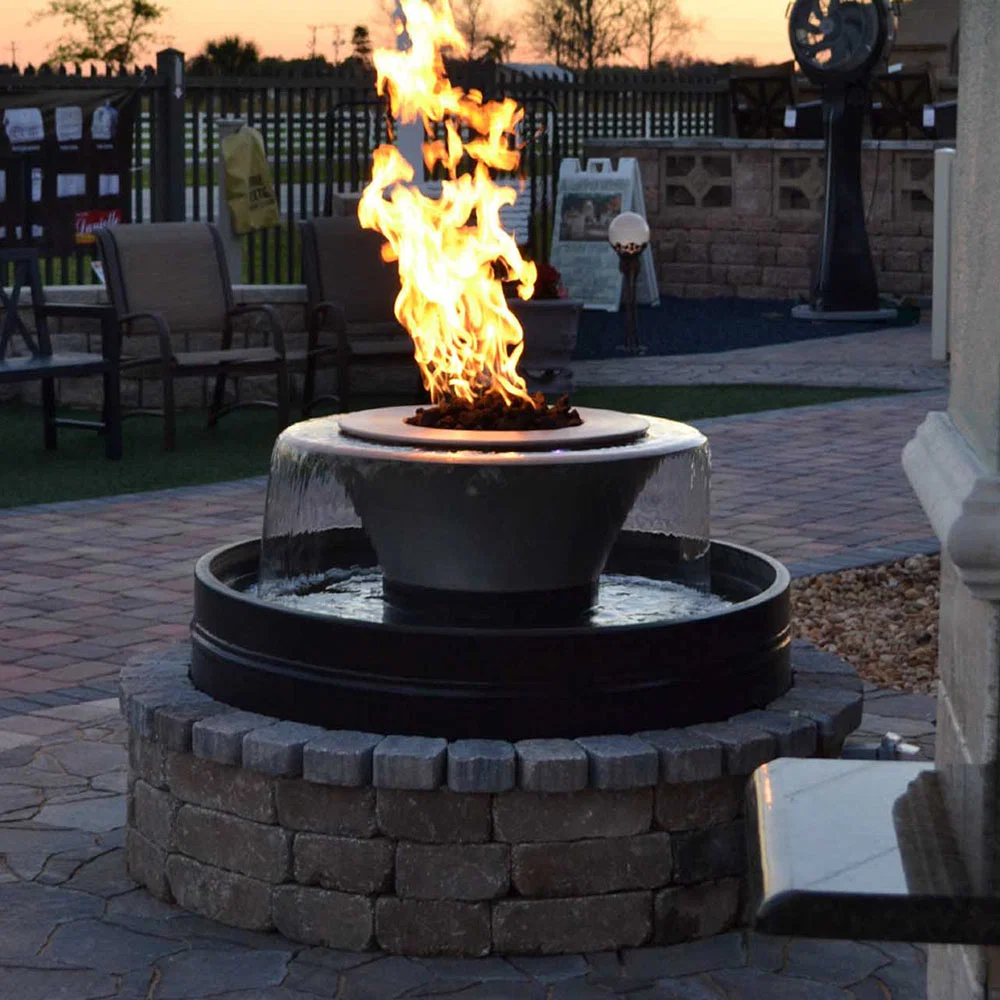
Top Fires Olympian 360 Fire and Water Bowl
The Top Fires Olympian 360 Fire and Water Bowl takes the concept in another direction by combining a round form with copper construction and a 360-degree presentation.
Copper adds another visual layer because the material itself becomes part of the feature's character. Over time, natural changes to the copper finish can create a more organic appearance.
Fire and water installations require more planning than a standard freestanding fire pit. Fuel supply, water supply, drainage, electrical needs where applicable, clearances, and manufacturer installation requirements should all be addressed early in the project.
2. Sculptural Fire Features
A fire pit can function as outdoor sculpture even when the flame is off. Sculptural designs use form and proportion to turn the fire feature itself into part of the landscape architecture.
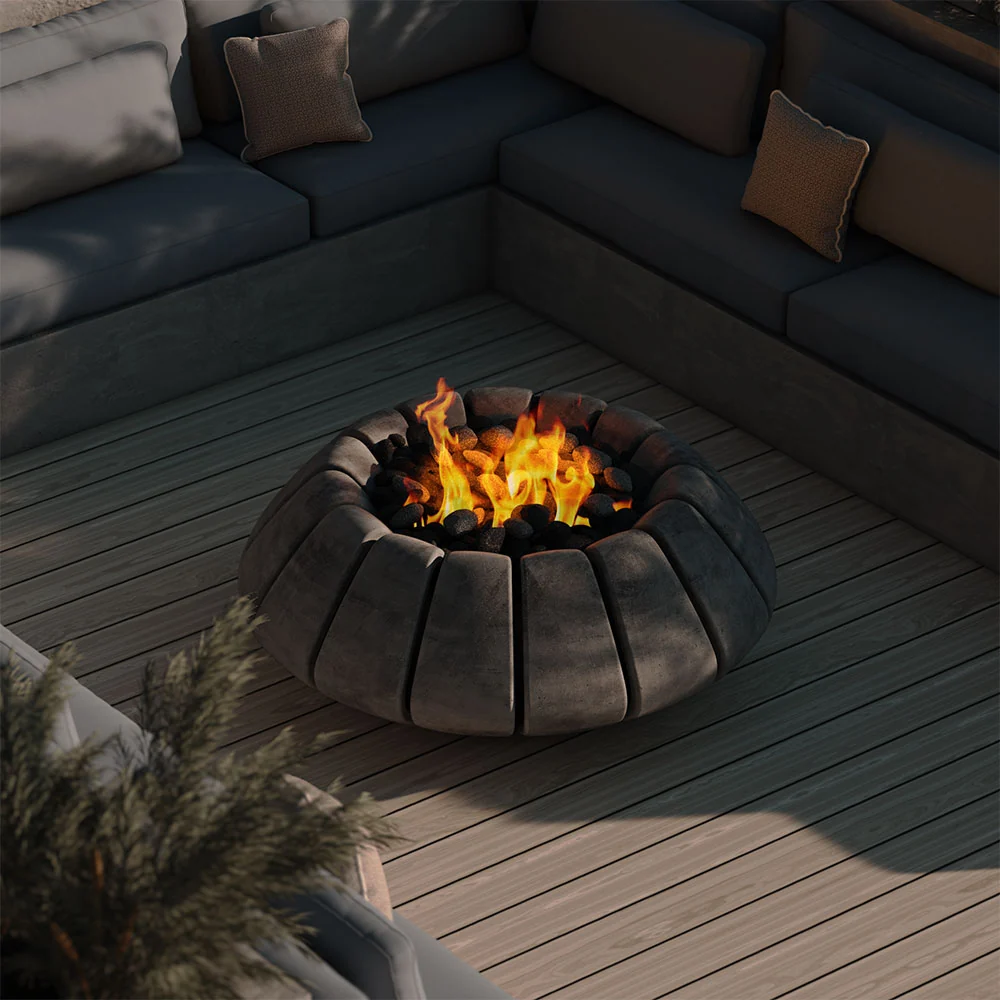
Prism Hardscapes Sunflower Fire Bowl
The Prism Hardscapes Sunflower Concrete Gas Fire Bowl uses a distinctive bowl profile that separates it from more conventional round fire pits. Its shape gives the feature visual presence without relying on elaborate decoration.
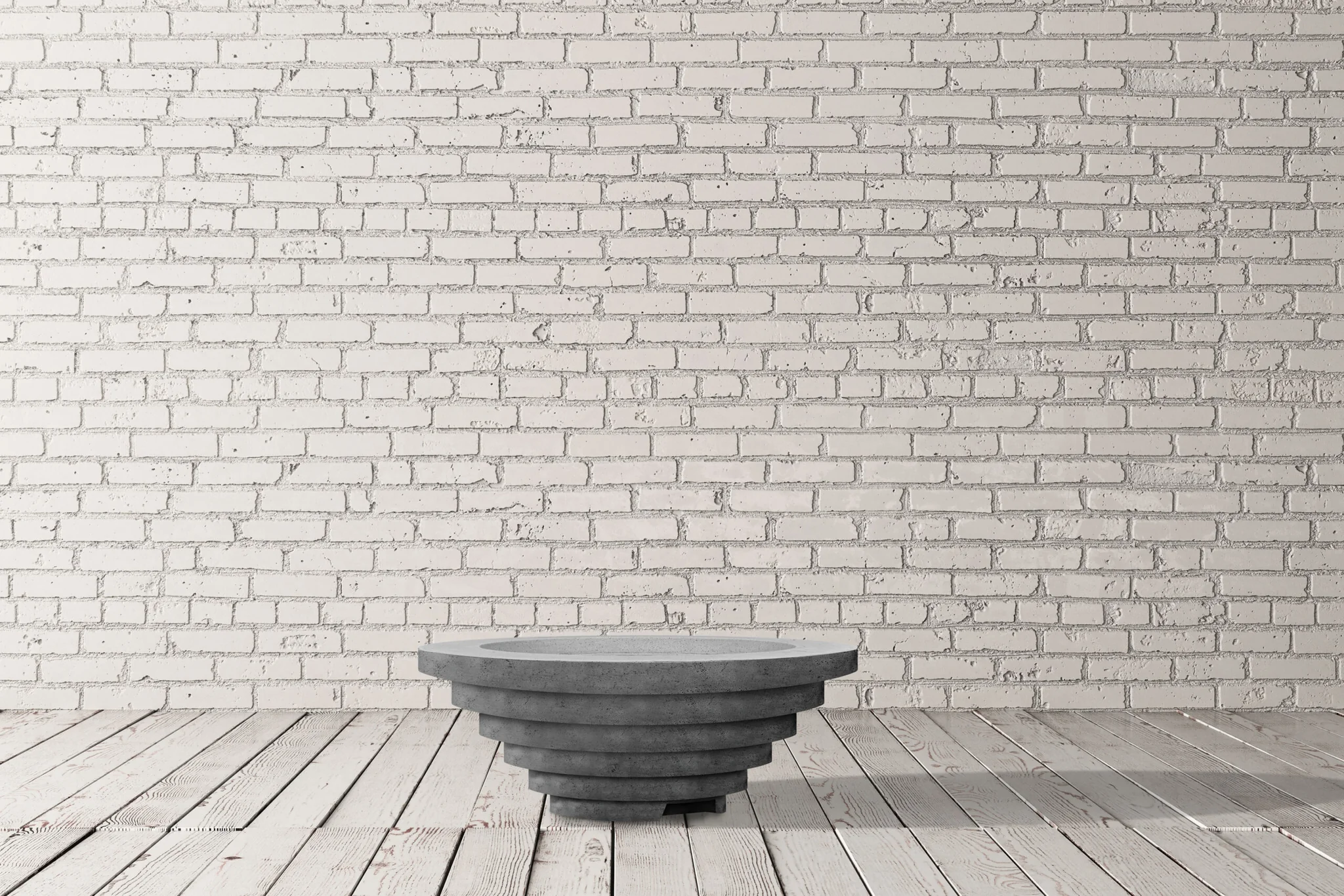
Prism Hardscapes Triton Fire Pit
The Prism Hardscapes Triton Concrete Gas Fire Pit offers another approach to sculptural concrete. Rather than treating the enclosure as a simple container for the burner, the form itself becomes part of the design.
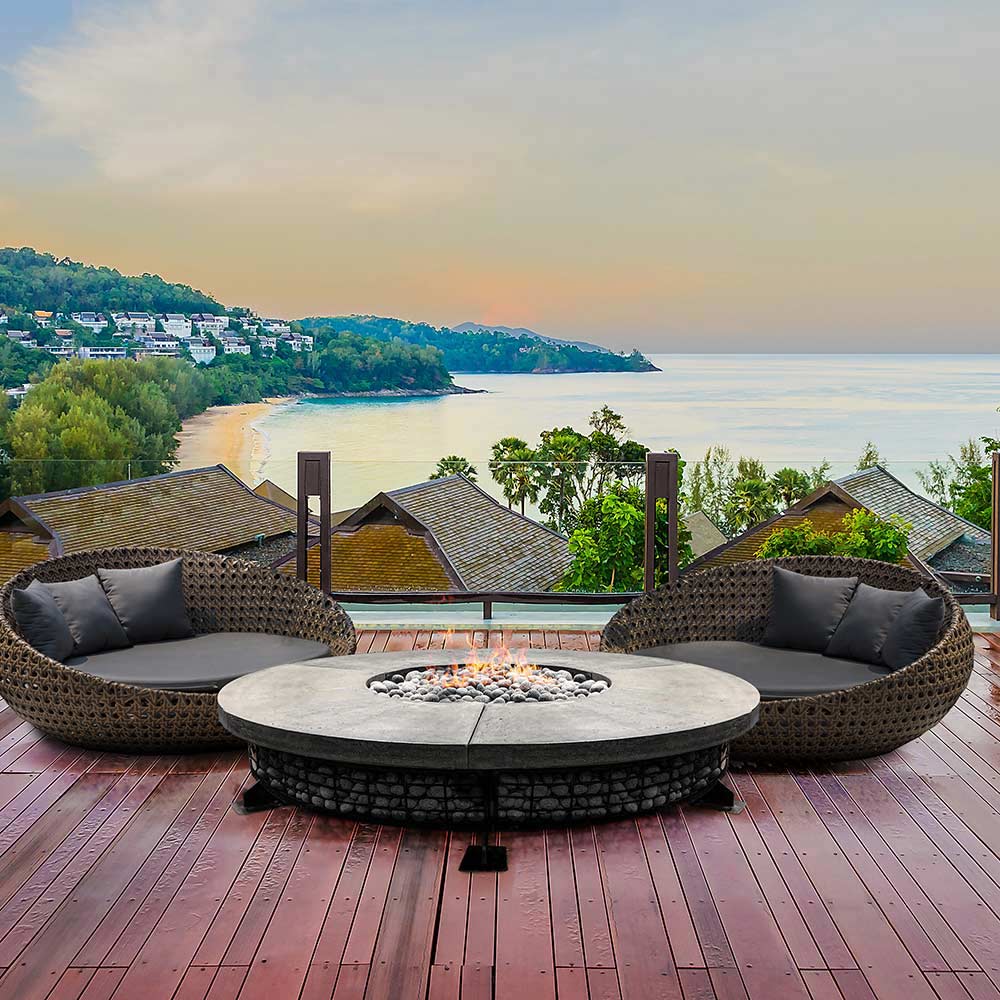
Prism Hardscapes Fuego
The Prism Hardscapes Fuego Electronic Ignition Gas Fire Pit is a larger concrete statement piece that works well in spaces where the fire pit needs enough scale to anchor the surrounding furniture and hardscape.
With sculptural concrete fire features, consider how the product looks from every direction. A distinctive silhouette can be especially effective in open patios, courtyards, and spaces where the fire feature is visible from inside the home.
3. Fire Features That Double as Outdoor Art
Some fire pits go further than unusual geometry and incorporate artwork directly into the enclosure. These pieces can feel less like outdoor equipment and more like functional sculpture.
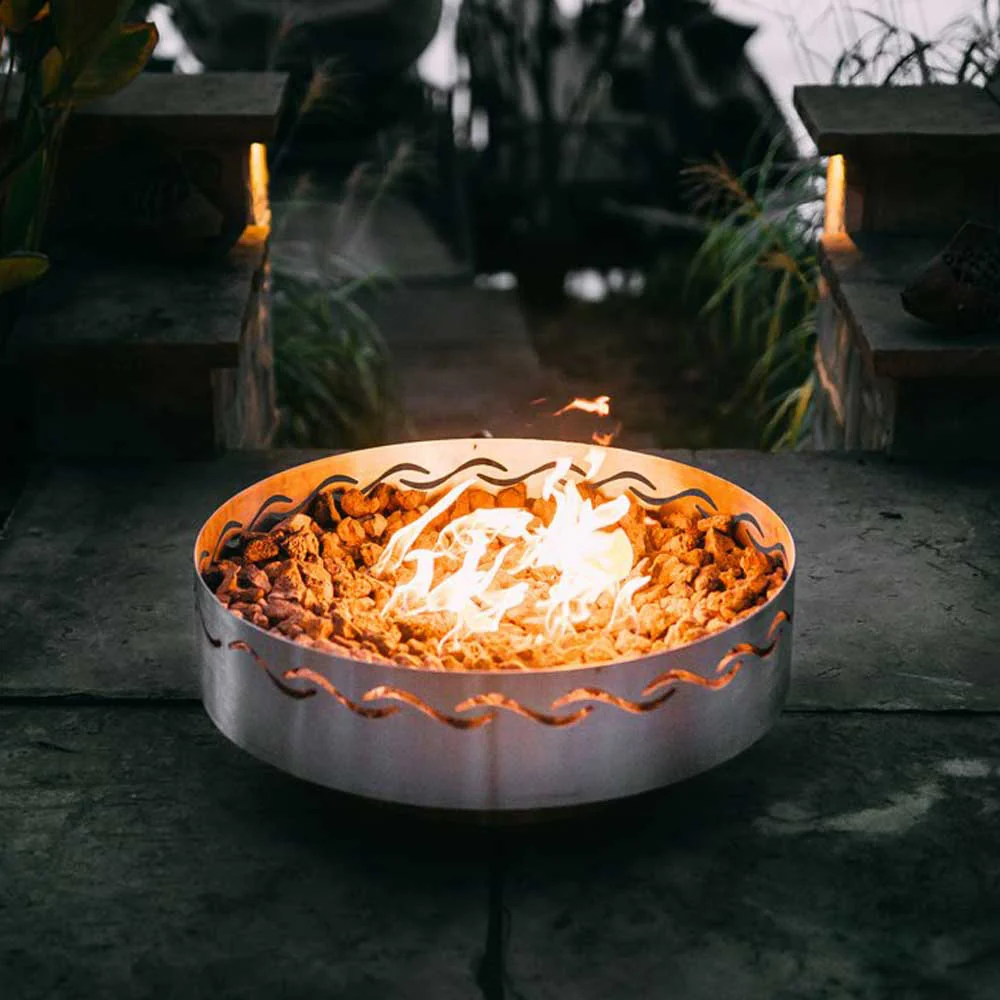
Fire Pit Art Fire Surfer
The Fire Pit Art Fire Surfer Gas Fire Pit brings a playful, highly recognizable design to the outdoor fire category. It is a good example of choosing a fire pit around a specific personality or theme rather than trying to make the feature disappear into the surrounding design.
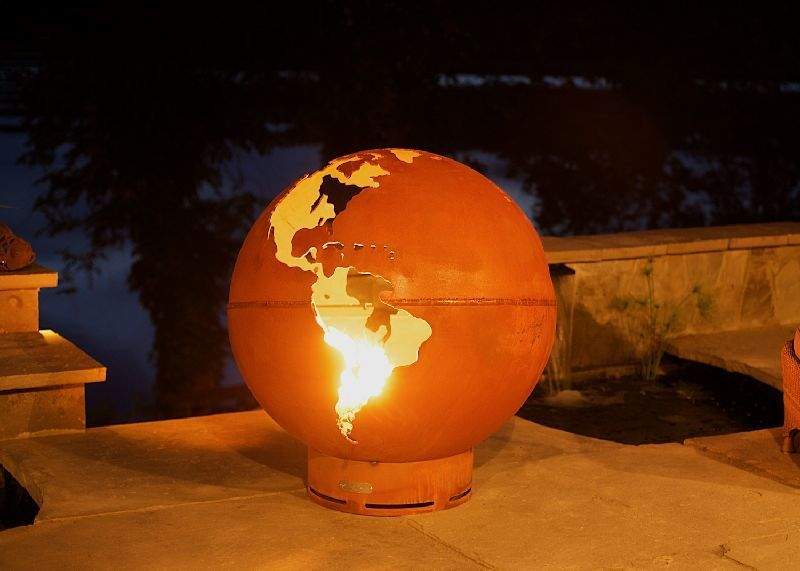
Fire Pit Art Third Rock
The Fire Pit Art Third Rock Gas Fire Pit transforms the enclosure into a globe-inspired sculptural feature. This type of design can become a conversation piece even when the fire is not operating.
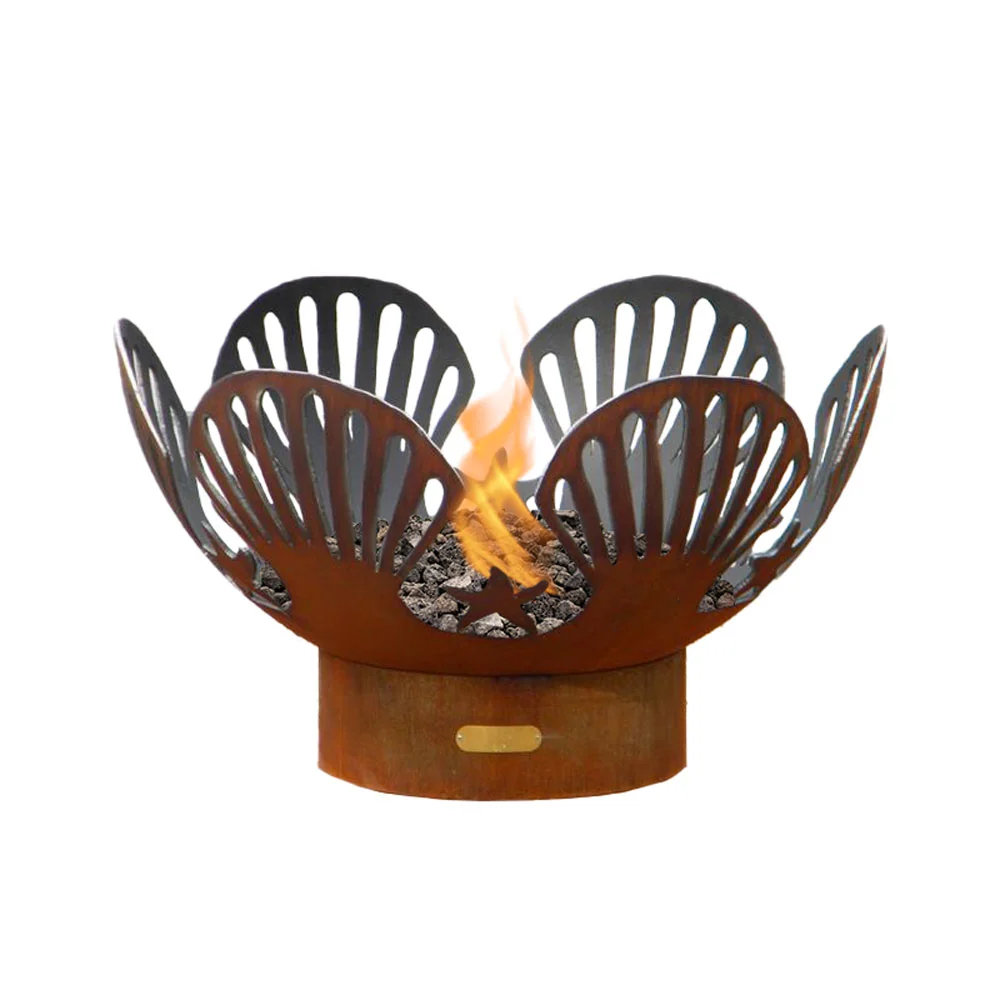
Fire Pit Art Barefoot Beach
The Fire Pit Art Barefoot Beach Gas Fire Pit takes a more coastal approach, making it especially relevant for beach homes, vacation properties, and outdoor spaces built around a relaxed coastal theme.
Artistic fire pits are best when the surrounding landscape gives them enough visual room. Too many competing patterns or decorative elements can make a statement fire feature feel cluttered rather than intentional.
4. Fire Towers and Vertical Fire Features
Traditional fire pits keep the flame relatively low to the ground. A fire tower changes the proportions of the entire feature by adding height and vertical presence.
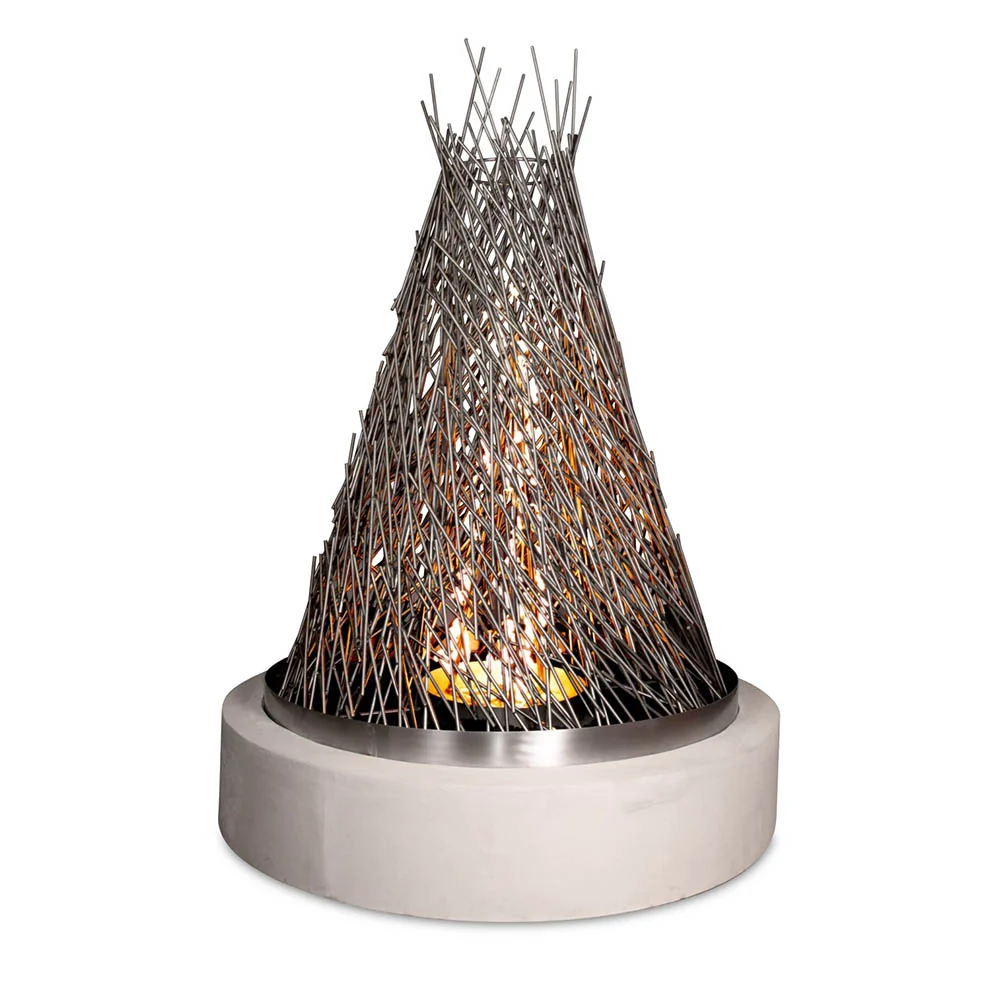
The Outdoor Plus Haystack concrete gas fire tower is a good example. Rather than behaving like a conventional conversation pit, the tall round form can work as a sculptural accent near an entryway, within a larger landscape, or as part of a coordinated series of fire features.
Vertical fire features can be particularly effective where floor space is limited but the design still needs a strong visual anchor.
Because the dimensions and flame location differ from a conventional fire pit, always follow the manufacturer's placement and clearance requirements for the specific model.
5. Unexpected Fire Pit Shapes
Round, square, and rectangular fire pits remain popular because they work with many layouts, but unusual geometry can help solve design problems and make a space feel more customized.
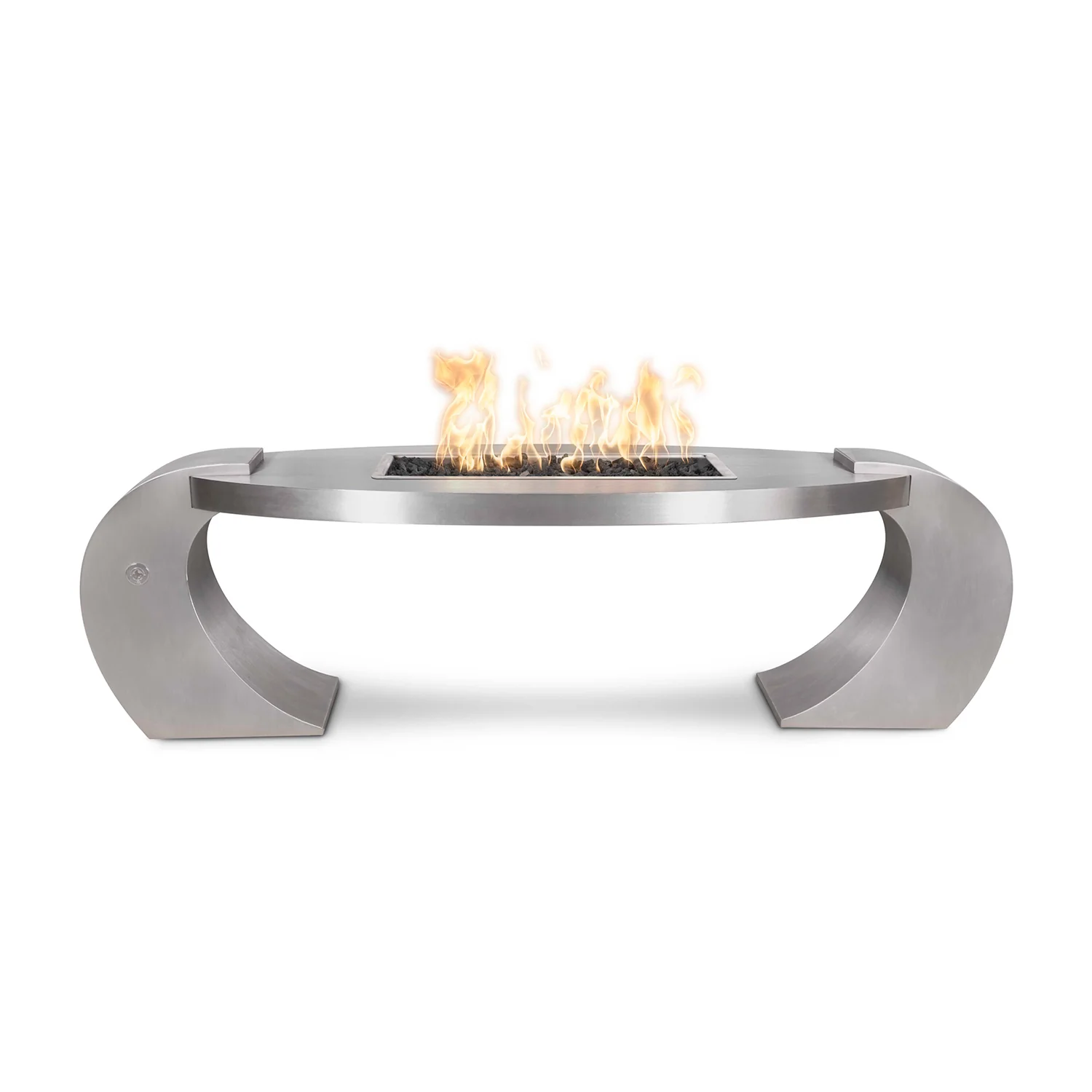
Top Fires Vernon Oval Fire Pit
The Top Fires Vernon 86 x 24-Inch Oval Stainless Steel Gas Fire Pit combines the elongated proportions of a linear feature with the softer edges of an oval.
An oval works particularly well with curved furniture, long seating arrangements, and outdoor spaces where a traditional rectangle would feel too rigid.
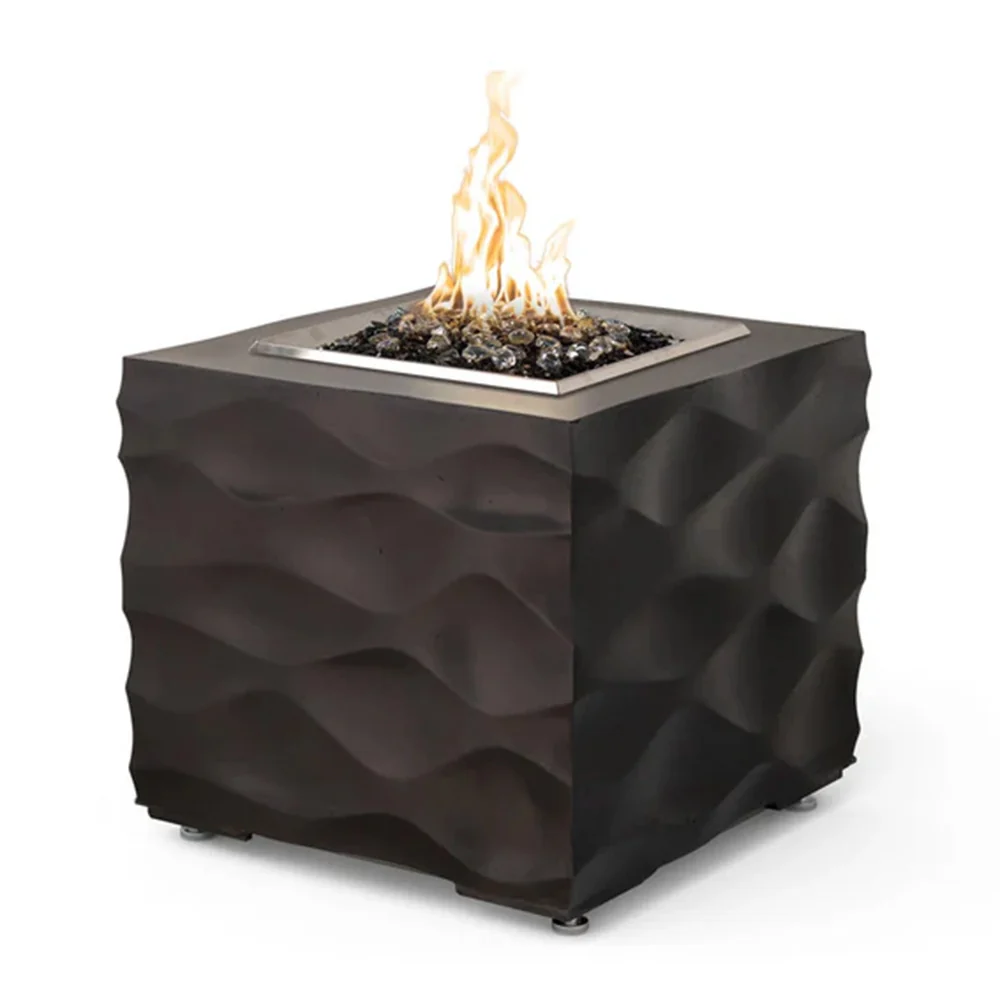
American Fyre Designs Voro Cube
The American Fyre Designs Voro Cube Fire Pit goes in the opposite direction by using a compact square form. Cube-shaped features can work as smaller architectural accents, especially where the enclosure itself is meant to feel like part of the hardscape.
Linear Fire Features
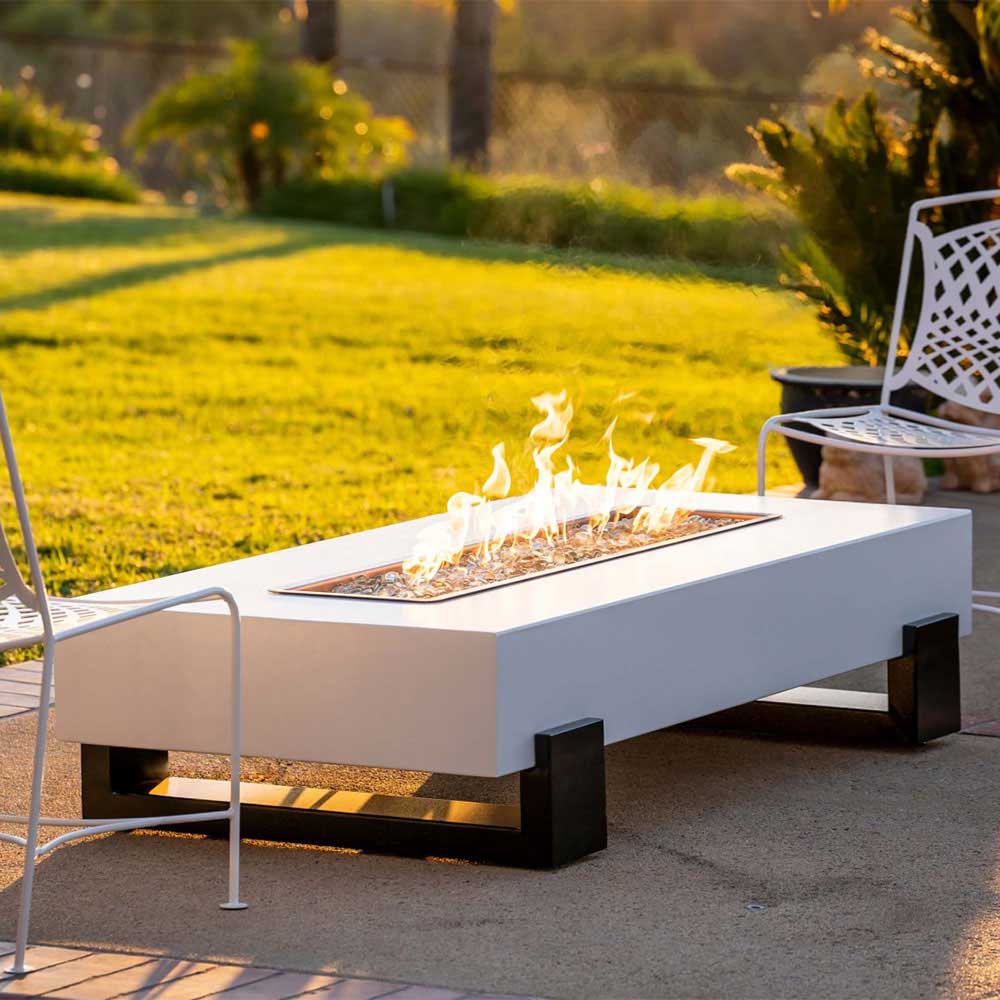
Products such as the Top Fires Alto, Imperial, and Baja (pictured above) designs use long, narrow proportions to create a more architectural flame presentation.
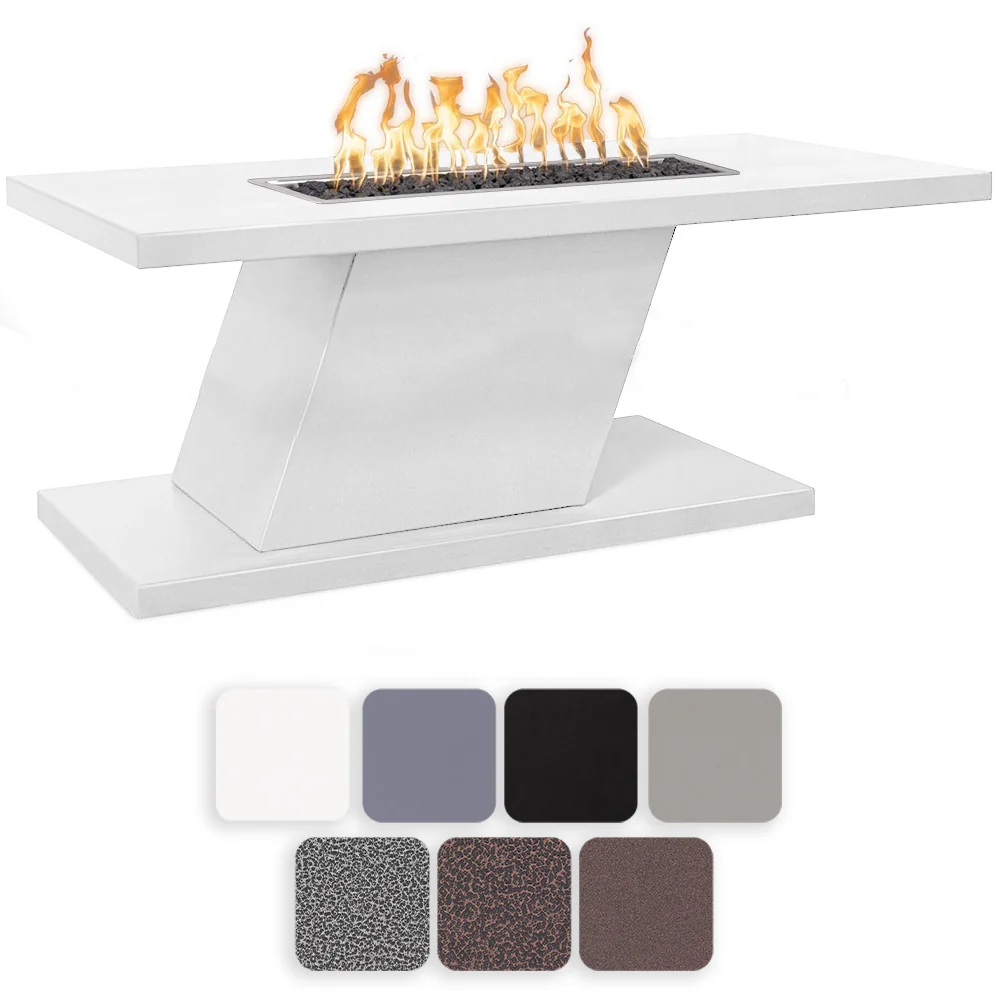
The Top Fires Imperial Linear Gas Fire Pit (pictured above) adds extra height to the linear format, while the Top Fires Alto Linear Gas Fire Pit (pictured below) offers another streamlined option for contemporary spaces.
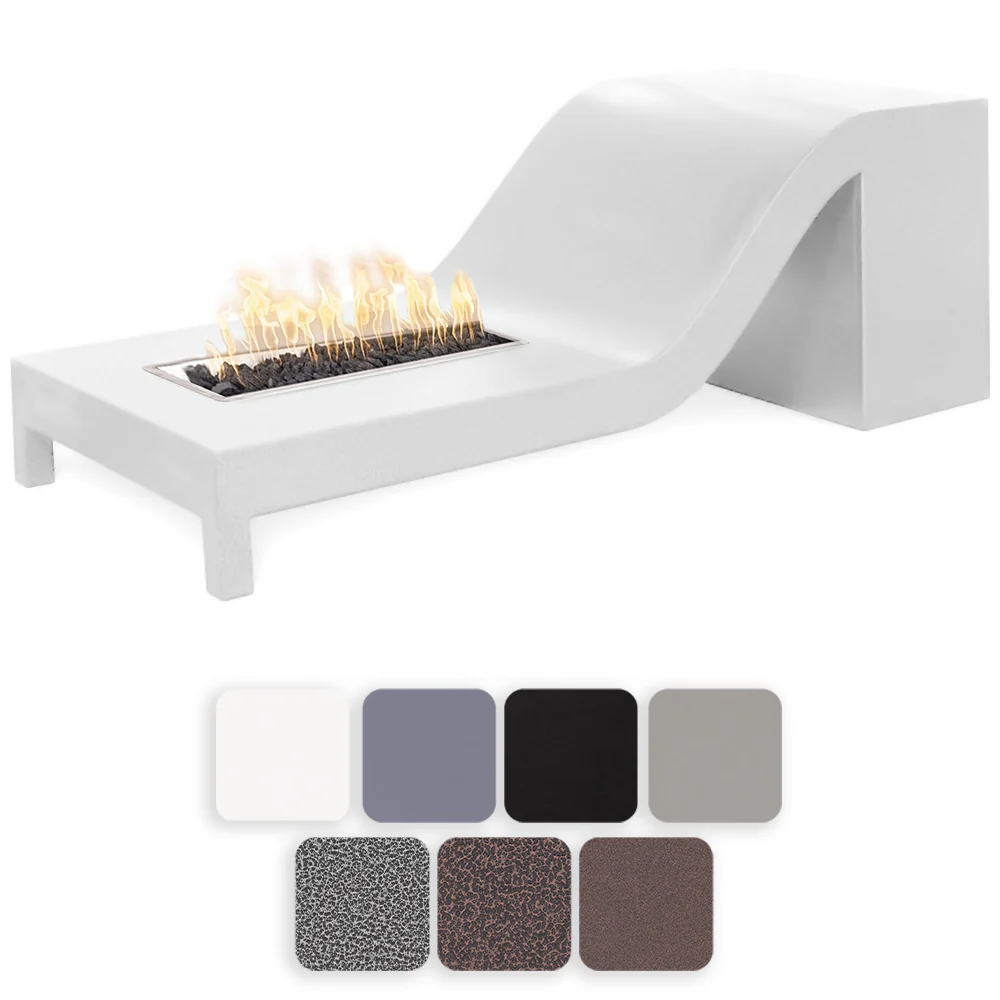
Linear designs are especially effective alongside sofas, long benches, retaining walls, pool edges, and other horizontal architectural elements.
6. Distinctive Materials and Finishes
The shape of a fire feature is only one way to make it unique. Material selection can completely change the finished appearance of an otherwise simple form.
Copper Fire Features
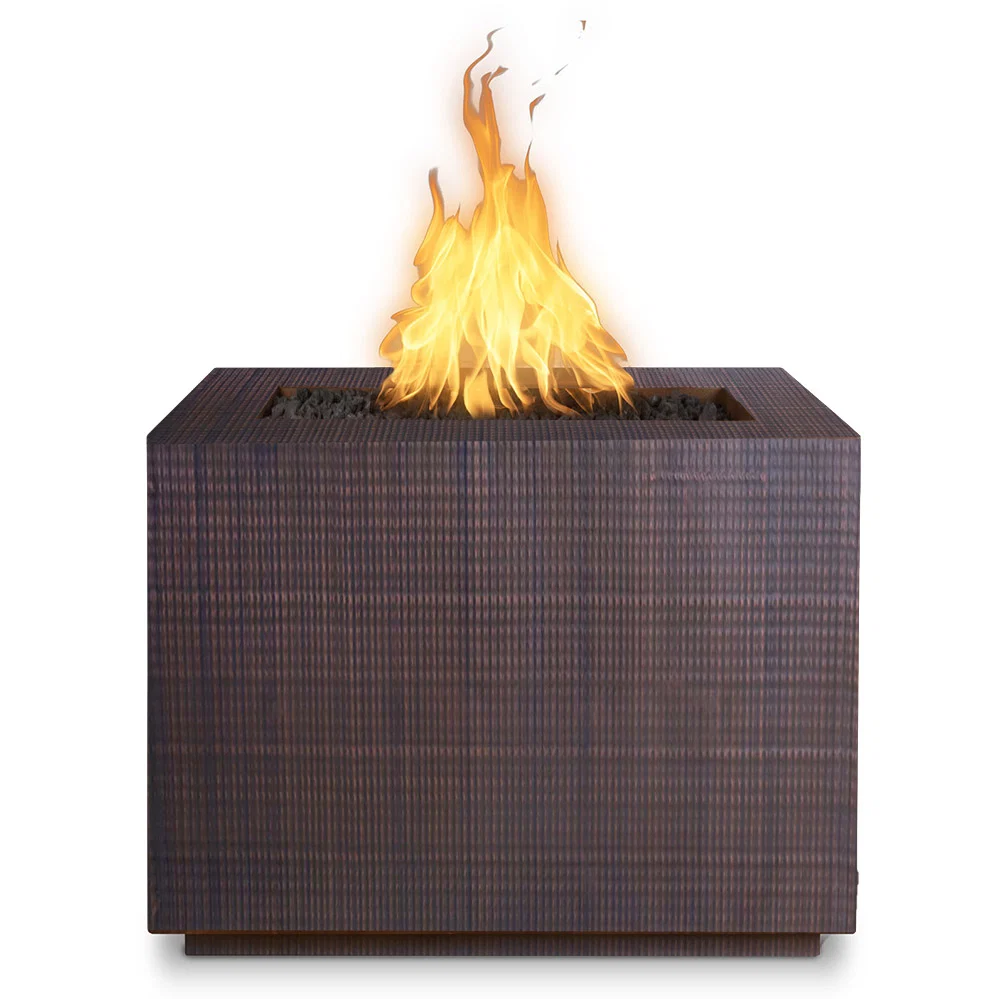
The Top Fires Forma 60 x 60-Inch Square Copper Gas Fire Pit uses its large square proportions and copper construction to create a strong architectural presence.
Copper works particularly well in landscapes that already incorporate natural stone, warm wood tones, weathered metals, or other organic materials.
Wood-Grain Concrete
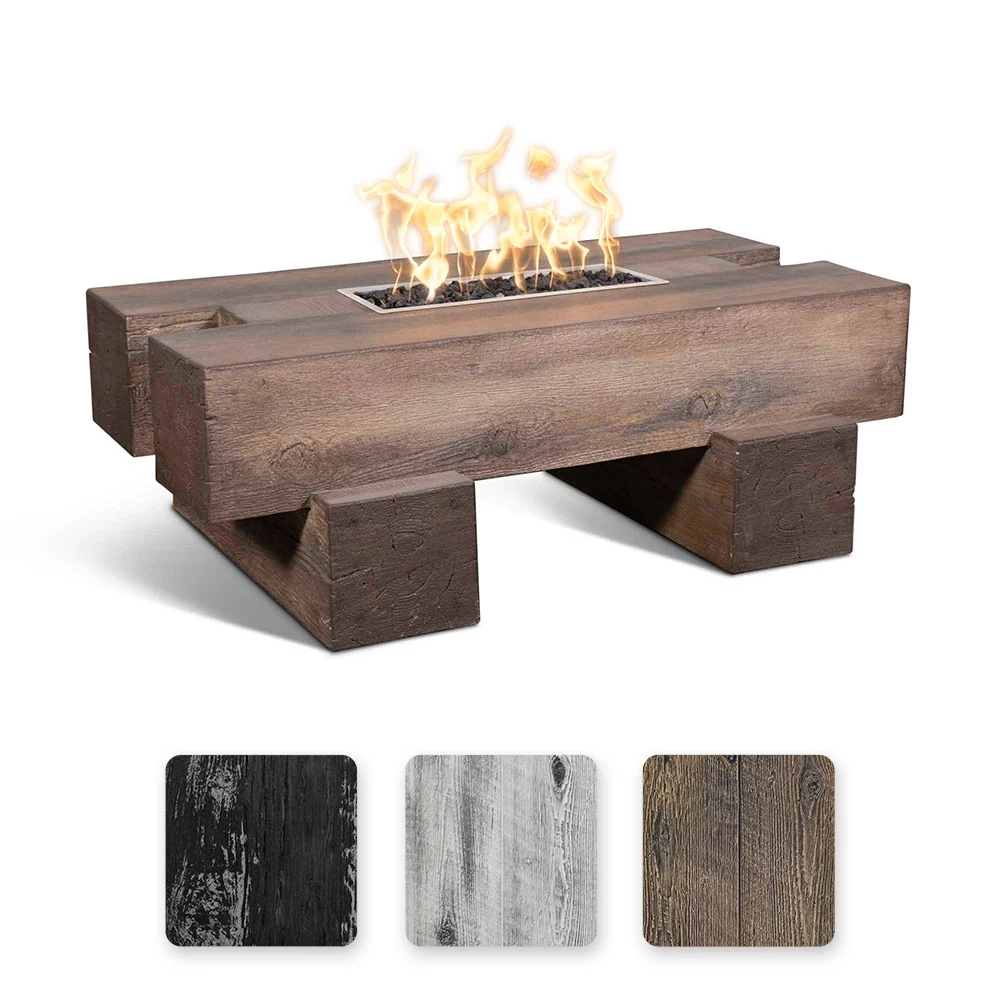
The Top Fires Palo Linear Wood-Grain Concrete Gas Fire Pit combines the durability and form of a concrete fire feature with a finish inspired by natural wood.
This can be a useful option when a project calls for warmer visual texture but the designer does not want the enclosure itself to be made from combustible wood.
High-Contrast Finishes
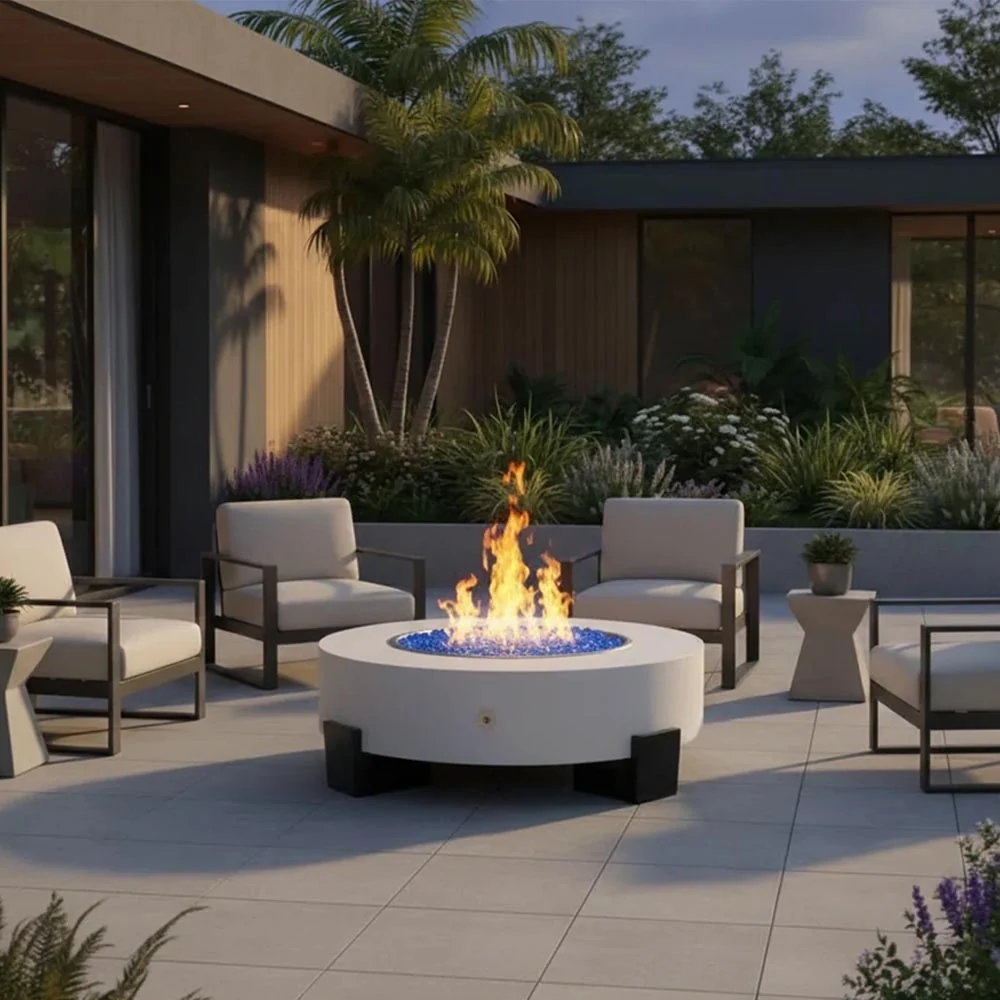
The Outdoor Plus Hollister uses contrasting black-and-white powder-coated steel to make color part of the fire pit's identity. High-contrast finishes can work particularly well in modern patios with a restrained color palette.
7. Fire Tables That Make a Design Statement
A fire table can still be distinctive while serving the practical role of a gathering surface.
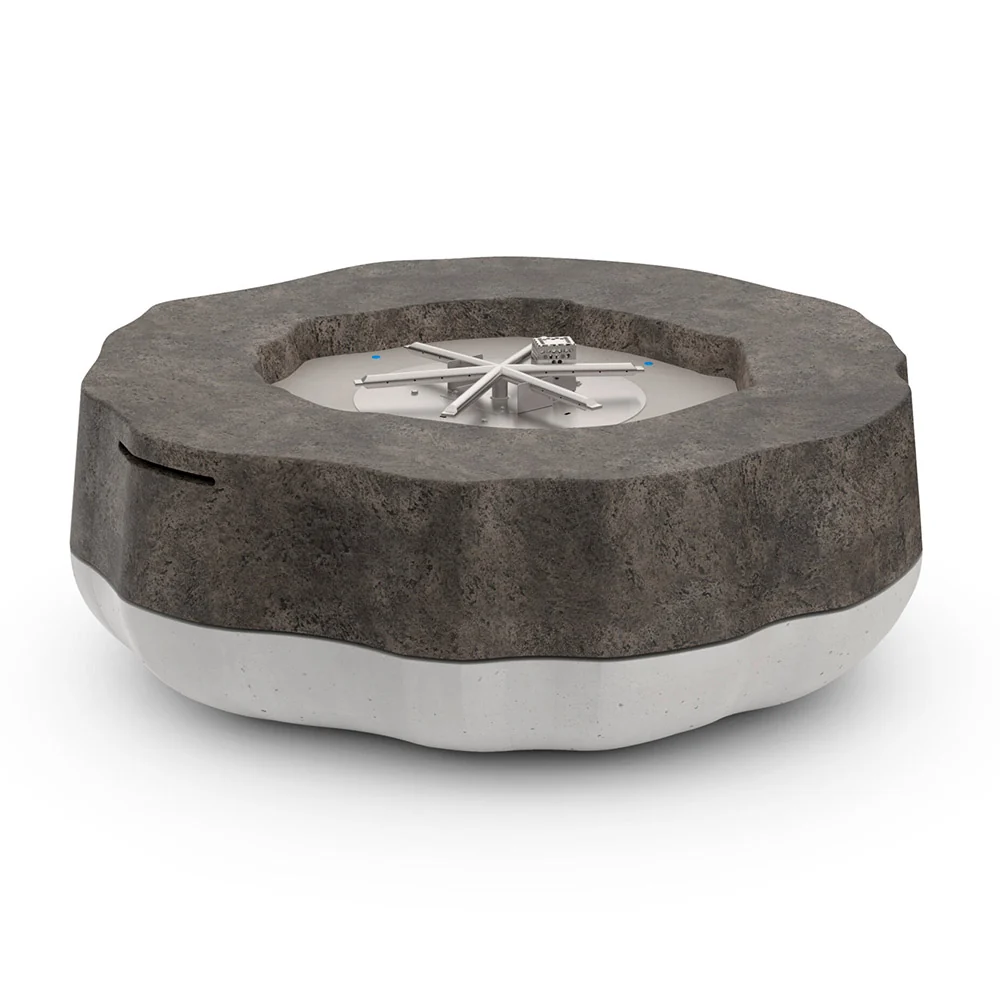
American Fyre Designs Meadow Fire Table
The American Fyre Designs Meadow 48-Inch Round Fire Table combines a round conversation-friendly layout with a more refined furniture-style profile.
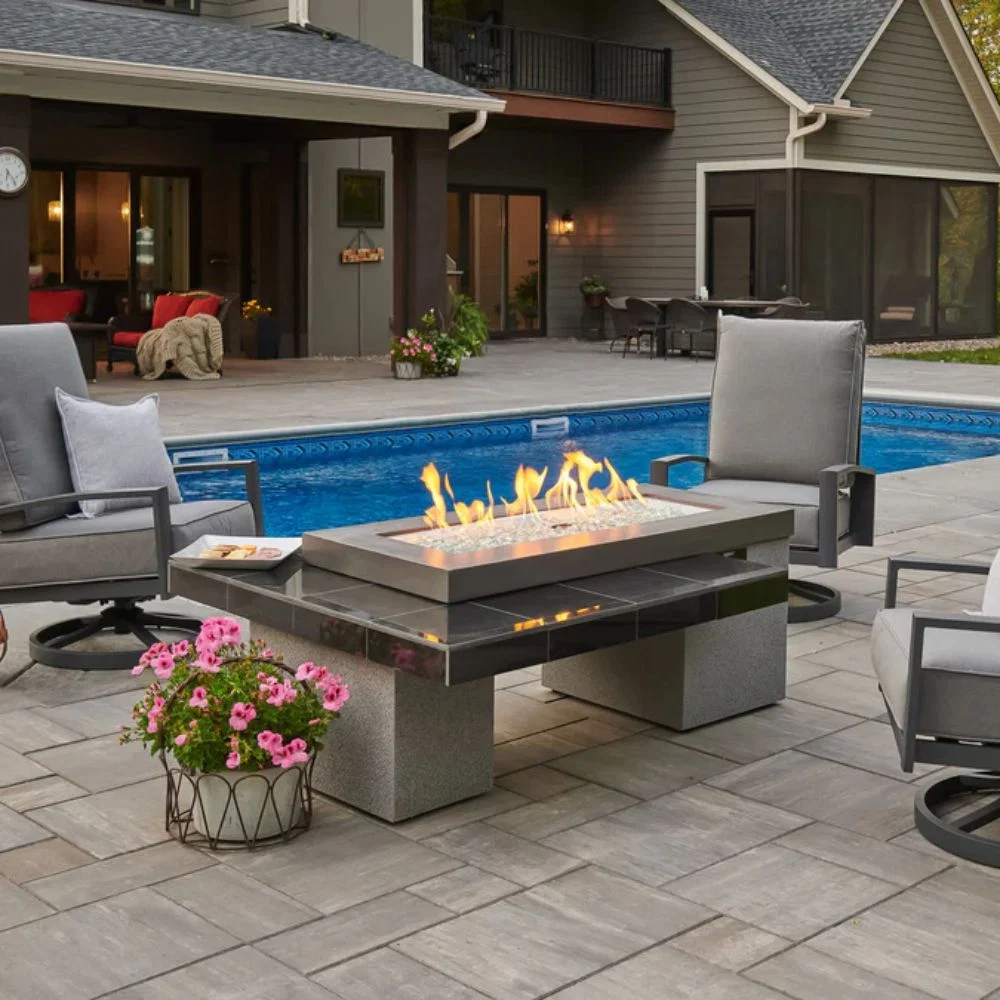
Outdoor GreatRoom Uptown Fire Table
The Outdoor GreatRoom Uptown Fire Table takes a more architectural approach to the fire table category. Its elongated proportions and distinctive finish make it feel more like purpose-built outdoor furniture than a conventional fire pit.
For entertaining spaces, fire tables can be especially useful because the surrounding surface gives guests a place to set drinks or small items while gathering around the flame. Always maintain the clearances and operating conditions specified by the manufacturer.
8. Water Features Can Be Part of the Same Outdoor Design
A unique outdoor focal point does not always need to include flame. Standalone water features can complement nearby fire pits and create another layer of movement and sound within the landscape.
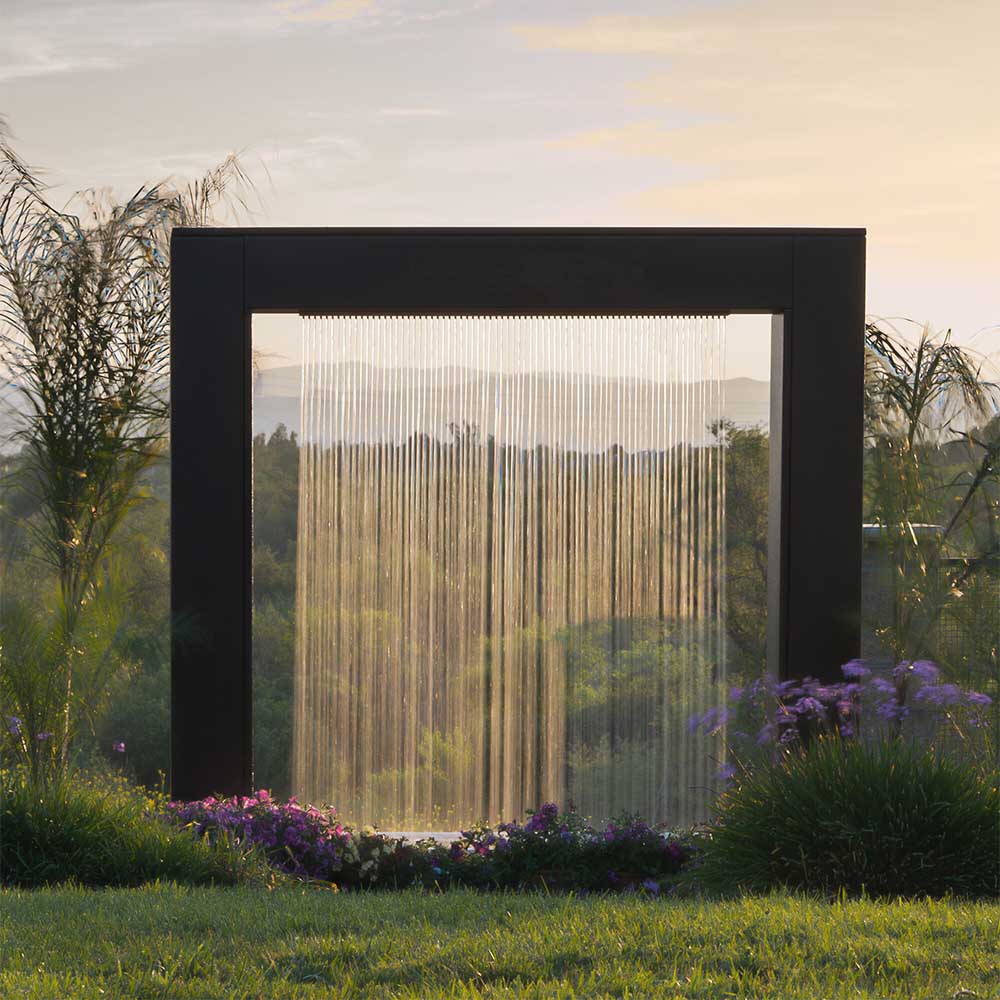
The Outdoor Plus Paradise Falls rain curtain waterfall is a good example. A rain curtain creates a vertical sheet of moving water that can serve as a backdrop, divider, poolside element, or architectural feature.
In larger projects, using fire and water as separate but coordinated design elements can be just as effective as combining them into one product.
Where Unique Fire Features Work Best
Poolside Spaces
Fire bowls, fire and water features, linear pits, and sculptural pieces can reinforce the resort-like character of a pool area. Consider sightlines from both the pool and surrounding seating when choosing placement.
Conversation Areas
Round and square fire features naturally support seating on multiple sides, while long linear designs pair well with sofas and bench seating.
Outdoor Kitchens
A fire feature can help define a separate lounge area near an outdoor kitchen without competing with the cooking zone itself.
Courtyards
Courtyards often benefit from a central sculptural element. Fire bowls, artistic pits, and compact architectural features can provide a strong focal point.
Entryways and Landscape Focal Points
Fire towers and sculptural bowls can work well where the goal is primarily visual impact rather than seating around all sides of the flame.
Hospitality and Commercial Spaces
Hotels, resorts, restaurants, multifamily properties, and other commercial outdoor spaces can use statement fire features to create recognizable gathering areas. Commercial applications should be planned around product certification, controls, clearances, supervision, maintenance, and other project requirements.
How to Choose a Unique Fire Feature
Start With the Purpose
Decide whether the feature is primarily for gathering, warmth, visual ambiance, architectural impact, or a combination of these goals.
A sculptural fire bowl placed at the end of a pool has a very different job from a fire table surrounded by lounge chairs.
Match the Scale of the Space
Large landscapes can support oversized fire bowls and long linear installations that might overpower a smaller patio. Likewise, a compact fire feature can disappear visually in a large open space.
Consider the entire outdoor room, not just the dimensions of the fire pit.
Coordinate With the Architecture
The most successful statement fire features still relate to the home or landscape around them.
Concrete, copper, stainless steel, powder-coated finishes, geometric shapes, and natural textures can all be used to reinforce architectural details already present elsewhere in the project.
Think About Sightlines
Ask where the fire feature will be viewed from most often. That could be the surrounding seating area, inside the home, across a pool, from an outdoor kitchen, or from multiple levels of the property.
A sculptural feature should look intentional from its primary viewing angles.
Consider Seating Layout
Round fire pits encourage gathering from all directions. Linear fire features work naturally with long sofas and benches. Fire towers and decorative bowls may function better as visual accents than central conversation pits.
Plan Fuel and Utilities Early
Built-in gas fire features require the appropriate fuel supply, and electronic ignition or fire-and-water systems can introduce additional electrical or water requirements.
Coordinate utilities before the surrounding hardscape is completed whenever possible, and use qualified professionals for gas connections and other required trade work.
Account for Wind and Weather
Wind can affect flame appearance and operation, particularly in exposed pool decks, rooftops, coastal areas, and large open landscapes.
Follow manufacturer requirements for the specific installation. For compatible gas fire features, a glass wind guard may help reduce flame disturbance from moderate crosswinds.
Follow Manufacturer Clearances
Do not use a universal clearance number for every unique fire feature. Required side, overhead, combustible, and installation clearances vary by product.
Review the owner's or installation manual before finalizing placement.
Use Fire Media to Make the Feature Even More Distinctive
Even a standard enclosure can take on a very different appearance depending on the fire pit media used with it.
Options may include:
- Reflective fire glass
- Colored fire glass
- Lava rock
- Fire-rated stone media
- Ceramic fire balls
- Decorative gas logs
A contemporary fire feature may look completely different with reflective glass than it does with black lava rock or ceramic spheres.
Always use media approved for the specific burner and follow manufacturer requirements for type, size, depth, and placement.
Do Not Choose a Unique Fire Feature Based on Appearance Alone
An unusual design still needs to work as a complete fire feature.
Before purchasing, verify:
- Overall dimensions
- Burner size and configuration
- Natural gas or propane availability
- Ignition system
- BTU rating
- Required utility connections
- Installation clearances
- Approved surface or installation method
- Fire media requirements
- Drainage
- Weather exposure
- Service access
- Manufacturer maintenance requirements
The most visually impressive fire feature is only a good choice if it also fits the technical and functional requirements of the project.
Looking for Something Even More Unique? Ask About Custom Fire Features
Sometimes the right fire feature does not already exist in a standard size, material, or configuration.
Firepits Direct can help customers, contractors, designers, landscape professionals, and other project teams explore custom fire feature options when an off-the-shelf product does not fit the space or design.
A custom project may allow you to explore requirements such as:
- Custom dimensions
- Unusual shapes
- Specialty materials or finishes
- Specific burner configurations
- Large-scale commercial designs
- Architectural integration
- Fire and water concepts
- Unique control or ignition requirements
The earlier custom requirements are identified, the easier it is to coordinate the burner, fuel supply, utilities, enclosure, controls, and surrounding construction.
If you have a fire feature concept you cannot find in our catalog, contact our sales experts. Our team can help you explore available products, custom options, and compatible components for your project.
Frequently Asked Questions About Unique Fire Features
What Is a Fire Feature?
A fire feature is an outdoor or indoor design element that incorporates controlled flame. Fire pits, fire tables, fire bowls, fireplaces, fire towers, fire and water bowls, and sculptural gas features can all fall within the broader fire feature category.
What Are Some Alternatives to a Traditional Fire Pit?
Alternatives include fire bowls, linear fire features, fire towers, sculptural fire pits, fire tables, fire and water features, artistic fire pits, and custom-built installations.
Can You Put a Fire Feature Near a Pool?
Many fire features are designed for poolside and landscape applications, but placement must follow the manufacturer's installation requirements and applicable local codes. Fuel, electrical service, water, drainage, clearances, and pool construction may all need to be coordinated by qualified professionals.
Are Unique Fire Features Available in Natural Gas and Propane?
Many specialty fire features are offered in natural gas, propane, or multiple fuel configurations, but availability varies by product. Confirm the fuel configuration before ordering and only use manufacturer-approved conversion components when conversion is permitted.
What Type of Fire Feature Is Best for Entertaining?
Fire tables and conversation-height fire pits are particularly useful for entertaining because they encourage guests to gather around the flame. Linear fire features can work well with long sofas and benches, while round designs support seating from multiple sides.
How Do I Choose the Right Size Fire Feature?
Consider the total dimensions of the outdoor space, surrounding seating, walking areas, required clearances, viewing distance, and the visual scale of nearby architecture. The fire feature should feel proportional without making the space difficult to use.
Can Firepits Direct Help With a Custom Fire Feature?
Yes. If a standard product does not fit the size, style, material, or configuration required for your project, contact the Firepits Direct sales team to discuss available custom fire feature options and compatible components.
Final Thoughts
A unique fire feature can do much more than provide flame. It can define a seating area, reinforce the architecture, create a poolside focal point, introduce sculpture into the landscape, or combine fire and water into one dramatic installation.
The best designs balance creativity with practical planning. Consider the feature's purpose, scale, shape, materials, seating arrangement, utilities, wind exposure, clearances, and manufacturer requirements before making the final selection.
If you need help choosing the right product, planning your project, exploring custom fire feature options, or finding compatible components, contact our product specialists for expert guidance.