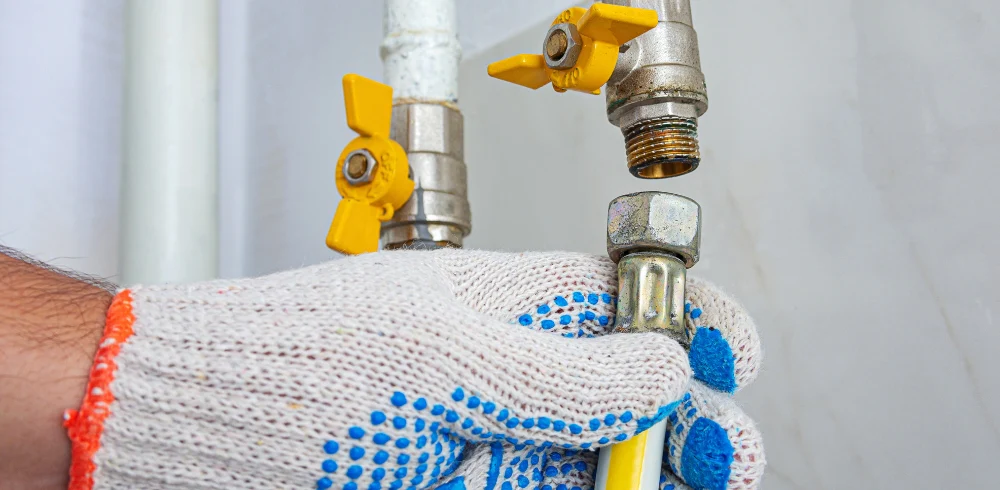
This gas fire pit plumbing glossary explains common terms used for burners, valves, fuel types, ignition systems, fittings, ventilation, and installation components. Use it as a quick reference while planning a gas fire pit project or comparing parts, but always follow manufacturer instructions and local code requirements.
Gas fire pit projects involve a lot of specialized terminology. Whether you're shopping for gas fire pit components, comparing burners, or trying to understand your installation manual, this glossary can help clarify the most common fire pit terms.
Most Common Fire Pit Terms
If you're new to gas fire pits, these are some of the most commonly referenced components and terms:
- Burner – The component that distributes gas and creates the flame.
- Burner Pan – Supports the burner and fire media inside the fire pit.
- Fire Glass – Decorative tempered glass used as fire media.
- Key Valve – A manual valve used to control gas flow.
- Electronic Ignition – An automated ignition system with built-in flame monitoring and safety features.
- Ventilation – Openings that provide airflow and prevent heat or gas buildup inside the enclosure.
- Thermocouple – A safety sensor that shuts off gas if the flame goes out.
- Regulator – Controls gas pressure before it reaches the appliance.
A B C E F G H I K L M N O P Q R S T V W
A
Air Mixer – Commonly used in propane gas appliances, an air mixer helps draw oxygen into the gas stream before combustion. Propane requires more air for clean combustion than natural gas, so an air mixer helps improve flame quality and reduce soot buildup. See also: Orifice, Propane Air Mixer, Venturi.
Air Shutter – An adjustable opening that controls how much air mixes with gas before combustion. Air shutters are more common on certain gas appliances and burner assemblies where flame quality needs to be adjusted.
Appliance Connector – An approved flexible connector used to connect a gas appliance to a gas supply line. Appliance connectors should be properly sized, rated for the fuel type, and installed according to local codes and manufacturer instructions. See also: Flexible Gas Line.
B
Ball Valve – A shut-off valve that uses a rotating ball to open or close gas flow. Ball valves are commonly used as manual gas shut-off valves in fire pit systems. See also: Key Valve, Shut-Off Valve.
BTU – Acronym for British Thermal Unit. It refers to the amount of energy needed to raise the temperature of one pound of water by one degree Fahrenheit. In gas fire pits, BTU is commonly used to describe the maximum heat output of a burner or appliance.
Burner – The component that distributes gas and creates the flame pattern in a fire pit. Gas fire pit burners come in many shapes, including round, square, rectangular, linear, H-style, and specialty designs.
Burner Cover – A protective cover placed over the burner area when the fire pit is not in use. Burner covers help protect burners, pans, and fire media from rain, debris, and outdoor exposure.
Burner Pan – A pan that supports the burner and fire media while helping create a cleaner, more finished installation. In propane fire pits, a burner pan can also help separate the air mixer from the burner area to support proper combustion. Burner pans are often used with fire glass, lava rock, or other approved media.
Burner Ring – A circular or shaped metal burner with drilled ports that distributes gas to create flames. Burner rings are commonly used in round fire pits and fire bowls.
C
CSA Certification – A safety certification issued by CSA Group. CSA-certified products have been tested to applicable safety standards and may be required for certain gas appliance installations.
Conversion Kit (NG/LP) – A set of components used to convert a compatible appliance from natural gas to propane or from propane to natural gas. Conversion should only be performed when the appliance is approved for conversion and should follow the manufacturer's instructions.
Cross Ventilation – Ventilation created by placing vents on opposite sides of a fire pit enclosure. Cross ventilation helps promote airflow, prevent heat buildup, and reduce the risk of gas accumulation inside the enclosure. See also: Ventilation.
E
Electronic Ignition – An ignition system that uses electronic controls to light the fire pit and monitor flame safety. Electronic ignition kits are often used for higher-end residential and commercial fire pit installations because they can offer push-button, remote, timer, or automation-compatible operation.
Enclosure – The outer structure of a fire pit. Enclosures are commonly made from paver blocks, stone, concrete, masonry, or other non-combustible materials. The enclosure houses the burner system, gas components, and ventilation openings.
F
Fire Glass – A type of fire media made from tempered glass designed for use in approved gas fire pits and fireplaces. Fire glass comes in many colors, shapes, and reflective finishes. Always confirm your appliance is rated for use with fire glass.
Fire Media – Decorative and functional material placed over or around a burner. Fire pit media can include fire glass, lava rock, ceramic logs, ceramic river stones, and other approved materials.
Fire Ring – Another name for a burner ring. Fire rings are commonly round burners used in circular fire pits and fire bowls.
Flame Failure Device – A safety system that shuts off gas flow if the flame goes out. Flame failure protection may involve a thermocouple, flame sensor, or electronic ignition control system.
Flame Sensor – A safety component that detects whether a flame is present. If no flame is detected, the system can shut off gas flow to help prevent unsafe gas release.
Flange – A decorative trim piece installed around a key valve opening. The flange creates a finished appearance and allows access to the valve key. See also: Key Valve, Flange Extension.
Flange Extension – An extension used when a key valve is located deeper inside a fire pit enclosure. A flange extension allows the decorative flange and key access point to reach the outside wall of the fire pit.
Flexible Gas Line – An approved flexible gas connector used to connect gas components or appliances. Flexible gas lines can make installation easier, but they must be properly rated, sized, and installed according to code. Shop compatible flex lines.
G
Gas Line – A pipe or approved connector that carries natural gas or propane to an appliance. Gas lines may be rigid or flexible and must be properly sized for the appliance's BTU demand and distance from the gas source.
Gas Logs – Ceramic or refractory logs used to create a realistic wood-burning appearance in gas fireplaces or some gas fire pits. Gas logs should only be used in appliances rated for that media type.
Gas Pressure Test – A test used to confirm gas pressure is within the required range for the appliance. Gas pressure testing should be performed by a qualified professional using the proper equipment.
Gas Regulator – A device that reduces and controls gas pressure before it enters the appliance. Regulators are commonly used with propane systems and may also be required in certain natural gas applications.
Gas Source – The source of fuel for the appliance, such as a natural gas line, large stationary propane tank, or portable propane cylinder.
Gas Supply – The available fuel capacity feeding the appliance. Gas supply depends on fuel type, pressure, line size, distance from the source, and total BTU demand from connected appliances.
H
Hard Pipe – Rigid gas piping, often made from black iron, galvanized steel where allowed, or other approved materials. Hard pipe is commonly used for permanent gas line installations and should be installed by a licensed professional.
High/Low Ignition – An ignition system that allows flame height adjustment between high and low settings. High/low systems are often used in premium fire pit installations where convenience and flame control are priorities.
I
Ignition System – The method used to light a gas fire pit. Common ignition systems include match-lit ignition, push-button spark ignition, flame-sensing systems, and electronic ignition systems.
Inside Dimension – The interior opening of a fire pit enclosure where the burner pan, burner, or insert will sit. Inside dimensions are important when choosing the correct size burner or pan.
Installation Collar – A support component used to hold a burner pan or insert in place inside a fire pit enclosure. Installation collars may be rigid or adjustable depending on the product design.
K
Key Valve – A manual gas valve operated with a removable key. Key valves are commonly mounted through the side of a fire pit enclosure and allow users to turn gas flow on and off.
L
Lava Rock – A natural porous volcanic rock used as fire media in approved gas fire pits and fireplaces. Lava rock helps cover burner components and creates a natural look. Do not use ordinary rocks, which may contain moisture and can crack or pop when heated.
Liquid Propane (LP) – Propane fuel stored as a liquid under pressure in a tank. LP is common in rural areas or installations where natural gas service is not available. See also: Propane.
Local Codes – Local building, fuel gas, fire safety, and zoning regulations that govern gas appliance installation. Always follow local codes and consult qualified professionals when installing a gas fire pit.
LP Conversion – The process of converting a compatible gas appliance from natural gas to liquid propane. LP conversion typically requires approved conversion components and should only be performed according to manufacturer instructions.
M
Manifold – A gas distribution component that directs fuel to one or more burner sections. In some fire pit systems, the manifold helps distribute gas evenly to multiple burner outlets.
Match-Lit Ignition – A simple ignition method where the gas is turned on manually and lit with a long lighter or match. Match-lit systems are straightforward and reliable but do not provide the same automated safety features as electronic ignition systems.
Media – Decorative or functional material placed over or around a fire pit burner. See also: Fire Media, Fire Glass, Lava Rock.
Millivolt System – A control system that uses a small electrical current generated by a heated thermopile or thermocouple to operate a gas valve. Millivolt systems are common in some gas fireplaces and gas appliances.
N
Natural Gas (NG) – A fuel gas made primarily of methane and commonly supplied through municipal gas service. Natural gas fire pits are popular for permanent outdoor installations because they do not require tank refills.
Nipple – A short threaded pipe fitting used to connect two gas plumbing components. Nipples come in various lengths, diameters, and thread types.
O
Orifice – A precisely sized opening that controls the flow of gas into a burner or pilot assembly. Orifice size must match the appliance, fuel type, and required input rating. In propane fire pits, the orifice may be part of an air mixer or venturi assembly. See also: Air Mixer, Venturi.
Oxygen Depletion Sensor (ODS) – A safety feature used in some indoor or vent-free gas appliances that shuts off gas flow if oxygen levels drop too low. ODS systems are not typically a primary consideration for outdoor fire pits but may appear in broader gas appliance terminology.
P
Pilot Assembly – A group of components that creates and monitors the pilot flame in certain gas appliances. A pilot assembly may include a pilot burner, igniter, thermocouple, thermopile, or flame sensor depending on the system.
Pilot Light – A small flame used to ignite the main burner when gas is turned on. Some systems use a standing pilot, while others use an intermittent pilot that lights only when the appliance is activated.
Pressure – The force of gas in the line, typically measured in inches of water column (WC) or PSI. Proper gas pressure is essential for safe operation and correct flame performance.
Propane – A common fuel for outdoor fire pits, especially where natural gas is unavailable. Propane fire pits may use portable tanks or permanent propane supply systems.
Propane Air Mixer – A component that mixes air with propane before combustion. Propane requires more oxygen than natural gas, so an air mixer helps create cleaner combustion and reduce soot. See also: Air Mixer, Venturi.
PSI – Pounds per square inch. PSI is a pressure measurement. In many gas appliance specifications, pressure is also listed in inches of water column. One PSI is approximately 27.7 inches of water column.
Q
Quick Disconnect – A fitting that allows a gas connection to be connected or disconnected more easily. Quick disconnects must be rated for gas use and installed according to code and manufacturer instructions.
R
Regulator – A device installed in a gas line to reduce and control pressure before gas reaches the appliance. Regulators are common with propane systems and may be built into or supplied with certain appliances.
S
Sediment Trap – A short capped section of pipe installed near some gas appliances to collect debris or moisture before it reaches the appliance controls. Also called a drip leg in some contexts. Installation requirements vary by code and appliance type.
Shut-Off Valve – A valve that stops gas flow for safety, maintenance, or emergency shutoff. Shut-off valves should be accessible and installed according to applicable code requirements.
Spark Ignition – An ignition system that uses a spark to ignite gas. Spark ignition may be battery powered, push-button operated, or part of a more advanced electronic ignition system.
Street Elbow – A pipe fitting with male threads on one end and female threads on the other, used to change the direction of a gas connection in tight spaces.
T
Thermocouple – A safety sensor that generates a small electrical signal when heated by flame. If the flame goes out, the thermocouple can signal the valve to shut off gas flow.
Thermopile – A sensor made from multiple thermocouples that generates more electrical current than a single thermocouple. Thermopiles are often used in millivolt gas systems.
V
Valve – A device that controls gas flow. Fire pit systems may use ball valves, key valves, millivolt valves, electronic ignition valves, or other gas control valves depending on the system design.
Valve Box – A protective housing that contains gas valves, ignition controls, or other fire pit components. Valve boxes are common in electronic ignition and commercial fire feature installations.
Vent – An opening that allows air movement in or out of a fire pit enclosure. In fire pits, vents below the burner can help provide fresh air, reduce heat buildup, and prevent propane from pooling inside the enclosure.
Ventilation – The overall airflow strategy for a gas fire pit enclosure. Proper ventilation is especially important for propane fire pits because propane is heavier than air and can settle inside an enclosure if it cannot escape.
Venturi – A fitting or passage designed to draw air into the gas stream before combustion. In propane fire pits, a venturi effect helps mix oxygen with propane to support cleaner combustion and reduce soot. See also: Air Mixer, Propane Air Mixer.
W
Water Column (WC) – A unit used to measure gas pressure. It refers to inches of water column, often written as in. WC. One PSI is approximately 27.7 inches of water column. See also: PSI.
Wind Guard – A glass or metal barrier used around the flame area to help protect the flame from wind. Glass wind guards are common accessories for gas fire pits and fire tables.
Need Help Choosing Fire Pit Components?
Understanding gas fire pit terminology is an important first step, but choosing compatible components can still be confusing. Whether you're planning a custom fire pit, selecting a burner, troubleshooting an ignition system, or trying to determine the right gas components for your project, our product specialists are here to help.
From burners and gas fire pit components to electronic ignition systems and fire media, we can help you find the right products for your installation. If you need assistance planning your project or identifying compatible parts, contact our product specialists for expert guidance.