So, you’re looking to build your own DIY gas fire pit but aren’t sure about some of the more technical aspects. Don’t worry. When it comes to gas and custom projects, it’s best to ask the experts before you plan anything.
Quick answer: If you plan to use a 20 lb. propane tank, like the type used for a gas grill, you will need a regulator to connect to that tank. If you’re using natural gas or tapping into a large propane tank, the gas line should be regulated in coordination with your gas plumber because pressure, BTU output, line size, distance, and other connected appliances all affect the setup.
One of the most common questions we get, from DIYers and gas plumbers alike, is whether they need a regulator for their fire pit kit. It’s a tough question to answer because gas projects can vary based on several important factors.
Do I Need a Regulator for My Gas Fire Pit?
| Fuel Source | Need a Regulator? | What to Know |
|---|---|---|
| 20 lb. propane tank | Yes | A standard 20 lb. propane tank will need a regulator to connect to your fire pit kit. |
| Large propane tank | Work with a gas plumber | Large propane systems are often already regulated for household appliances, but your gas plumber needs to confirm the fire pit has sufficient BTU supply. |
| Natural gas line | Depends on the setup | Pressure, line distance, gas line size, and other appliances on the line all affect whether additional regulation is needed. |
| Shared appliance line | Requires evaluation | If the line also supplies a pool heater or another appliance, your gas plumber will need to account for total gas demand. |
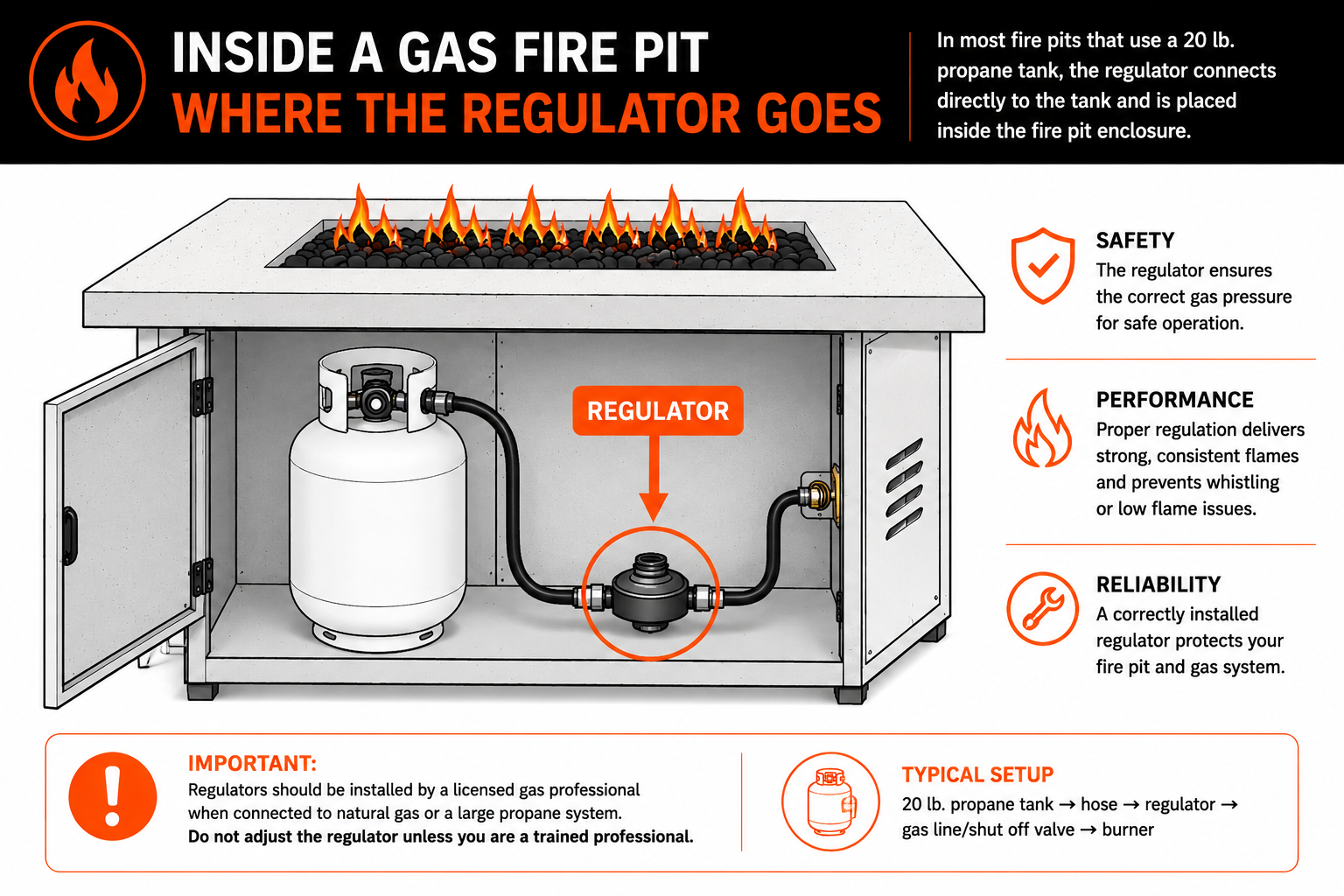
If you’re using natural gas or tapping into a large propane tank, like a 500 gallon tank in a rural area, those gas lines should be regulated in coordination with your gas plumber. We do offer bulk regulators intended for that use, but regulators are not universal. Gas pressure and BTU output will vary based on the distance the gas needs to travel, the gas line size, how many appliances are on the line, and more. That’s why it’s important to work with a gas professional who can account for all the variables required to properly supply your fire pit. Failing to do so can cause performance issues, including an annoying whistling noise.
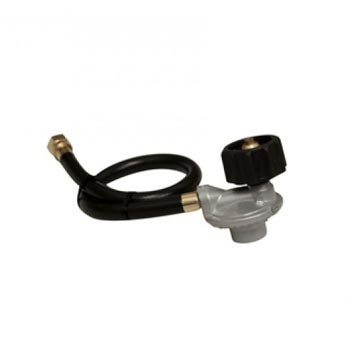
First, What is a Regulator?
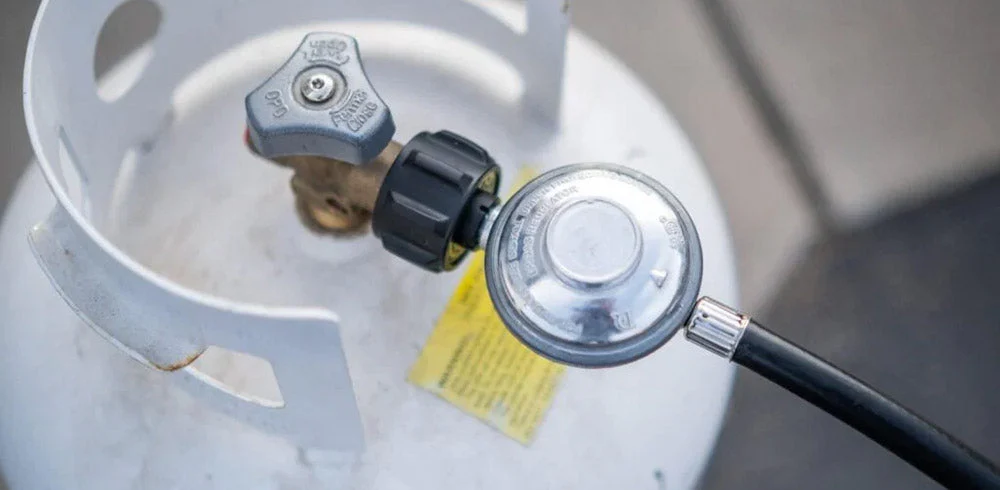
A regulator is a gas component that controls gas pressure. Many of us won’t come across gas regulators often, but they’re present in many of the appliances we use on a day-to-day basis, including a gas stove, water heater, dryer, and more.
How Does a Gas Regulator Work?
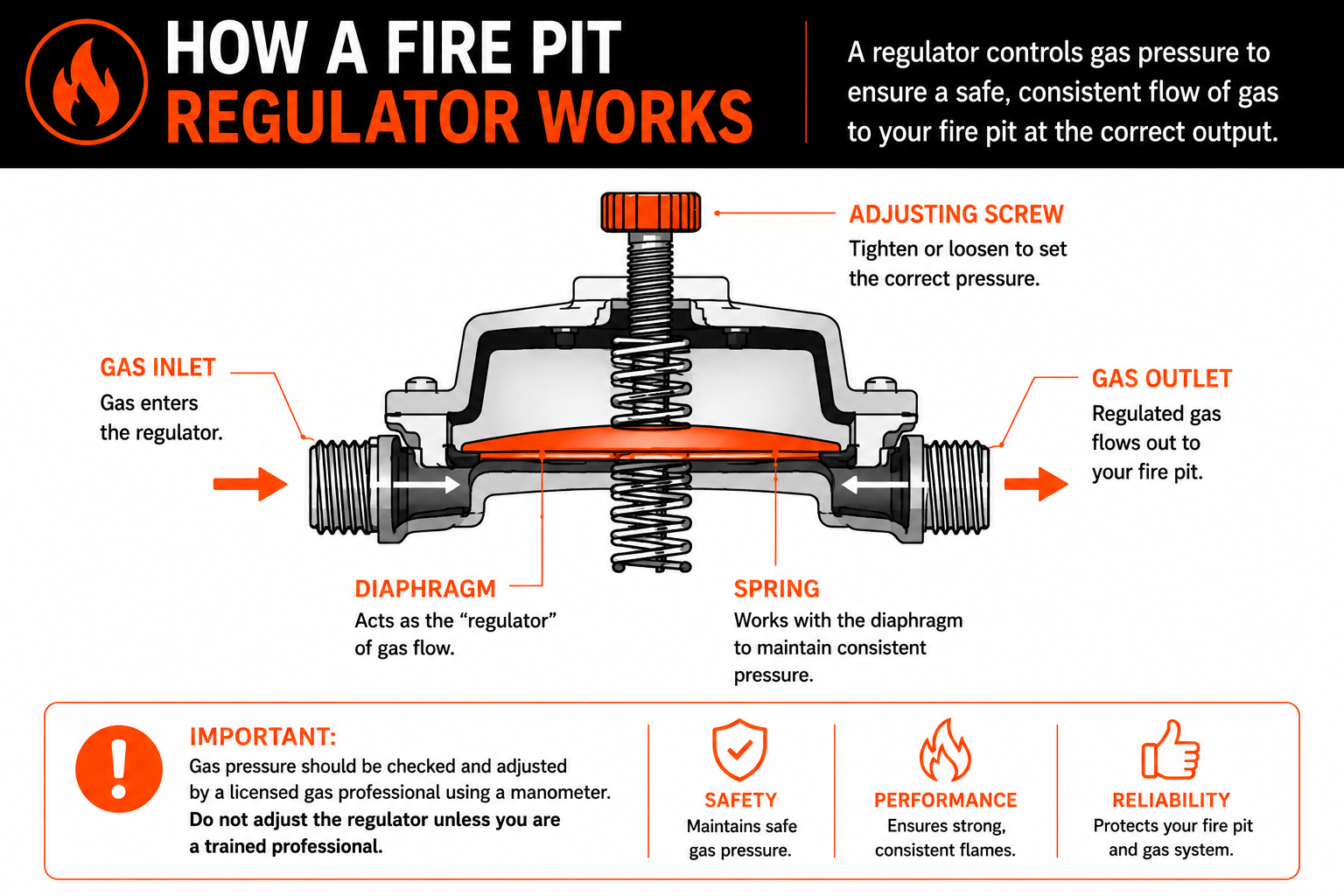
A regulator is a simple device designed with a gas inlet, a diaphragm, and a gas outlet. As gas moves into a standard regulator, it runs into the diaphragm. The diaphragm acts as the “regulator” of gas flow. Many regulators are advertised as adjustable and can be adjusted using the adjusting screw, which can be tightened or loosened to determine how much gas pressure it takes to pass through the diaphragm.
What this means for your project is that a gas plumber will use a manometer, a tool used to measure gas pressure, and work with the adjusting screw to properly regulate the flow of gas. This ensures the output gas pressure is correct for the appliance. Please note, you should not use the adjustment screw unless you are a trained gas professional.
Regulators for Propane
As mentioned above, a common fuel solution for backyard gas fire pits is the standard 20 lb. propane tank, like the type used for a gas grill. These tanks can provide up to about 125,000 BTU, so it’s important to make sure you select a properly sized burner ring if using this type of tank.
For larger propane tanks, most often found in rural areas, you will need the gas line running to your fire pit regulated properly. However, that gas line may also fuel your home, so it may already be regulated for common household appliances, typically between 8" and 11" Water Column, almost 1/2 PSI. This is what our fire pit kits call for, so the key thing your gas plumber needs to confirm is that you have sufficient BTU to supply your fire pit.
Regulators for Natural Gas
Most urban and suburban areas are on the city’s natural gas lines, so natural gas is the most common fuel type for built-in units. Depending on how large your home is and how many appliances you need to supply, your gas source, the meter on the side of your home, could be regulated anywhere from 3.5" Water Column on up, but most commonly it’s about 7".
If you have a gas line run to your fire pit, it probably will need to be regulated in order to properly supply the appliance. However, how it gets regulated will be up to your gas plumber to determine. If your fire pit is located just 10 feet away from the meter, it might not need to be regulated. But if the gas line is supplying a pool heater or another appliance, or if it’s traveling a long distance, your gas plumber will need to regulate the gas line accordingly.
How to Troubleshoot My Gas Regulator
Issues with outdoor gas fire pits often trace back to the gas regulator. If the regulator is faulty or incorrectly installed, it can lead to problems like weak flames or high-pitched whistling noises during operation.
Low Flame Height on My Gas Fire Pit
If your gas fire pit has a low flame, the most common issue is insufficient gas pressure. Fire pits need higher pressure than BBQ grills to produce large, warming flames. If you’re using propane, check the regulator. Many people mistakenly use a low-pressure grill regulator. Swap it for a high-pressure regulator made for fire pits to fix the problem.
For natural gas fire pits, the issue might be in the gas line setup. If the fire pit is installed downstream of a low-pressure regulator meant for a grill, it won’t receive enough pressure. A gas installer should check that the fire pit gets 3.5" to 7" WC to ensure proper flame height.
Whistling Sound From My Gas Fire Pit
If your gas fire pit is making a whistling noise, first check the flex hose. A standard hose can cause this sound, while a whistle-free hose is designed to prevent it. Look for a hose with alternating rib sizes, tight rings mixed with wider ones, which disrupt sound resonance.
If the hose isn’t the problem, the gas regulator might be. High gas pressure can also lead to whistling. For natural gas, the pressure should be between 3.5" and 7" WC; for propane, between 7" and 11" WC. A licensed gas professional can test and adjust it if needed.
For more information on how to fix the whistling noise coming from your gas fire pit, check out this article.
Should I Have My Gas Regulator Professionally Installed?
Yes. Installing a gas regulator might seem like a simple task, but when working with natural gas or a whole-house propane system, it’s essential to hire a licensed professional. Natural gas is especially dangerous because it’s connected to an unlimited supply. Any leak can cause gas to accumulate in your home or around your property, creating a serious risk of fire, explosion, or health hazards. Improper connections can put not only your household in danger but also your neighbors.
Propane systems carry similar risks, especially when connected to large residential tanks. In these cases, a licensed gas installer should always handle the connections to ensure safety and compliance with local codes. The only exception is when you're using a small 20 lb. propane tank; it's typically safe to connect the regulator yourself. Still, your fire pit must be placed outdoors with proper ventilation to prevent gas buildup and ensure safe operation.
Why Don’t We Include Regulators with Many of Our Fire Pit Kits?
The short answer is that nearly every gas project is unique in its challenges in determining gas supply, so it’s best to partner with a gas plumber who can help you figure out what works best for your project.
We certainly have regulators and are glad to assist with any questions that you or your gas installer have as you move forward with your project.
Gas Fire Pit Regulator FAQs
Do I need a regulator for a propane fire pit?
Yes, if you are using a standard 20 lb. propane tank, you will need a regulator to connect the tank to your fire pit. For larger propane systems, work with a gas plumber to confirm pressure and BTU supply.
Can I use a grill regulator on a gas fire pit?
Many low flame issues happen when a low-pressure grill regulator is used on a fire pit. Fire pits need higher pressure than BBQ grills to produce large, warming flames, so use a regulator made for fire pit applications.
Why is my gas fire pit flame low?
A low flame is often caused by insufficient gas pressure. For propane setups, check the regulator. For natural gas setups, have a gas installer confirm the fire pit is receiving the correct pressure and enough BTU supply.
What causes a gas fire pit to whistle?
A whistling sound can come from the flex hose or from high gas pressure. A whistle-free hose can help if the hose is the issue. If pressure is the problem, a licensed gas professional can test and adjust the setup.
Do fire pit kits come with regulators?
Many fire pit kits do not include regulators because gas supply needs vary from project to project. Fuel type, line distance, line size, total BTU demand, and other connected appliances can all affect the regulator needed.
Final Thoughts
Choosing the right regulator for your gas fire pit depends on your fuel source, gas pressure, BTU needs, gas line size, and overall project setup. For a simple 20 lb. propane tank setup, a regulator is required. For natural gas or large propane systems, work with a licensed gas professional to confirm the right setup for your appliance.\
If you need help choosing the right product, planning your project, or finding compatible components, contact our product specialists for expert guidance.
Ready to Add a Regulator to Your Fire Pit Project?