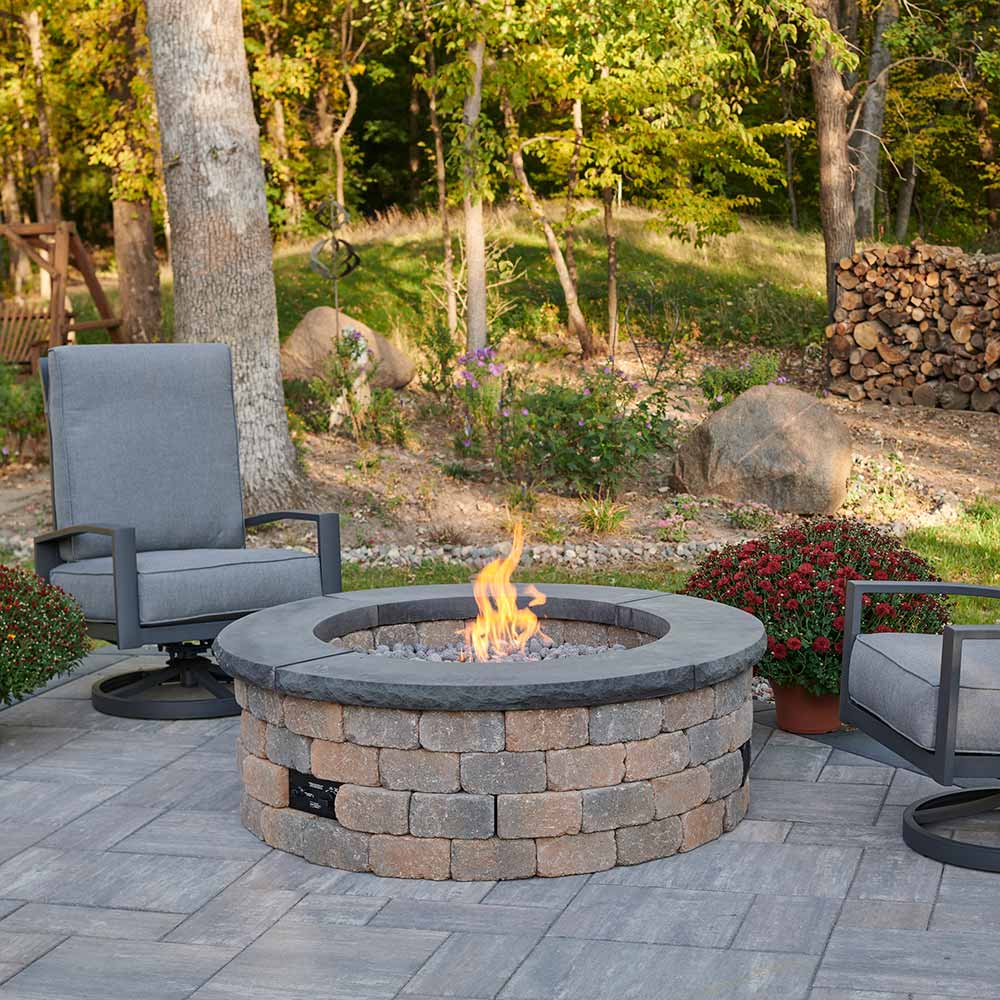
Building a gas fire pit starts with choosing the right gas supply, burner, pan, valve, flex lines, ventilation, and finishing media. Each component plays an important role in how your fire pit performs, how safely it operates, and how easy it is to maintain over time.
In the video above, Adam will walk you through exactly how to build your own gas fire pit. If during this process you have any questions, or if you are unsure about one of the steps outlined above, contact us, and an expert will be happy to assist. After watching the video, check out the list of things to consider when building your own gas fire pit that we have outlined below.
We offer a selection of pre-selected gas fire pits that can seriously simplify your shopping and installation process because you'll know from the beginning that you're getting all the right components.
Gas Fire Pit Component Checklist
| Component | Why It Matters |
|---|---|
| Gas Supply | Determines whether your fire pit will use natural gas or propane and helps guide burner selection. |
| Fire Pit Burner | Creates the flame pattern and must be sized correctly for the fire pit enclosure. |
| Fire Pit Pan | Supports the burner, helps with drainage and ventilation, and is required for propane applications. |
| Valves & Keys | Controls the gas supply so the fire pit can be turned on and off safely. |
| Gas Flex Lines | Connects the gas components and helps prevent whistling when properly rated for fire pit use. |
| Ventilation | Creates airflow and helps prevent gas from pooling inside the enclosure. |
| Fire Media | Finishes the look of the fire pit with lava rock, fire glass, or log sets. |
Important installation note: Gas fire pit projects should always follow local codes and manufacturer instructions. If you are unsure about gas pressure, BTU requirements, clearances, ventilation, or connections, work with a qualified gas professional before operating your fire pit.
9 Things to Consider When Building a Gas Fire Pit
1. Gas Supply

Before you begin designing your fire pit, first determine your gas supply. Both Natural Gas and Propane may be used but your supply pressure and BTU ratings need to be regulated for both. For Natural Gas, the supply pressure should be set between 3.5" - 7" of water column. For Propane, the supply pressure should be set between 8" - 11" of water column.
If you are using a 20lb propane tank, consider the maximum output of the tank to be 90,000 - 125,000 BTU. You'll also need to purchase a regulator. The reason why this is important is that the BTU rating of the 20lb tank will limit your burner options to sizes that are rated for 125,000 or less BTU.
2. Fire Pit Burner

The shape and size of your fire pit burner can be selected after determining your gas supply. Choose a burner that is at least 6" smaller than the inside dimension of your enclosure, which will put 3" between the edge of the burner and the inside edge of the pit all the way around your pit.
3. Fire Pit Pan

A fire pit pan is recommended for use with all fire pit burners and required for fire pits that use a propane gas supply. A fire pit pan can be flat or a bowl style to accommodate your specific construction style. Your pan should be installed at least 3" - 4" below the top surface of your fire pit enclosure. The purpose of a burner pan in propane applications is to separate the air mixer from the burner, and in all applications it helps with water drainage and ventilation.
4. Valves & Keys

You'll of course need a way to control the fuel supply, and that's where a valve and key assembly comes in. By placing the valve inside the enclosure and requiring a key to actuate it, you can ensure the safety of your home and family.
5. Flange Extension

In many cases, the shut-off valve has to be located inside the fire pit, and if your enclosure walls are thicker than 3", there is a good chance that it will be necessary to use a flange extension and a longer on/off key.
6. Gas Flex Lines

Not all gas lines are created equal. Using a flex line that isn't rated for high-BTU applications can cause an annoying whistling sound. Be sure to buy a flex line specifically designed for fire pits, like those you'll find here.
7. Ventilation

For all fire pit burners, adequate ventilation is required. The recommended amount of ventilation is 36 square inches, or two 18 sq. inch vents on two opposing sides to create proper airflow. This prevents gas from pooling beneath your fire pit, which can present a safety hazard.
8. Installation Collar

Installation collars are designed to simplify the installation process of a fire pit pan. The flexible installation collars can bend for round enclosures and can be anchored in with concrete screws. Not only will they make your fire pit easier to assemble, they also make it easier to take apart if you need to access the inner workings for cleaning and maintenance.
9. Fire Media

Fire media is the final step to finishing your gas fire pit. Lava rock, fire glass, and log sets are all available. A maximum of 2" - 4" of media should cover your burner and pan. Your choice for fire media is purely aesthetic, depending on what you want for a final look and feel.
Custom Fire Pit Enclosures
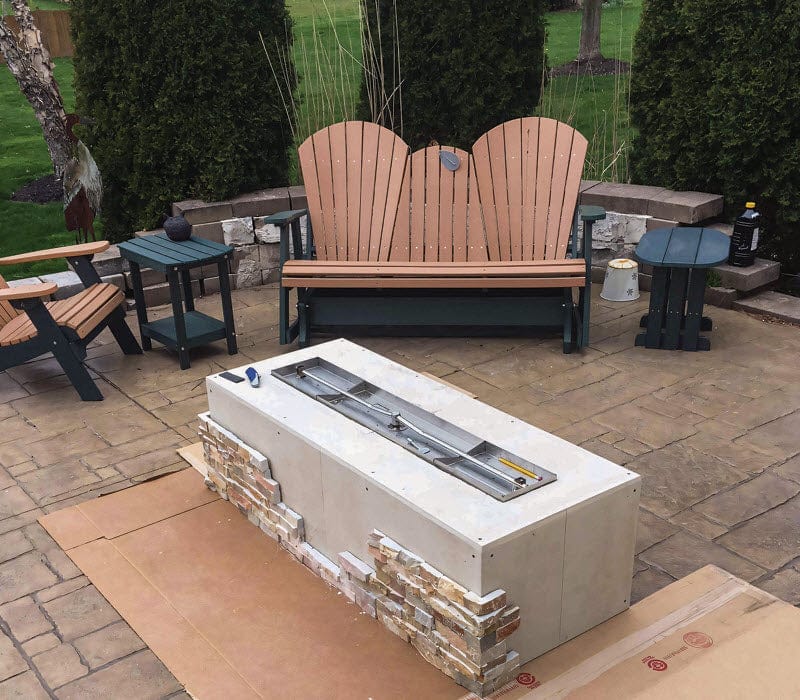
Your fire pit enclosure is what brings the entire project together visually and structurally. Whether you're building a modern concrete fire feature, a stone patio centerpiece, or a custom outdoor entertainment space, choosing the right enclosure materials is an important part of the design process. In addition to aesthetics, the enclosure must provide proper support, ventilation, and access to internal components like valves and gas connections.
For homeowners and contractors looking to simplify the build process, we also offer a variety of fire pit enclosures designed to pair with compatible burners, pans, and ignition systems. These ready-to-finish and pre-designed options can help reduce installation time while still allowing flexibility in your final outdoor living design.
DIY Fire Pit Enclosure Kits
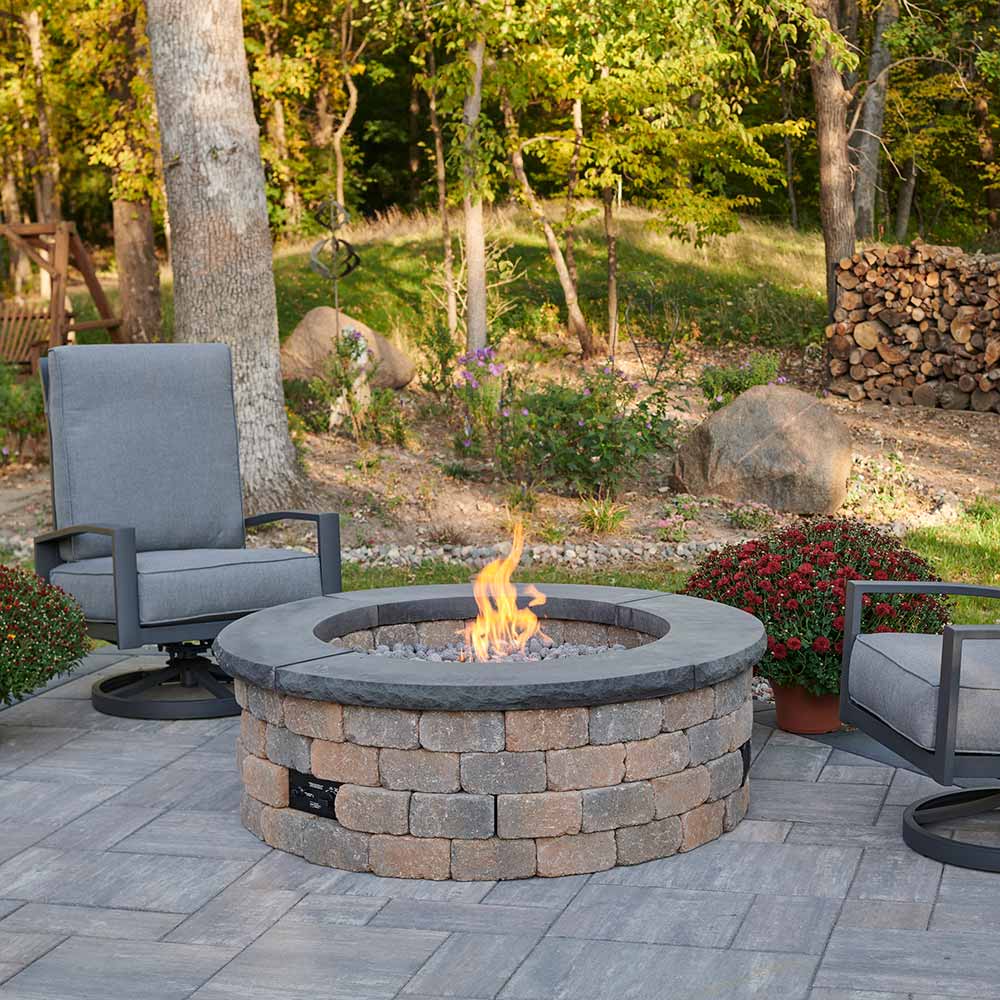
If you want the look of a custom fire pit without starting completely from scratch, DIY enclosure kits can be a great middle ground. These kits simplify the planning and installation process by providing a professionally designed enclosure structure that is ready to pair with compatible fire pit components.
The Outdoor GreatRoom Company offers popular options like the Bronson Square DIY Gas Fire Pit Kit and the Bronson Round DIY Gas Fire Pit Kit. These kits are designed to make installation easier while still allowing you to customize the final appearance with your preferred finishing materials. They are especially popular for patios, backyard gathering spaces, and outdoor living projects where homeowners want a clean, finished look without the complexity of designing an enclosure entirely from the ground up.
For homeowners looking to speed up installation while maintaining a high-end appearance, our product specialists can help you choose the right DIY enclosure kit and compatible burner components for your project.
Frequently Asked Questions About Building a Gas Fire Pit
What parts do I need to build a gas fire pit?
To build a gas fire pit, you will typically need a gas supply, burner, burner pan, valve and key, flange extension if needed, gas flex lines, ventilation, installation collar if needed, and fire media. Each part plays a specific role in ensuring the fire pit operates safely and produces a clean, consistent flame. Gathering manufacturer specifications for each component ahead of time can help avoid compatibility issues during installation.
Do propane fire pits need a burner pan?
Yes, a fire pit pan is required for fire pits that use a propane gas supply. The pan helps separate the air mixer from the burner and also helps with water drainage and ventilation. Without a properly fitted pan, propane fire pits can experience uneven combustion or moisture-related issues over time. Choosing a pan sized correctly for your burner helps ensure consistent performance.
How much ventilation does a gas fire pit need?
The recommended amount of ventilation is 36 square inches, or two 18 sq. inch vents on two opposing sides of the enclosure. This helps create proper airflow and helps prevent gas from pooling beneath the fire pit. Insufficient ventilation can create a safety hazard, so this step should never be skipped during construction. Always confirm ventilation requirements against local codes as well as manufacturer specifications.
How far should the burner be from the edge of the fire pit?
Choose a burner that is at least 6" smaller than the inside dimension of your enclosure. This leaves about 3" between the burner and the inside edge of the fire pit on all sides. This spacing helps ensure even heat distribution and provides room for fire media to sit properly around the burner. Skipping this clearance can lead to overheating along the enclosure's interior walls.
How much fire media should cover a gas fire pit burner?
A maximum of 2" - 4" of fire media should cover your burner and pan. Lava rock, fire glass, and log sets are all available depending on the final look and feel you want. Covering the burner with too much media can restrict airflow and negatively affect flame height. Always follow the manufacturer's specific media depth recommendations for your burner model.
Final Thoughts
Building your own gas fire pit is easier when you understand each component before you begin. A complete kit can simplify the process, while individual components give you more flexibility for a custom build. If you need help choosing the right burner, pan, valves, flex lines, or compatible components, contact our product specialists for expert guidance.