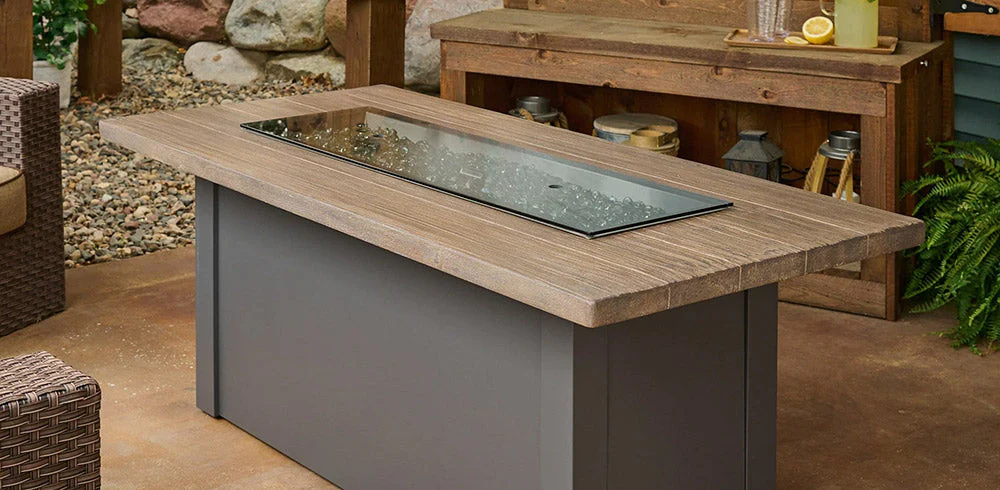
To winterize a fire pit, remove debris, clean the burner or burn area, shut off the fuel supply, inspect components, remove or protect accessories, and cover the fire pit before winter weather arrives. A few end-of-season maintenance steps can help protect your fire pit from moisture, debris, pests and unnecessary wear.
Whether you own a gas fire pit, wood-burning fire pit, fire table or custom outdoor fire feature, proper off-season care helps extend the life of your investment and makes spring startup easier.
End-of-Season Fire Pit Checklist
- Remove leaves, ash and debris.
- Clean the burner, bowl or fire media.
- Shut off the gas supply if applicable.
- Disconnect and store propane tanks properly.
- Inspect ignition components and gas connections.
- Check drainage and ventilation openings.
- Remove or store accessories.
- Clean exterior surfaces.
- Install a burner cover if needed.
- Cover the fire pit securely.
Remove Debris from the Fire Pit
Leaves, twigs, dirt and other debris can trap moisture, block burner ports and create a nesting area for pests. Before winter, remove all loose debris from the burner area, fire bowl and enclosure.

Shut Off the Gas Supply
For natural gas fire pits, turn off the gas valve according to the manufacturer’s instructions. For propane fire pits, shut off the tank valve, disconnect the propane tank and store it outdoors on a level surface away from direct sunlight, heat sources and enclosed spaces.

Remove Accessories and Fire Media
If your fire pit has a glass wind guard, burner cover, cooking accessory, decorative logs, lava rock or fire glass, remove and store accessories indoors when practical.
Fire media can often remain in place if it is clean, dry and protected by a cover, but removing it may make it easier to inspect the burner and prevent moisture buildup.

Clean Exterior Surfaces
Wipe down exterior surfaces with warm, soapy water or the cleaner recommended for your fire pit material. Stainless steel, powder-coated steel, concrete, GFRC and wicker-style fire tables may each have different care requirements, so always follow the owner’s manual.

Winterizing a Gas Fire Pit
Gas fire pits need extra attention before winter because burners, ignition systems and gas components can be affected by moisture and debris.
- Turn off the gas supply.
- Remove debris from the burner ports.
- Inspect the burner for corrosion or damage.
- Check that vents and drainage openings are clear.
- Protect ignition components from standing water.
- Use a compatible cover when the fire pit is not in use.
Winterizing a Wood-Burning Fire Pit
Wood-burning fire pits should be cleaned thoroughly before being covered for the season.
- Allow all embers and ash to cool completely.
- Remove ash from the fire bowl.
- Check for rust, cracks or surface damage.
- Clean the interior and exterior surfaces.
- Store tools and cooking accessories indoors.
- Cover the fire pit to reduce moisture exposure.
Protecting Electronic Ignition Systems
If your fire pit uses an electronic ignition system, keeping the control components dry is especially important.
- Confirm the enclosure drains properly.
- Make sure the control box is not sitting in standing water.
- Clear debris from vents and access areas.
- Inspect wiring and visible connections.
- Cover the fire pit securely when not in use.
If you need replacement ignition components, browse electronic ignition kits and compatible timers and switches.
Fire Pit Maintenance Inspection
| Component | What to Check |
|---|---|
| Burner | Debris, blocked ports, corrosion or damage |
| Ignition System | Moisture, loose connections or visible wear |
| Fire Glass or Lava Rock | Dirt, moisture, discoloration or excess buildup |
| Gas Connections | Wear, damage or loose fittings |
| Cover | Tears, poor fit or weather damage |
Cover Your Fire Pit
A properly fitted fire pit cover is one of the best ways to protect your fire pit during the off-season. The cover should fit securely and protect the burner, fire media and exterior finish from snow, rain, leaves and debris.
If your fire pit has a separate burner cover, install it before adding the full weather cover. Make sure vents are not blocked in a way that traps moisture inside the enclosure.

Common Winter Storage Mistakes
- Leaving leaves, ash or debris inside the fire pit.
- Forgetting to shut off the gas supply.
- Storing propane tanks indoors.
- Allowing standing water to collect inside the enclosure.
- Leaving accessories exposed all winter.
- Using a loose or poorly fitted cover.
- Skipping inspection of burners and ignition components.
When to Replace Parts or Accessories
End-of-season maintenance is a good time to identify worn parts before the next outdoor season begins. Consider replacing damaged or worn:
- Fire pit covers
- Burner covers
- Fire glass or lava rock
- Burners
- Ignition components
- Gas hoses or fittings
- Wind guards
Shop gas fire pit burners, fire glass, glass wind guards and fire pit covers to prepare for next season.
Fire Pit Winterization FAQs
Should I cover my fire pit in winter?
Yes, covering your fire pit helps protect burners, ignition systems, fire media, and exterior finishes from moisture, snow, leaves, and debris. A cover also reduces the amount of cleaning needed once warmer weather returns. Choosing a cover rated for winter conditions can offer added protection against heavy snow load or freezing temperatures.
Can fire glass stay outside all winter?
Fire glass can often stay outside if it is clean, dry, and protected by a cover. However, removing it can make burner inspection and cleaning easier. If moisture becomes trapped beneath the glass, it can contribute to corrosion or debris buildup around the burner. Storing fire glass indoors during winter is optional but can help extend its long-term appearance.
Should I remove my propane tank for winter?
Yes, shut off and disconnect the propane tank, then store it outdoors on a level surface away from direct sunlight, heat sources, and enclosed areas. Never store a propane tank indoors, in a garage, or in a basement, even temporarily. Checking the tank for rust or damage before storage can also help ensure it's safe to use again next season.
Can snow damage a fire pit?
Snow and ice can contribute to moisture buildup, corrosion, and finish wear, especially if the fire pit is left uncovered or drainage is poor. Repeated freeze-thaw cycles can be particularly hard on concrete and GFRC surfaces. Clearing snow buildup and ensuring proper drainage can help minimize long-term damage.
How often should I clean a gas fire pit burner?
Inspect and clean the burner at least at the end of the season and again before the next season begins. More frequent cleaning may be needed in areas with heavy debris, insects, or coastal exposure. Clogged burner ports can lead to uneven or weak flames if left unaddressed. A simple visual inspection before each use can help catch issues early.
Can a wood-burning fire pit be left outside in winter?
Many wood-burning fire pits can stay outside, but they should be emptied, cleaned and covered to reduce rust, moisture damage and debris buildup. Leftover ash and debris can trap moisture and accelerate corrosion if not cleared out before storage. Checking the fire pit's metal components for rust periodically throughout winter can help catch problems before they worsen.
Final Thoughts
Winterizing your fire pit only takes a little time, but it can help protect burners, ignition systems, fire media and exterior finishes from unnecessary wear during the off-season. Proper cleaning, inspection and storage also make spring startup easier. If you need help choosing the right product, planning your project, or finding compatible components, contact our product specialists for expert guidance.