Planning a Propane Fire Pit
Planning a propane fire pit starts with choosing the right burner size, propane tank, regulator, ventilation setup, and ignition system. A standard 20-pound propane tank can often fuel a backyard fire pit for roughly 3 to 7 hours, depending on the BTU rating of the burner and how the fire feature is operated.
Propane gas fire pits are becoming more common in residential settings thanks to their convenient design. Running new gas lines can be expensive and requires professional installation, so many homeowners choose to fuel their fire pits using a standard propane tank instead.
At Firepits Direct, we’re often asked how long a propane tank will fuel a typical backyard fire pit. This answer will vary based on the size of your tank as well as the BTU rating of the fire pit burner. To calculate approximate burn times for yourself, we’ve put together this helpful guide. Consider grills as a point of reference, as these calculations will work for propane grills as well.
Propane Fire Pit Planning Checklist
| Planning Item | Why It Matters |
|---|---|
| Propane Tank Size | Determines estimated burn time and fuel availability. |
| Burner BTU Rating | Higher BTU burners use fuel faster and may require larger tanks. |
| Regulator | Helps maintain proper supply pressure for safe flame performance. |
| Ventilation | Required because propane is heavier than air and can collect in enclosed spaces. |
| Fire Pit Pan | Helps support the burner and fire media while allowing proper drainage and airflow. |
| Ignition Type | Match-light and electronic ignition systems have different setup requirements. |
| Tank Location | The tank must remain accessible, ventilated, and safely positioned. |
How Long Does a Propane Tank Last on a Fire Pit?
The process for determining an estimated propane burn time is simple. Divide the total BTUs available in the propane tank by the total BTU rating of your gas appliance.
To determine the gas appliance operating time:
BTUs of Propane Tank / Total BTUs of Gas Appliance = Total Burn Time in Hours
These estimates represent ideal conditions and assume proper setup. Actual burn time can vary depending on flame height, outdoor temperature, wind exposure, regulator performance, and whether other appliances are using the same fuel source.
Propane Tank Specifications
| Tank Size | Amount of Gas | Total BTU |
|---|---|---|
| 11 lbs. | 2.98 gal. | 256,205 |
| 20 lbs. | 5 gal. | 430,000 |
| 30 lbs. | 7 gal. | 640,000 |
| 40 lbs. | 10 gal. | 860,000 |
| 50 lbs. | 25 gal. | 2,159,400 |
Sample Propane Fire Pit Burn Times
Below are estimated burn times for several popular fire pit kit options. These numbers are approximate and should be used for planning purposes only.
| Fire Pit Kit | Tank Size | BTU | Approx. Burn Time |
|---|---|---|---|
| HPC 12” Penta Burner | 20 lbs. | 65,000 | 6.61 hours |
| HPC 18” Penta Burner | 20 lbs. | 125,000 | 3.44 hours |
| Warming Trends 13” x 13” Original Crossfire Burner | 20 lbs. | 120,000 | 3.58 hours |
| Firegear 22” Burning Spur | 20 lbs. | 100,000 | 4.3 hours |
| HPC 36” Penta Burner | 500 gal. | 43,000,000 | 143.33 hours* |
| *Does not factor in additional appliances using fuel. | |||
What Affects Propane Burn Time?
Although the formula above provides a helpful estimate, real-world propane usage can vary. The following factors can affect how long your propane tank lasts:
- Burner BTU rating: Higher BTU burners use propane more quickly.
- Flame height: Running the fire pit at full flame will shorten burn time.
- Tank size: Larger tanks hold more fuel and provide longer operating time.
- Outdoor temperature: Cold weather can affect propane performance.
- Wind exposure: Wind may require higher flame settings for the same visual effect. Consider a wind guard to combat this issue.
- Regulator setup: Improper regulation can cause weak flames or poor performance.
- Other appliances: If multiple appliances draw from the same fuel source, available burn time will decrease.
Choosing the Right Burner Size
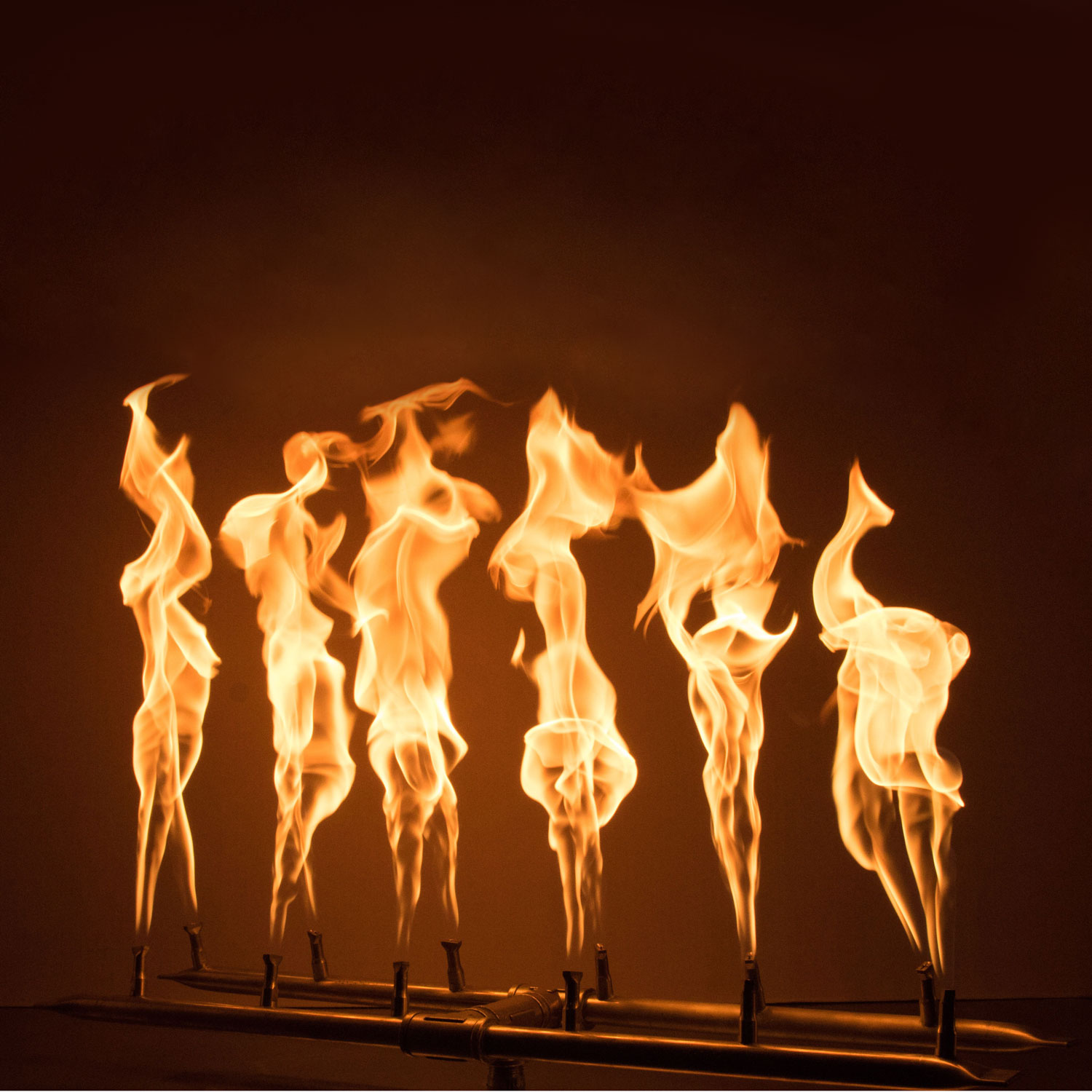
Although a fire pit kit attached to a propane tank generally offers a simpler setup than an in-ground gas line, burner sizing still matters. The maximum output of a traditional 20-pound propane tank is approximately 90,000 to 125,000 BTU. This means you will need to use a burner rated for 125,000 BTU or less if you plan to use a 20-pound propane tank.
Do not use a burner rated for greater than 125,000 BTU with a 20-pound propane tank. Using a fire pit burner rated for greater than 125,000 BTU with a standard 20-pound propane tank will result in poor flame performance.
If you want a larger flame or a larger burner, you may need to plan for a larger propane supply or a professionally installed gas system. Matching the burner to the fuel supply is one of the most important steps in planning a propane fire pit.
Regulators and Supply Pressure
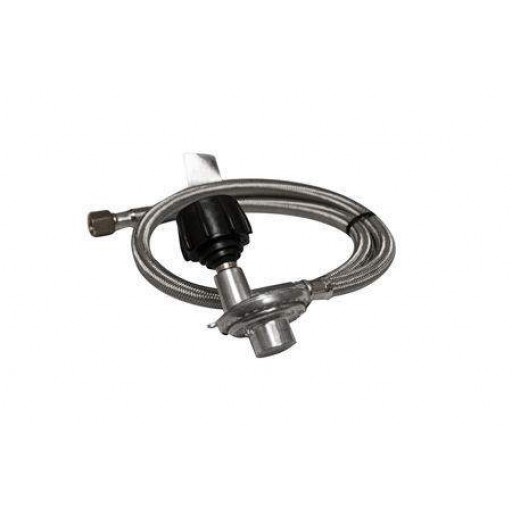
For propane fire pit kits, a supply pressure between 8” and 11” water column is required for optimal results. Water column is a measurement of gas pressure. On professional installations, a gas technician can measure this using a tool called a manometer.
For propane tank kits, proper pressure can be achieved through the use of propane tank regulators. Improper supply pressure can result in a whistling noise if pressure is too high or a low blue flame if pressure is too low.
Where Should You Put the Propane Tank?
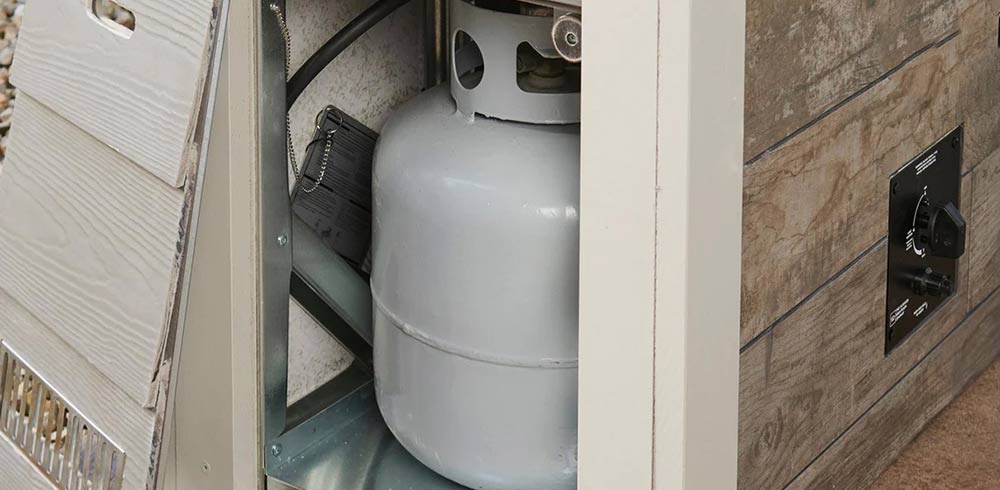
Propane tank placement is an important part of planning your fire pit. The tank should be easy to access for shutoff, inspection, and replacement. It should also be positioned according to the fire pit manufacturer’s installation instructions.
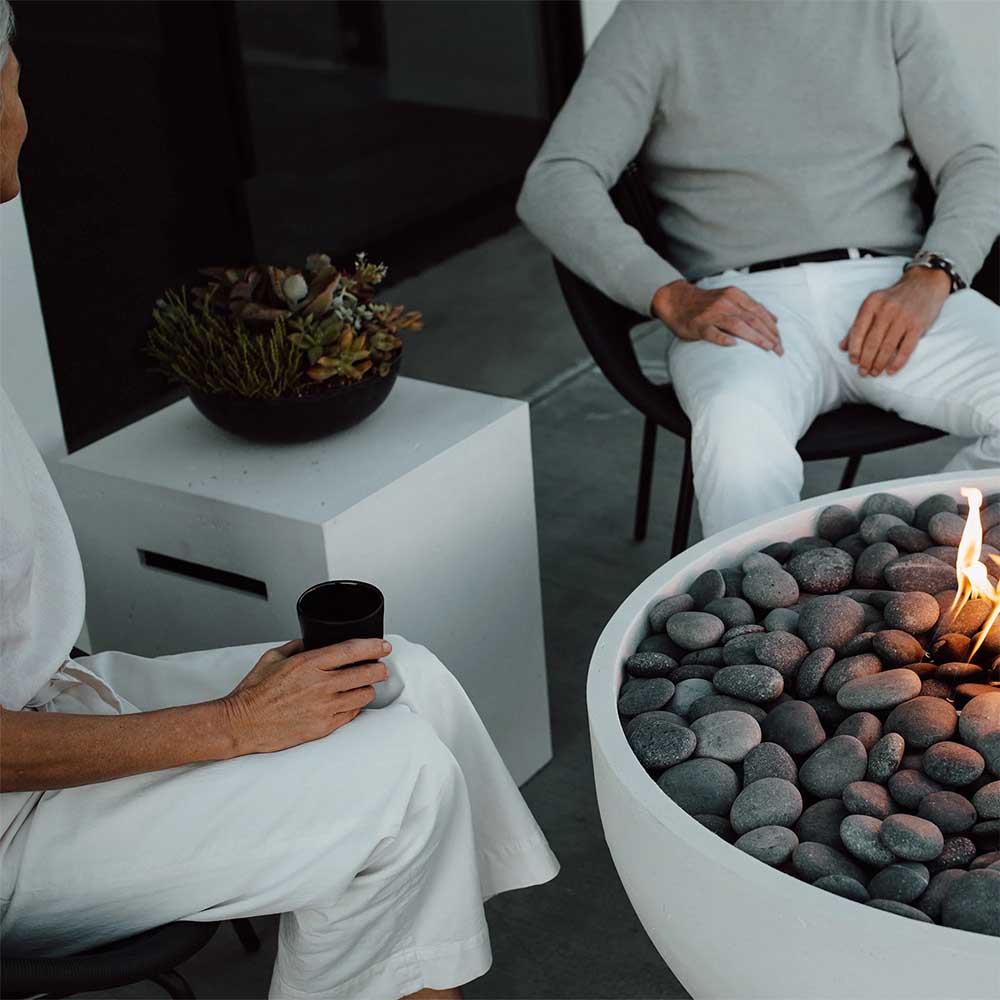
Many homeowners prefer to hide the propane tank for a cleaner look, but the tank should never be placed inside an unsafe sealed enclosure. If your design includes concealed tank storage, make sure the area is properly ventilated and allows easy access to the valve, regulator, and hose connections.
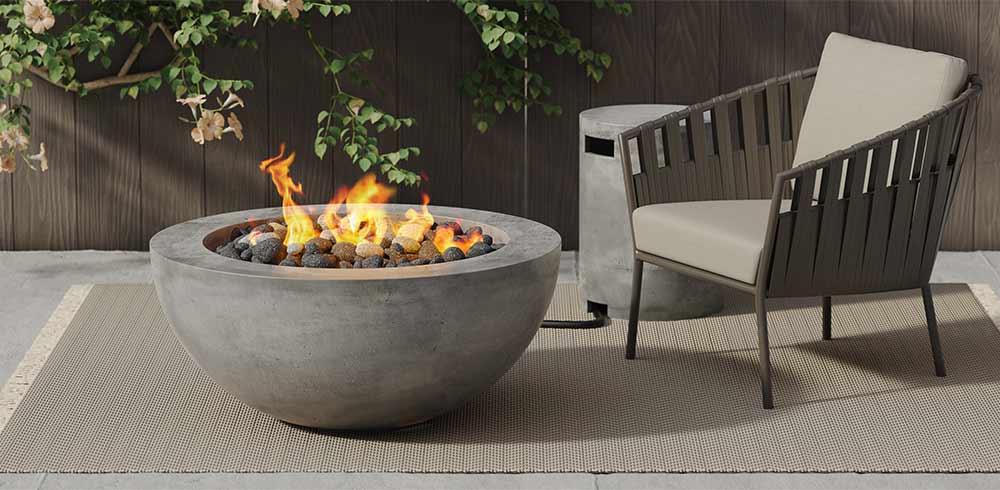
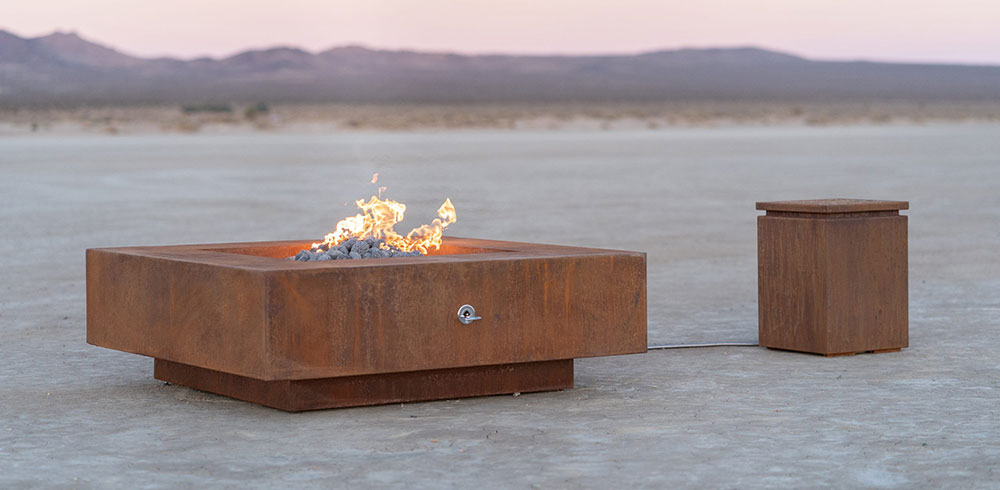
We also carry a large variety of propane tank covers, which provide the option to store the tank nearby but not under the fire feature itself, keeping the tank hidden. In the picture above, the tank cover is being used as a side table. This layout is becoming quite popular for those designing an outdoor seating area.
If you are unsure whether your planned tank location is appropriate, contact a qualified gas professional or one of our product specialists before installation.
Propane Fire Pit Safety and Ventilation
Propane gas is heavier than air, which can result in pooling gas in and around a fire pit if ventilation is not handled correctly. Always ensure your gas supply has been completely shut off after use.
Proper ventilation and a fire pit pan are required when installing a propane fire pit kit. Failure to follow these guidelines can result in an unsafe fire pit. Refer to the manufacturer’s specific guidelines for more information regarding proper fire pit installation.
When planning a propane fire pit, keep these safety points in mind:
- Use the correct regulator for your burner and propane tank.
- Make sure the enclosure has proper ventilation.
- Keep the propane tank accessible for shutoff and service.
- Check hose and fitting connections for leaks according to manufacturer instructions.
- Do not exceed the BTU capacity recommended for your propane tank.
- Keep ignition components and gas connections accessible.
- Shut off the propane tank completely after each use.
- Follow all manufacturer installation and clearance requirements.
Propane vs. Natural Gas Fire Pits
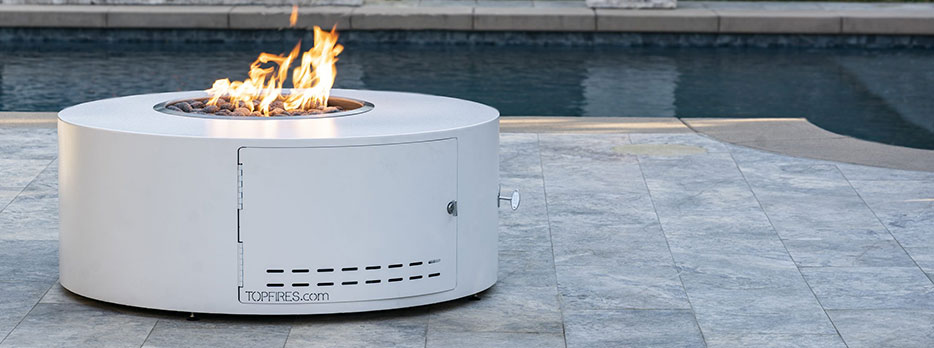
Propane and natural gas are both popular fuel options for gas fire pits. Propane is often preferred when you want more flexibility or do not have a natural gas line available. A propane tank can make your setup more convenient than running a new gas line, especially for smaller residential fire pit projects.
Natural gas, on the other hand, is often better for permanent installations where continuous fuel access is a priority. If your fire pit will be used frequently and your home already has natural gas service, a professionally installed natural gas line may be worth considering.
Propane Fire Pit FAQs
How Long Does a 20 lb Propane Tank Last on a Fire Pit?
A 20-pound propane tank can often last between 3 and 7 hours on a fire pit, depending on the burner’s BTU rating. A lower-output burner will run longer, while a higher-output burner will use fuel more quickly.
What Size Propane Tank Do I Need for a Fire Pit?
The right propane tank size depends on the BTU rating of your burner and how long you want the fire pit to run. Standard 20-pound tanks are common for smaller burners, while larger burners may require a larger fuel supply.
Can I Use a 20 lb Propane Tank for Any Fire Pit Burner?
No. A standard 20-pound propane tank is not ideal for every burner. Burners rated above 125,000 BTU generally require a larger fuel supply to perform properly.
Why Is My Propane Fire Pit Flame Weak?
A weak flame may be caused by low supply pressure, an undersized propane tank, an incorrect regulator, low fuel level, or a burner that requires more BTUs than the tank can provide.
Does a Propane Fire Pit Need Ventilation?
Yes. Propane fire pits require proper ventilation because propane is heavier than air and can collect in low or enclosed areas if not vented correctly.
Can I Hide a Propane Tank Under a Fire Pit?
You should only conceal a propane tank if the setup is specifically designed for safe tank storage and proper ventilation. Never place a propane tank inside an unsafe sealed enclosure.
Final Thoughts
Planning a propane fire pit is about more than choosing a burner and connecting a tank. Tank size, burner BTU rating, regulator selection, ventilation, safety, and tank placement all affect how well your fire pit performs. If you need help choosing the right product, planning your project, or finding compatible components, contact our product specialists for expert guidance.