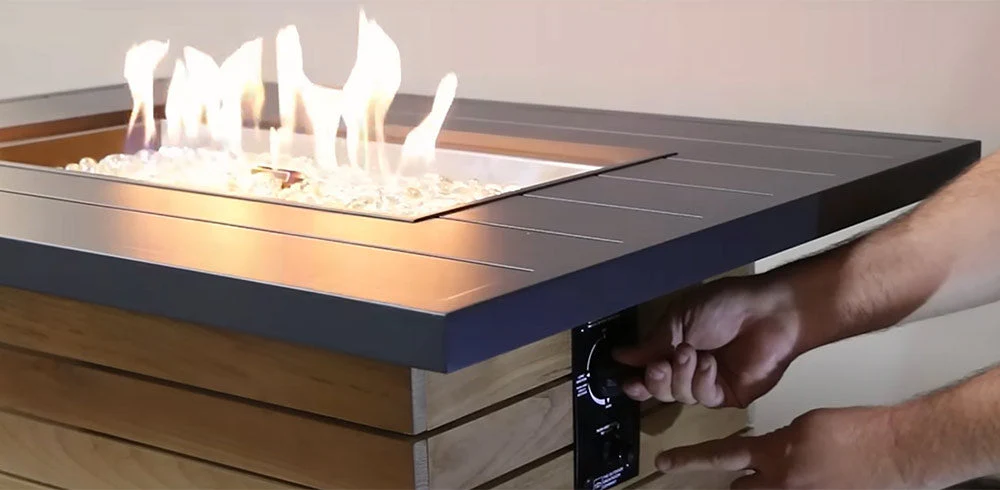
Building a fire pit doesn’t have to be a complicated undertaking. With a little planning and preparation, you’re sure to create an awesome outdoor space for you, your friends, and your family.
Quick answer: The best fire pit ignition system depends on your budget, how much convenience you want, local code requirements, safety needs, and whether electricity is available at the fire pit. Match light systems are simple and cost-effective, spark ignition adds push-button convenience, flame-sensing kits add safety shutoff features, and electronic ignition systems offer the highest level of automation and control.
One of the biggest choices you’ll need to make when designing your fire pit is what kind of ignition system your fire pit will have. Today, we’ll give you some helpful information to make that decision easier for you.

Fire Pit Ignition System Comparison
| Ignition Type | Best For | Key Consideration |
|---|---|---|
| Match Light Ignition | Simple DIY fire pits and budget-conscious builds. | Requires manual lighting and should not be left unattended. |
| Spark Ignition | Users who want push-button convenience without a fully electronic system. | Battery sparkers may need periodic maintenance or replacement. |
| Flame-Sensing Spark Ignition | Small to mid-sized fire pits where added safety features are needed. | Often offers automatic gas shutoff if the flame goes out. |
| Electronic Ignition | High-end residential, commercial, and automated fire pit projects. | Usually requires electricity and has a higher upfront cost. |
What Are the Different Ignition Types?
Fire pit ignition systems can range from very basic match lit systems to premium electronic ignitions with remote controls and automatic flame sensors. Although there’s some variability, you’ll most often see ignition types divided into one of three categories: match light, spark ignition, or electronic ignition.
While it’s easy to think of these options as a “good, better, best” scenario, particularly when looking at cost, it’s also important to remember no two fire pit builds will be exactly the same. Many people may actually be happier with a basic match light system than they would be a more complicated electronic ignition system.
What Ignition Type is Best?
The type of ignition you select will likely depend on your application. You’ll also want to keep in mind any local building codes relevant to your project before you begin building. We recommend checking with your local authorities in advance.
Match Light Ignition Systems

Match light fire pits, also sometimes referred to as “manual” ignition systems, offer a reliable and cost-effective fire pit option for your project. The reason these fire pits are so reliable is the simplicity of their design. These are completely mechanical systems with no moving parts. Turn a key to start the gas, light a flame, and sit back to enjoy your fire. It’s as simple as that.
Non-certified match kits are often high capacity, as well, allowing these units to put off larger and more impressive flame presentations. However, with no flame-sensing feature, the fire pit must not be left unsupervised and these kits may not be considered “up to code” in all areas.
Spark Ignition Systems

Spark ignition systems are very similar to match light systems with one exception: a battery-operated sparker. These fire pits feature ignition systems similar to those found on some barbecue grills.
A spark ignition system offers a helpful middle ground between basic match light ignition kits and more advanced ignition systems. You’ll get the added convenience of assisted ignition while maintaining the reliability of a manual system. However, these spark ignition systems will not last forever, so expect this to be a regular maintenance task every few years.
Flame-Sensing Spark Ignition Systems

Flame-sensing kits are a special kind of fire pit worth mentioning on their own. While technically still spark ignition systems, these fire pits also feature flame sensors or thermocouples for an added level of safety. These added safety measures automatically stop gas flow in the event flames are extinguished in order to avoid pooling gas.
These kits typically involve some simple annual maintenance to keep them working smoothly, but the process doesn’t involve extensive time or costs.
Electronic Ignition Systems

Electronic ignition kits are nearly always flame-sensing and safety-certified. The ignition process is automated and they can be controlled with a timer, switch, remote, smartphone app, automation system, etc.
While some kits use electronic sparkers, many have commercial-grade hot-surface igniters which provide excellent reliability and performance.
Though there are more moving parts, these systems from premium manufacturers are more reliable than ever and can be seen at hotels and restaurants across the country.
What is the Most Cost-Effective Fire Pit Ignition Option?
Match light and spark ignition systems without flame-sensing are the most cost-effective ignition systems available and remain very popular for this reason.

How to Troubleshoot Fire Pit Lighting Issues
If your fire pit isn’t lighting properly, start with the basics before assuming the ignition system needs to be replaced.
- Check the gas supply. Make sure the valve is fully open and the propane tank, if used, has fuel.
- Inspect the ignition system. For spark ignition, listen for a clicking sound and look for a visible spark near the burner.
- Replace or check the battery. If there is no spark, the battery may need replacement, or the igniter may be dirty or misaligned.
- Clean the burner ports. Remove debris, soot buildup, or blockages that could prevent gas from flowing properly.
- Check the gas lines. Look for kinked or damaged gas lines and confirm connections are tight.
- Review the manufacturer’s guide. If the issue persists, consult the product manual or contact a professional for further diagnosis.
How to Extinguish the Fire in a Gas Fire Pit
To extinguish the fire in a gas fire pit, turn off the gas supply using the shutoff valve or control knob. This stops the flow of fuel and extinguishes the flames.
If your fire pit uses a key valve, insert the key and turn it clockwise until it’s fully closed. For models with an ignition system, make sure the burner control is also turned to the “off” position.
Frequently Asked Questions About Fire Pit Ignition Systems
What is the best ignition system for a gas fire pit?
The best ignition system depends on your project. Match light ignition is simple and cost-effective, spark ignition adds push-button convenience, flame-sensing ignition adds automatic gas shutoff, and electronic ignition offers the most automation and control options.
Do electronic ignition fire pits need electricity?
Most electronic ignition fire pits require electricity at the fire pit, though some smaller kits may have battery-powered options.
Are match light fire pits safe?
Match light fire pits can be safe when installed correctly, used according to manufacturer instructions, and monitored while in use.
What is a flame-sensing ignition system?
A flame-sensing ignition system uses a flame sensor or thermocouple to detect whether the flame is present.
Why won’t my gas fire pit light?
Common causes include a closed gas valve, empty propane tank, weak or dead igniter battery, dirty or misaligned igniter, clogged burner ports, kinked gas lines, or loose connections.
Final Thoughts
The right ignition system can make your gas fire pit easier, safer, and more enjoyable to use. If you want the simplest setup, a match light kit may be enough. If you want more convenience or added safety features, a spark, flame-sensing, or electronic ignition kit may be the better choice.
Our product experts can help you with every part of the fire pit buying process. If you’re unsure which ignition system or components are best for your needs, contact our product specialists for expert guidance.