.jpg)
Fire pit media is the heat-resistant material placed over and around a gas fire pit burner. It helps improve flame appearance, protect components, retain heat, and complete the overall design of your fire pit.
Selecting the right fire pit media is an important part of creating a gas fire pit that looks great and performs properly. Whether you want a modern, reflective finish or a more natural, rustic look, the media you choose can significantly impact the appearance, maintenance, and overall feel of your outdoor fire feature.
What Is Fire Pit Media?

Fire pit media refers to the material placed around the burner in a gas fire pit. It helps cover the burner mechanism, distribute flames more evenly, retain heat, and add visual appeal.
Common fire pit media options include fire glass, fire pit rock, and gas log sets. Each option offers a different look, feel, and level of maintenance.
What Does Fire Pit Media Do?
Fire pit media serves several functional and visual purposes. While many shoppers choose media based on appearance, the right material also supports proper fire pit performance.
Key Functions of Fire Pit Media
- Improves flame appearance: Media helps break up and distribute the flame for a fuller, more natural look.
- Covers the burner: It hides the burner and internal components for a cleaner finished appearance.
- Retains heat: Materials like fire glass and lava rock absorb heat and radiate warmth outward.
- Supports design style: Media helps define the overall look of your fire pit, from modern to rustic.
- Protects components: Properly installed media can help shield burner components from direct exposure and debris.

Use Only Fire-Rated Media
Not every decorative material is safe for a fire pit. Always use media specifically rated for gas fire pits or fireplaces. Regular glass, landscaping stones, river rocks, aquarium rocks, and decorative pebbles should not be used unless they are clearly approved for high-heat fire feature use.
Non-fire-rated materials can crack, pop, discolor, release debris, or create unsafe conditions when exposed to high heat. For best results, choose media designed for your fuel type, burner style, and fire pit configuration.
What Is Fire Glass?

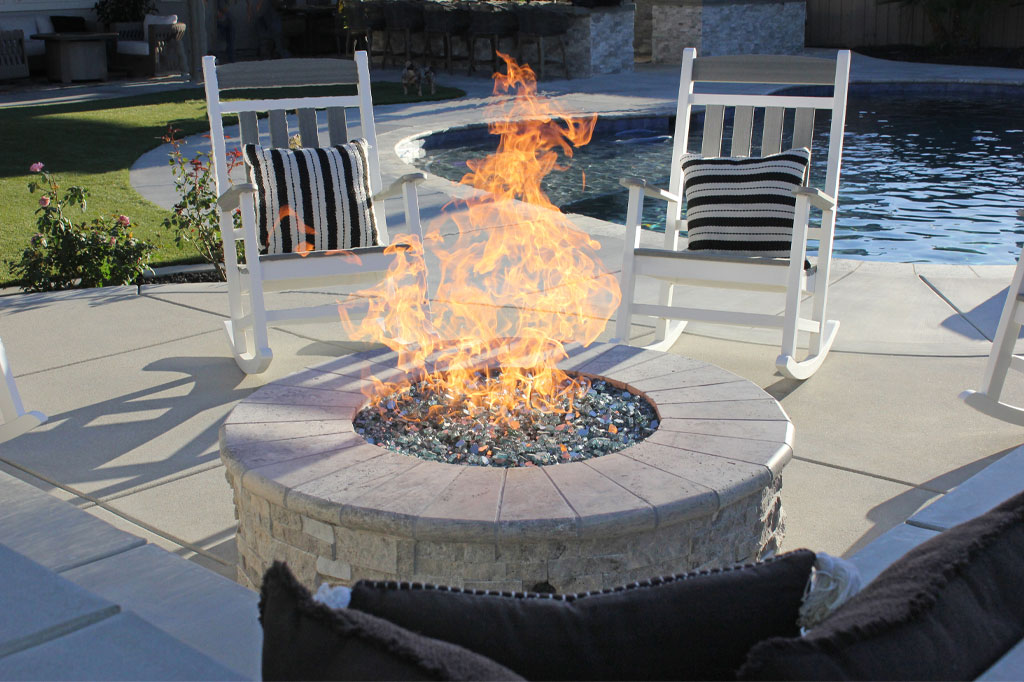
Fire glass is tempered glass designed specifically for use in gas fire pits and fireplaces. It comes in a variety of colors, shapes, sizes, and finishes, making it one of the most customizable fire pit media options available.
Fire glass is known for its reflective properties, especially in mirrored or reflective finishes. As flames move across the glass surface, the media creates a bright, shimmering effect that works especially well in modern outdoor spaces.
Benefits of Fire Glass
- Modern appearance: Fire glass creates a clean, contemporary look.
- Color customization: It is available in many colors and finishes to match your outdoor design.
- Reflective effect: Reflective fire glass adds extra shine and visual movement.
- Heat retention: Fire glass absorbs and radiates heat during use.
- Low maintenance: It does not create ash or embers and is easy to clean.
- Durability: Fire-rated glass is designed to withstand high temperatures when installed correctly.
Fire Glass Considerations
- Fire glass is usually more expensive than lava rock.
- It should be installed at the correct depth to avoid restricting gas flow.
- For propane fire pits, larger glass pieces are generally recommended to help gas move properly through the media.
- Lighter colors may show soot over time and may need occasional cleaning.
For help estimating how much fire glass your project needs, use our fire glass calculator.
What Is Lava Rock?

Lava rock is a natural, porous stone formed from volcanic activity. It is one of the most popular fire pit media options because it offers a natural appearance, strong heat retention, and a budget-friendly price point.
Lava rock is typically black or red and works well in rustic, natural, or traditional outdoor settings. It can also be used as a filler layer below fire glass in some fire pit setups, helping reduce the amount of premium media needed while still supporting heat distribution.
Benefits of Lava Rock
- Natural look: Lava rock blends well with outdoor landscapes and stone fire pits.
- Good heat retention: It absorbs heat and releases warmth gradually.
- Affordable: Lava rock is typically less expensive than fire glass or log sets.
- Lightweight: It is easy to install, adjust, and replace.
- Useful filler: In some installations, lava rock can be used under decorative media to reduce cost.
Lava Rock Considerations
- Lava rock may crack or break down over time.
- It can collect dust, debris, and moisture.
- It may need occasional replacement depending on use and weather exposure.
- Only use lava rock rated for fire pit use.
What Is a Gas Log Set?

A gas log set consists of ceramic or refractory logs designed to mimic the look of natural wood. These logs are made specifically for gas fire pits and fireplaces, providing the appearance of a traditional wood-burning fire without the smoke, ash, or need to add real wood.
Gas log sets are available in styles such as oak, birch, driftwood, and other natural wood looks. They are a strong option for homeowners who want a classic fire feature appearance with the convenience of gas.
Benefits of Gas Log Sets
- Traditional appearance: Log sets create the look of a wood-burning fire.
- Clean operation: They do not produce ash, smoke, or flying embers.
- Long-lasting design: Ceramic and refractory logs are built for high-heat use.
- Easy to use: Once arranged properly, they require little ongoing adjustment.
- Natural ambiance: Logs create a warm, familiar fire pit look.
Gas Log Set Considerations
- Log sets offer less color customization than fire glass.
- High-quality log sets can cost more than basic lava rock.
- Logs must be positioned correctly for proper flame visibility and gas flow.
- Not every log set is compatible with every burner, so check product requirements before purchasing.
What Are Fire Balls and Fire Spheres?
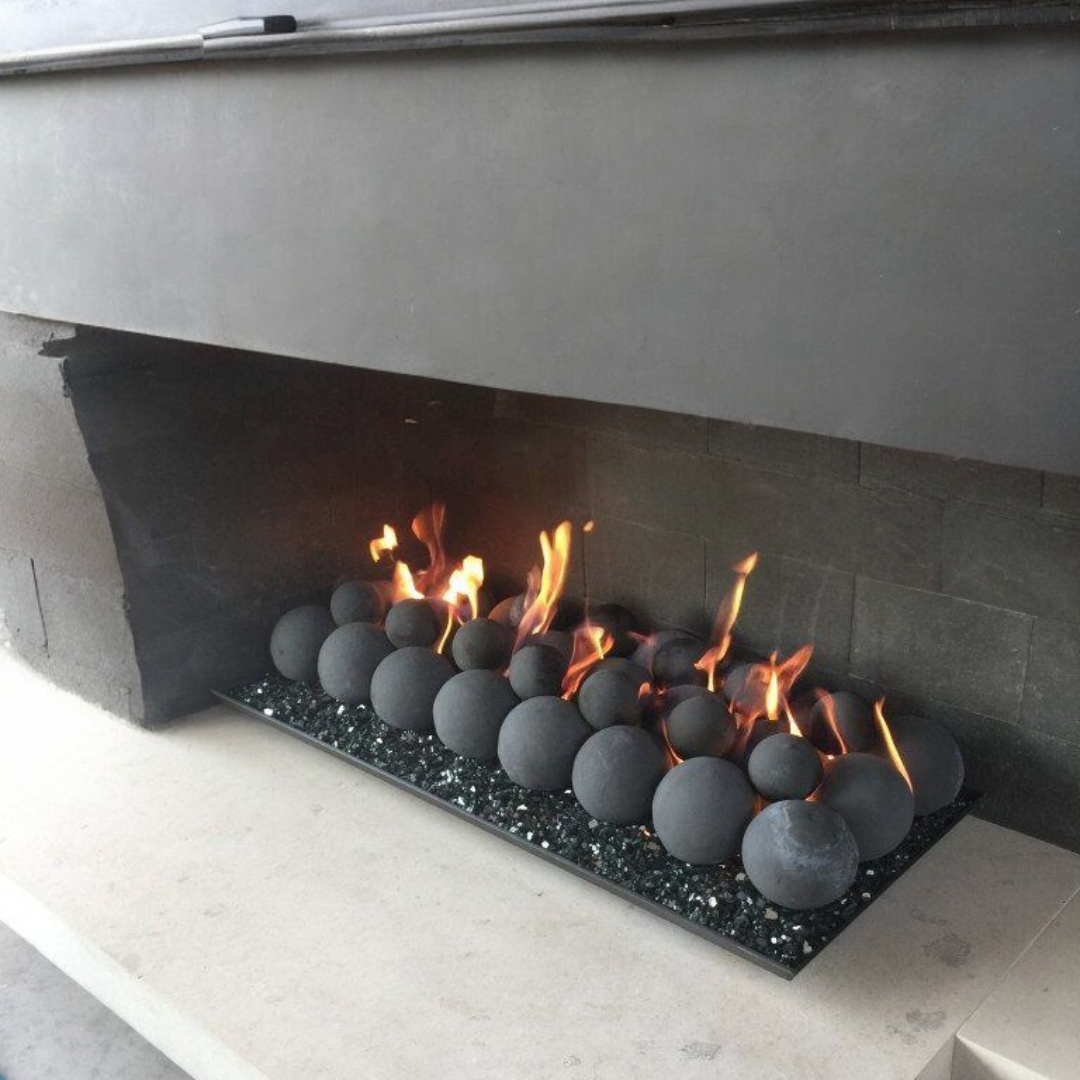
Fire balls and fire spheres have become an increasingly popular option for modern gas fire pits and fireplaces. These decorative ceramic spheres create a clean, sculptural appearance that offers a unique alternative to traditional fire glass, lava rock, or gas logs.
Available in a variety of sizes, colors, and finishes, fire balls can be arranged in different layouts to create either a minimalist contemporary design or a more dramatic architectural focal point. Some homeowners choose a uniform size for a sleek appearance, while others mix multiple sizes together for added depth and texture.
Beyond aesthetics, fire balls also help distribute flames throughout the burner area while partially concealing the burner system underneath. They pair especially well with modern linear fire pits, fire bowls, and outdoor fireplaces where a bold designer look is desired.
Many fire balls are made from heat-resistant ceramic or refractory materials designed specifically for high-temperature fire feature use. As with all fire pit media, it’s important to use only products rated for gas fire pits and follow manufacturer recommendations for installation and burner coverage.
Fire Glass vs. Lava Rock vs. Log Sets
| Media Type | Style | Maintenance | Best For |
|---|---|---|---|
| Fire Glass | Modern, colorful, reflective | Low maintenance, occasional cleaning | Modern designs and custom color combinations |
| Lava Rock | Natural, rustic, earthy | Moderate maintenance, may need replacement over time | Budget-friendly and natural-looking fire pits |
| Gas Log Sets | Traditional wood-fire look | Low maintenance when installed properly | Classic fire pit or fireplace-style designs |
How to Choose the Best Fire Pit Media
The best fire pit media depends on your design style, budget, burner setup, and maintenance preferences.
- Choose fire glass if you want a modern, colorful, or reflective fire pit design.
- Choose lava rock if you want a natural look, strong heat retention, and a budget-friendly option.
- Choose gas logs if you want the appearance of a traditional wood fire with the convenience of gas.
- Choose fire balls if you want a unique, trendy look that elevates your fire pit setup instantly!
- Consider combining media carefully only when your fire pit and media products allow it.
- Check compatibility with your burner, fuel type, and manufacturer recommendations before installing.
If you are still choosing the fire pit itself, our guide to the best fire pits can help you compare popular options.
Common Fire Pit Media Mistakes to Avoid
- Using non-fire-rated media: Regular glass, river rocks, and decorative stones can be unsafe under high heat.
- Overfilling the burner area: Too much media can restrict gas flow and reduce flame quality.
- Blocking burner ports: Media should not prevent gas from flowing properly through the burner.
- Using wet stones: Moisture trapped in improper stones can create safety issues when heated.
- Choosing incompatible logs: Gas log sets must match the burner and fire pit configuration.
- Ignoring propane requirements: Propane fire pits need proper airflow and ventilation around the media.
- Skipping maintenance: Debris, soot, and moisture should be cleaned out as needed.
Fire Pit Media FAQs
Can you mix fire pit media?
In some cases, yes. Lava rock is often used as a filler layer beneath fire glass, but you should only mix media when your fire pit, burner, and manufacturer instructions allow it.
How much fire pit media do I need?
The amount depends on your fire pit size, burner pan size, and desired depth. For fire glass, use our fire glass calculator to estimate how many pounds you need.
Can I use regular rocks in a gas fire pit?
No. Regular rocks, river rocks, and landscaping stones are not recommended unless they are specifically rated for fire pit use. Always use fire-rated media.
Does fire pit media need to be replaced?
Fire glass and gas logs can last for years when installed and maintained properly. Lava rock may break down over time and may need occasional replacement.
What fire pit media is best for propane?
For propane fire pits, use media that allows proper airflow. Larger fire glass pieces are often recommended, and the enclosure should include proper ventilation.
Final Thoughts
Choosing the right fire pit media is essential for achieving the look, performance, and safety you want from your outdoor fire feature. Fire glass is ideal for a sleek, modern design, lava rock offers a natural and affordable option, and gas log sets create the classic charm of a traditional wood fire.
If you need help choosing the right product, planning your project, or finding compatible components, contact our product specialists for expert guidance.




.webp)