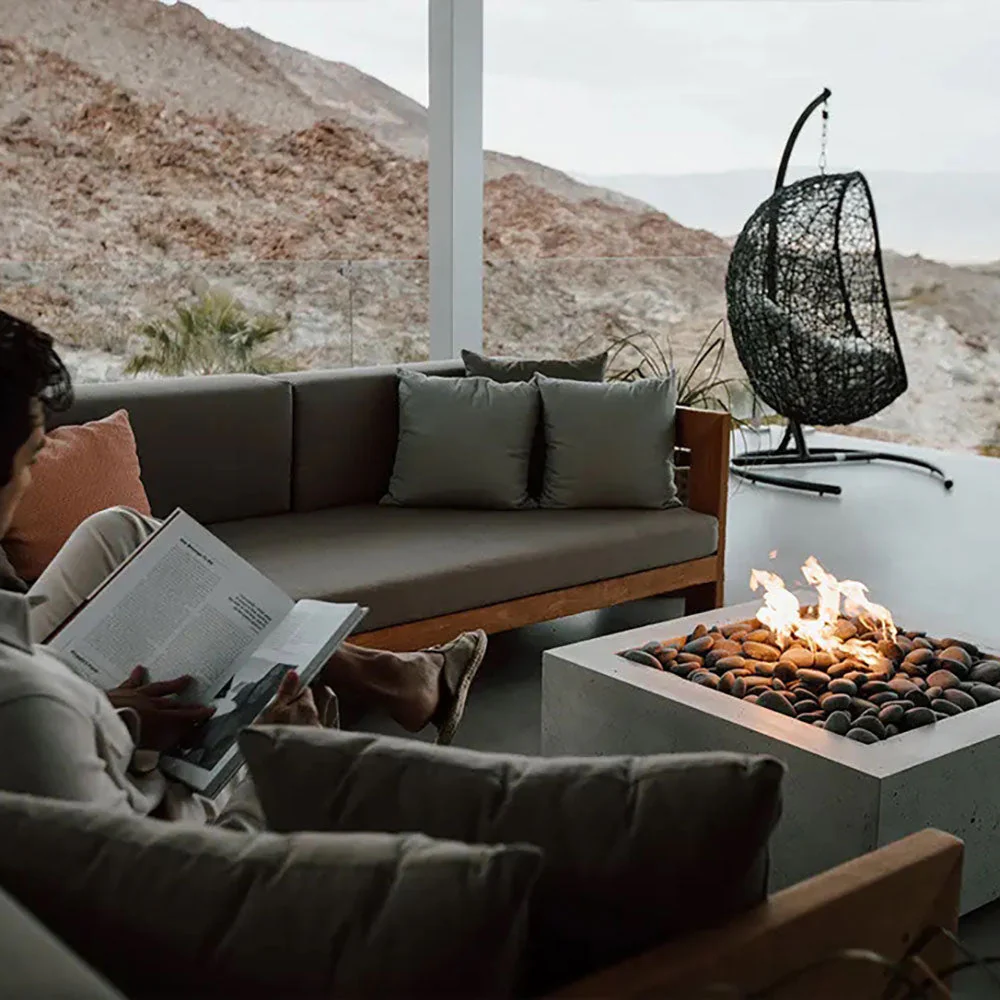
The best fire pit burner depends on your fire pit shape, fire pit size, desired flame pattern, fuel type, ignition system, and overall design goals. Round burners work well for traditional circular fire pits, linear burners are ideal for modern fire features, and premium options like CROSSFIRE burners are often chosen for high-performance custom projects.
Choosing the right gas fire pit burner is one of the most important decisions in any fire pit project. The burner controls the flame pattern, heat output, and overall visual presentation of your fire feature.
Fire Pit Burner Comparison
| Burner Type | Best For | Flame Style |
|---|---|---|
| Round Burner | Round fire pits and classic layouts | Balanced circular flame |
| Square Burner | Square fire pits and modern patios | Symmetrical flame pattern |
| Rectangular Burner | Long fire pits and fire tables | Extended flame coverage |
| Penta Burner | Fuller flame presentation | Natural, dynamic flame |
| H-Burner | Large custom fire pits | Wide flame coverage |
| CROSSFIRE Burner | Premium and custom builds | Tall, dramatic flame |
| Linear Burner | Modern linear fire features | Clean, narrow flame line |
How to Choose a Fire Pit Burner
Before choosing a burner, consider the full design of your fire pit and how you want the finished flame to look.
- Fire pit shape: Match the burner shape to the enclosure whenever possible.
- Fire pit size: Larger fire pits usually need larger burners or wider flame coverage.
- Flame appearance: Some burners create a soft, even flame while others create taller, more dramatic flames.
- Fuel type: Make sure the burner is compatible with natural gas or propane.
- Ignition system: Burner selection may depend on whether you use match light, spark ignition, or electronic ignition.
- Burner material: Stainless steel and brass are the most common options.
- Budget: Premium burners usually cost more upfront but may offer better durability and flame performance.
Burner Shape vs. Fire Pit Shape
| Fire Pit Shape | Recommended Burner | Why It Works |
|---|---|---|
| Round | Round or Penta | Creates balanced flame coverage |
| Square | Square or Penta | Supports symmetrical flame presentation |
| Rectangle | Rectangular or H-Burner | Extends flame across the enclosure |
| Linear | Linear Burner | Creates a clean modern flame line |
| Luxury Custom | CROSSFIRE or Custom Burner | Allows premium performance and customization |

Round Burner
Round burners are one of the most common burner styles and are a classic choice for traditional fire pits. Their circular shape creates even flame distribution and a balanced appearance from every angle.
Round burners are ideal for:
- Round fire pits: A natural fit for circular enclosures.
- Conversation seating: Creates a central flame everyone can enjoy equally.
- Classic fire pit designs: Offers a familiar campfire-inspired look.
- Small to large installations: Available in a wide range of sizes.
 Square Burner
Square burners create a symmetrical flame pattern that works especially well in modern square fire pits and geometric patio layouts.
Square burners are ideal for:
- Square fire pits: Helps distribute flames evenly across the enclosure.
- Modern patios: Complements clean lines and structured outdoor designs.
- Fire tables: Works well with square table-style fire features.
- Balanced flame presentation: Creates a neat, centered flame pattern.

Rectangular Burner
Rectangular burners are a strong choice for longer fire pits, outdoor lounges, and fire tables where flame coverage needs to extend across a wider area.
Rectangular burners are ideal for:
- Rectangular fire pits: Provides flame coverage across the length of the enclosure.
- Outdoor lounges: Works well with linear seating arrangements.
- Fire tables: Offers extended flame presentation for entertaining spaces.
- Contemporary designs: Pairs well with modern furniture and long patios.
 Penta Burner
Penta burners use a five-sided design to create a fuller and more natural-looking flame pattern. They are popular for homeowners who want more movement and visual depth from their fire pit flame.
Penta burners are ideal for:
- Fuller flame appearance: The shape helps create a more dynamic flame pattern.
- Multiple enclosure shapes: Can work in round, square, or rectangular designs.
- Improved airflow: Helps support more efficient combustion.
- Decorative fire pits: Adds visual interest beyond a standard ring burner.
For more information on penta burner flame performance, watch the video below.
 H-Burner
H-burners are designed for larger rectangular fire pits where broad flame coverage and strong heat output are important. Their dual-row flame pattern helps spread heat across wider fire features.
H-burners are ideal for:
- Large fire pits: Provides strong flame distribution across wider spaces.
- Commercial settings: Works well for restaurants, hotels, and hospitality patios.
- Custom burner pans: Often used in larger custom-built enclosures.
- Balanced flame coverage: Creates two parallel rows of flame for visual impact.
 CROSSFIRE Burner
CROSSFIRE burners by Warming Trends are premium brass burners designed for tall, natural-looking flames and high-performance custom fire pit projects.
CROSSFIRE 2.0 burners include advanced features such as:
- Patented Venturi technology: Helps create a taller, fuller flame.
- All-brass construction: Provides excellent corrosion resistance.
- Universal fuel capability: Includes adapters for natural gas and propane.
- WATERSTOP® protection: Helps protect the gas line from water and debris.
- Whisper-quiet operation: Reduces distracting burner noise.
CROSSFIRE burners are ideal for luxury fire pits, custom builds, coastal environments, and commercial installations where flame quality and long-term durability matter.
 Linear Burner
Linear burners are designed for long, narrow fire features and modern outdoor designs. They create a clean line of flame that works especially well in minimalist patios and contemporary outdoor lounges.
Linear burners are ideal for:
- Modern fire pits: Creates a sleek and streamlined flame presentation.
- Fire tables: Works well in long, narrow fire table designs.
- Outdoor lounges: Supports linear seating arrangements.
- Minimalist aesthetics: Adds a sophisticated visual element without visual clutter.
Burner Materials: Stainless Steel vs. Brass
Burner material plays a major role in long-term durability, corrosion resistance, and price.
| Material | Best For | Key Benefit |
|---|---|---|
| Stainless Steel | Most residential fire pits | Durable and cost-effective |
| Brass | Premium and coastal installations | Superior corrosion resistance |
Stainless steel burners are a reliable choice for many fire pit projects, while brass burners are often selected for long-term durability, harsh climates, and premium outdoor installations.
Ignition System Options
Your burner may need to work with a specific ignition system, so it’s important to choose compatible components.
- Match light ignition: Simple, affordable, and commonly used in basic gas fire pits.
- Spark ignition: Offers push-button lighting without a full electronic system.
- Electronic ignition: Ideal for premium installations, remote operation, and automated controls.
Do You Need a Burner Pan?
A burner pan supports the burner and fire media while creating a cleaner installation. It can also help reduce the amount of fire glass or lava rock needed to fill the fire pit.
Burner pans can help with:
- Cleaner burner installation
- Improved airflow
- Reduced media requirements
- Better burner support
- Drainage and maintenance access
For many custom gas fire pit builds, using a burner pan can create a more finished and professional result.
How to Size a Fire Pit Burner
Burner sizing depends on your enclosure dimensions, desired flame coverage, and fuel supply.
As a general rule, the burner should not touch the inside walls of the fire pit. Leaving proper clearance helps maintain airflow, improves flame performance, and keeps heat from concentrating too closely against the enclosure.
When sizing a burner, consider:
- Inside dimensions of the fire pit
- Burner shape
- Desired flame coverage
- Gas supply capacity
- Media depth
- Ignition system compatibility
Need help choosing the right burner? Our product specialists can help compare burner shapes, materials, ignition systems, and sizing requirements for your fire pit project.
Best Burners for Different Fire Pit Projects
| Project Type | Recommended Burner | Why |
|---|---|---|
| Small Residential Fire Pit | Round Burner | Simple, balanced, and easy to size |
| Modern Fire Table | Linear Burner | Clean flame line and modern appearance |
| Large Custom Fire Pit | H-Burner or Rectangular Burner | Wide flame coverage |
| Premium Luxury Project | CROSSFIRE Burner | Tall flame, brass construction, and premium performance |
Fire Pit Burner FAQs
Which burner creates the biggest flame?
CROSSFIRE burners are known for producing tall, dramatic flames, while larger H-burners and rectangular burners can provide strong flame coverage in oversized fire pits. The CROSSFIRE design in particular is popular for creating a bold, eye-catching centerpiece flame. Choosing the right burner style often comes down to whether you want height and drama or broader, more even flame coverage.
Are brass burners worth it?
Brass burners can be worth the investment for premium fire pits, coastal areas, humid climates, and long-term outdoor installations because they offer excellent corrosion resistance. This makes them a strong choice for locations near saltwater or areas with frequent rain and humidity exposure. While brass burners typically cost more upfront, their extended lifespan can offset the added expense over time.
What size burner do I need?
The right burner size depends on the inside dimensions of your fire pit, desired flame coverage, fuel supply, and ignition system. The burner should leave clearance from the fire pit walls. A common guideline is to choose a burner at least 6 inches smaller than your enclosure's interior dimensions. Always reference manufacturer sizing charts to confirm the best fit for your specific project.
Do burner shapes matter?
Yes, burner shape affects flame distribution, appearance, and how well the burner fits the fire pit enclosure. Round and square burners tend to produce a more uniform flame pattern, while linear or custom shapes can create a more dramatic, architectural look. Selecting a shape that matches your enclosure design helps ensure both proper fit and the intended visual effect.
Can I upgrade my burner later?
Final Thoughts on Fire Pit Burners
The right fire pit burner depends on your fire pit shape, size, fuel type, ignition system, flame goals, and long-term durability needs. Round and square burners are excellent for classic layouts, rectangular and linear burners work well in modern fire features and fire tables, while H-burners and CROSSFIRE burners are strong choices for larger or premium custom projects. If you need help choosing the right burner shape, sizing a burner for your fire pit, or selecting compatible ignition components, contact our product specialists for expert guidance.