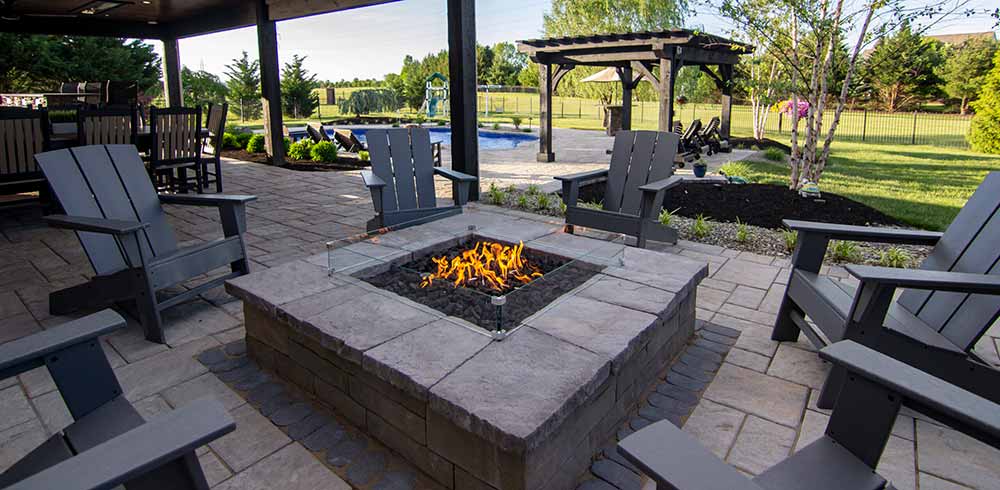
A fire pit kit includes the key components needed to build a custom gas fire pit, including a burner, plumbing components, and ignition hardware. Choosing the right kit depends on your fire pit’s size, shape, fuel type, and desired accessories.
One of the most popular options for those looking to spruce up their backyard is to buy an all-in-one fire pit kit that includes all of the inner workings needed to design and build your own custom fire pit. These smart packages feature a burner and the requisite plumbing and accessories in one purchase, cutting out the guesswork and stress and turning your fire pit project into something you can handle.
As a leading retailer of fire pit products, Firepits Direct has the best inventory of fire pit kits on the market, including our very own Spotix-brand fire pit kits. We’ve worked with the best manufacturers in the industry to curate these kits, ensuring that every component is of the highest quality and that we offer a design and style for almost every use case. If you’re trying to figure out how to build a custom fire pit in your backyard, these fire pit kits may just be for you. We’ve put together this helpful fire pit kit guide to help!
Fire Pit Kit Buying Guide Quick Reference
| Decision | Common Options | Why It Matters |
|---|---|---|
| Fire Pit Shape | Square, round, rectangular, or linear | Determines the best burner shape and size. |
| Fuel Type | Natural gas or propane | Affects gas supply, BTU capacity, and ventilation needs. |
| Burner Style | Round, square, Penta, rectangular, or linear | Impacts flame shape, coverage, and overall appearance. |
| Accessories | Burner pan, valve key, collar, vents, flange extension | Helps improve installation, operation, and maintenance. |
Spotix Brand Fire Pit Kit Buying Guide Table of Contents
- Choose the Right Fire Pit Shape and Burner
- Natural Gas vs. Propane Fire Pit Kits
- Recommended Fire Pit Kit Accessories
Choose the Right Fire Pit Shape and Burner
The first question to ask yourself when designing a custom fire pit is what the overall form of it will be, including both size and shape, as this will determine what size and style of fire pit burner you should be looking for. To determine the correct size of your burner, you’ll want to make sure it has at least 3" of clearance from the inside edge of the fire pit enclosure all the way around. In other words, the burner should be 6" smaller than the opening it’s being mounted in.
Fortunately, we carry a very wide range of burner designs, so there’s something for almost any setup. Common shape options include:

Square Fire Pits
For a square fire pit, your burner shape options will be round, square or the very popular Penta burner. This star-shaped burner design offers a more realistic flame presentation that’s sure to wow you, your family and your guests. Exact size availability will depend on the shape you choose, but generally speaking, these burners have diameters between 6" and 48", making them suitable for fire pits with an opening between 12" and 54".

Round Fire Pits
Round fire pits provide similar options to those of a square fire pit, but we generally don’t recommend the use of a square burner for a round fire pit as it’s something like trying to fit a square peg into a round hole. Because we recommend the burner be at least 3" away from the inside edge of the fire pit, a square burner would have to be quite a bit smaller to safely fit in a round fire pit.

Rectangular Fire Pits
If you’re looking to add a rectangular fire pit to your backyard, then you’ll most likely be looking to purchase a rectangular burner as well. Rectangular fire pit burners come in two basic designs: a twin-linear design with two lengths of burner pipe running parallel to each other or a full rectangular design which mimics that of a square burner. The two can be used more or less interchangeably, so the decision will come down to personal taste and/or budget. These burners generally range between 12" and 84" in length, with the width varying from 6" to 24" depending on the specific model.

Linear Fire Pits
Similar to a rectangular fire pit, the linear fire pit is generally narrower and is more likely to be purely decorative rather than serving as a table or gathering space. For a fire pit of this type, the burner designs tend to be simple lengths of stainless steel pipe. Lengths will vary between 24" and 96", ensuring there’s something for almost any design.
Natural Gas vs. Propane Fire Pit Kits
Gas fire pits can use one of two fuel types: natural gas or propane. The decision of which you will be using will depend on a number of factors. For questions regarding fuel type or supply, we generally recommend working with a licensed gas plumber to complete the project in order to ensure the safety and security of your installation.

Generally speaking, but with some possible exceptions, if your home has access to fuel supplied by the power company or some other local entity, that fuel will be natural gas. This is most common in towns and cities. For people who live in rural areas, it’s more common to have a large, central propane tank with plumbing taking the fuel where it’s needed.
If you don’t have access to natural gas, then propane will be your only option, either from that central tank or from a small supply tank connected to the fire pit. Be mindful that a small propane tank probably can’t supply enough fuel for a large fire pit. If you do have natural gas, you have a choice. You can either pay a plumber to install piping to direct the natural gas to where your fire pit will be, or go the route of the small propane tank instead, with the same proviso as above regarding the limited size. Generally, we don’t recommend using a 20-pound propane tank for any burner greater than 125,000 BTU.
Recommended Fire Pit Kit Accessories
There are a number of optional accessories or add-ons available with our fire pit kits. These products are designed to apply to some use cases, but not all, which is why they are optional. To help you decide which of these accessories you’ll need for your installation, we’ve listed them below and provided some context on what they’re intended to solve.

Burner Pan
This is the accessory we most recommend for building a custom fire pit with one of our kits. They make the installation process significantly easier, and they make it simpler to access the interior of your fire pit in the event something needs to be cleaned, repaired or replaced down the line. While it is possible to build your custom fire pit without a burner pan, we consider it a worthy investment. When selecting the size of your burner pan, you should choose the size that is just slightly larger than the burner you’ve chosen.

8-Inch Valve Key
All of our fire pit kits include a 3" valve key, which does work just fine for many fire pit designs. If you’re choosing to use thicker paving blocks in the construction of your fire pit enclosure, that 3" key may not be long enough to reach the valve inside. If that’s your plan, you’ll definitely want to add an 8" valve key to your purchase to operate the valve with ease.

Installation Collar
While optional, the installation collar is another accessory that will make your life significantly easier both in building and maintaining your fire pit. These flexible metal strips provide an easy platform for holding your burner pan up at the desired height and make it a breeze to remove the pan if you need to access the interior of the enclosure for maintenance and cleaning, similar to the burner pan.

Vent Kit
These vents are designed to be installed in the walls of the fire pit enclosure to provide airflow through the interior. These are especially important, and possibly even required by local building codes, when building a propane fire pit. This is because propane is heavier than air, which means in the event of a leak or if your burner is extinguished, it will begin to pool inside the enclosure, which can present a risk of explosion or accidental fire. These vents will dissipate the gas, keeping your home safe. While they’re less important for a natural gas fire pit, we do still recommend them.

Flange Extension
Similar to the extended valve key, a flange extension is designed for use when building a fire pit from thicker paving stones. It provides an avenue for the key to reach the valve and operate the fire pit burner. Technically it’s not necessary as you can just drill a hole in one paving stone and leave it at that, but the flange extension provides a neater look and more reliable ability to reach the valve with the longer key.
Frequently Asked Questions About Fire Pit Kits
What comes in a fire pit kit?
A fire pit kit typically includes the burner, gas plumbing components, valve, key, and other core parts needed to build a gas fire pit. Exact contents vary by kit, so always review the product details before purchasing.
How do I choose the right burner size?
As a general rule, your burner should have at least 3" of clearance from the inside edge of the fire pit enclosure on all sides. That means the burner should be about 6" smaller than the total opening.
Is propane or natural gas better for a fire pit kit?
Natural gas is often preferred for permanent installations with an available gas line, while propane can work well when natural gas is not available. Propane fire pits require proper ventilation and may need a larger fuel source for higher-BTU burners.
Do I need a burner pan?
We strongly recommend using a burner pan for most custom fire pit projects. A burner pan helps support the burner, simplifies installation, and makes it easier to access the inside of the fire pit for cleaning or maintenance.
Do propane fire pits need ventilation?
Yes. Propane is heavier than air and can collect inside a fire pit enclosure if there is a leak or if the burner goes out. Venting helps trapped gas dissipate and is especially important for propane fire pit installations.
Can I build my own gas fire pit?
Yes, many homeowners build their own gas fire pits using complete fire pit kits. However, gas connections and fuel supply should be handled by a licensed professional to help ensure a safe installation.
Final Thoughts
Choosing the right fire pit kit starts with understanding your fire pit shape, burner size, fuel source, and installation requirements. Spotix fire pit kits simplify the process by pairing quality components into complete packages designed for DIY homeowners and professional installers alike. If you need help choosing the right product, planning your project, or finding compatible components, contact our product specialists for expert guidance.