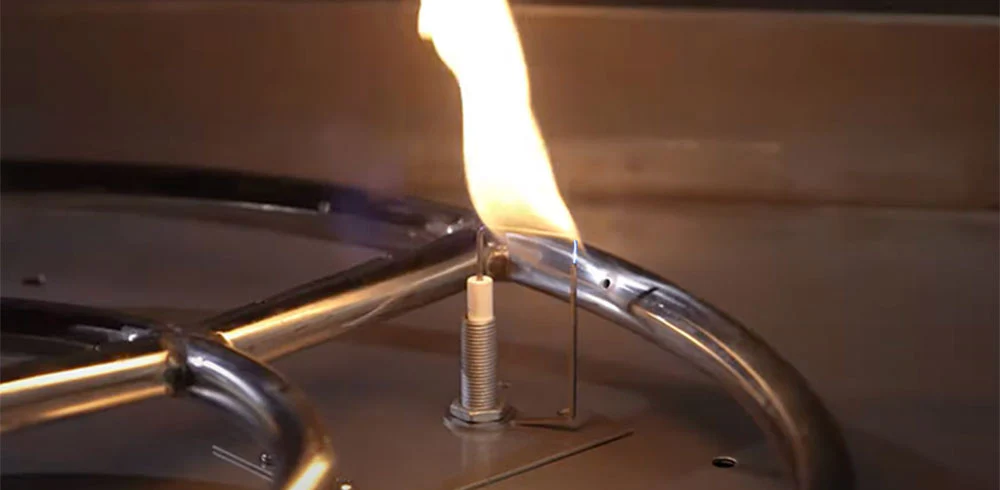
Battery-powered fire pit kits use a battery-powered spark igniter to light the gas burner, giving you push-button convenience without requiring a hardwired electrical connection. They are often a practical middle ground between simple match-lit systems and premium electronic ignition kits.
It is important to note that “battery powered” does not mean the fire pit runs on batteries. The battery powers the ignition spark only. The flame itself still comes from natural gas or propane flowing through the burner.
If you're comparing battery-powered fire pit kits, this guide explains how they work, what their advantages are, where they can fall short, and how they compare to other ignition options.
What Is a Battery Powered Fire Pit Kit?

A battery-powered fire pit kit is a gas fire pit system that uses a push-button spark igniter to light the burner. Instead of using a match or long-stem lighter, you press the igniter button to create a spark while opening the gas valve.
These kits may also be referred to as spark ignition fire pit kits because the battery-powered igniter creates the spark that lights the flame.
How Does a Battery-Powered Fire Pit Igniter Work?

A battery-powered fire pit igniter creates a spark near the burner or pilot area. When gas flows through the system, and the spark is activated, the flame lights.
The typical startup process is simple:
- Open the gas valve according to the manufacturer’s instructions.
- Press the ignition button to create a spark.
- Allow the spark to ignite the gas at the burner.
- Adjust the flame using the gas control valve or key valve.
Browse gas fire pit burners, burner pans, valves, and keys when planning a complete fire pit system.
Pros and Cons of Battery-Powered Fire Pit Kits

| Pros | Cons |
|---|---|
| Push-button lighting is easier than using matches | Battery and small ignition parts may need replacement over time |
| No hardwired power source required | Ignition can be less consistent in wind or poor conditions |
| More convenient than a basic match-lit kit | Does not offer the same automation options as electronic ignition |
| Often more affordable than electronic ignition | May not include flame-sensing safety unless the kit is designed for it |
Battery Powered vs. Match-Lit vs. Electronic Ignition
| Ignition Type | How It Works | Best For |
|---|---|---|
| Match-Lit | Gas is lit manually with a match or lighter | Simple, budget-friendly fire pits |
| Battery Powered | Battery creates a spark to light the gas | Push-button convenience without hardwired power |
| Electronic Ignition | Electrical system lights and monitors the fire pit | Premium, automated and commercial-style installations |
Browse match light fire pit kits, battery-powered fire pit kits, and electronic ignition fire pit kits to compare options.
What’s Good About Battery Powered Fire Pit Kits?
Battery-powered systems offer a noticeable convenience upgrade over match-lit kits. You do not need to hold a match or lighter near the burner, and the push-button spark makes startup feel cleaner and easier.
They are especially useful for homeowners who want:
- Push-button lighting
- No hardwired electrical connection
- A simpler setup than electronic ignition
- A more convenient option than match-lit ignition
- A fire pit kit that can work with natural gas or propane configurations
What Are the Limitations?
Battery-powered ignition systems are convenient, but they are not the same as full electronic ignition systems. They still require manual gas control and may not offer the same level of automation, flame sensing or weather-resistant performance as premium electronic ignition kits.
Potential limitations include:
- Battery replacement over time
- Possible ignition inconsistency in wind
- Small ignition components that may eventually wear out
- Less automation than electronic ignition systems
- Manual operation still required
If the spark does not ignite the gas immediately, follow the manufacturer’s instructions and allow any unburned gas to dissipate before trying again.
What About Flame-Sensing Fire Pit Kits?
Some battery-powered kits include flame-sensing features or safety-focused controls. Flame sensing helps detect whether the flame is present and can shut off gas flow if the flame goes out, depending on the system design.
This is an important distinction because not every battery-powered or spark ignition kit includes flame-sensing safety. If safety shutoff is a priority, review the product specifications carefully before choosing a kit.
When Is a Battery-Powered Fire Pit Kit the Right Choice?
A battery-powered fire pit kit is a good fit when you want more convenience than a match-lit system but do not need full electronic ignition.
It is often a good choice for:
- Residential backyard fire pits
- Patios without nearby electrical access
- DIY fire pit projects
- Moderate-use outdoor spaces
- Homeowners who want push-button ignition at a lower cost than electronic ignition
When Should You Choose Electronic Ignition Instead?
Electronic ignition is usually the better choice for high-end residential projects, commercial spaces or fire pits that need a switch, timer, remote, app or automation control.
Consider electronic ignition fire pit kits if you want:
- More advanced safety features
- Automation compatibility
- Switch, timer, or remote operation
- Commercial-grade performance
- More reliable flame monitoring
Battery-Powered Fire Pit Kit FAQs
Do battery-powered fire pit kits need electricity?
No hardwired electrical connection is required. The igniter uses a battery to create the spark, while the fire itself uses natural gas or propane. This makes installation simpler since there's no need to run electrical wiring to the fire feature. It also makes battery-powered kits a popular choice for retrofits and DIY builds where adding power isn't practical.
Does a battery-powered fire pit run on batteries?
No. The battery powers only the ignition spark, while the flame itself is produced by gas flowing through the burner. Without a gas supply connected, the igniter will spark but there will be no flame to light. Batteries typically just need occasional replacement to keep the ignition system working reliably.
Are battery-powered kits better than match-lit kits?
Battery-powered kits are more convenient because they use push-button ignition. Match-lit kits are simpler and usually more economical. For homeowners who value ease of use, the push-button start can make lighting the fire pit feel more like using a household appliance. However, match-lit systems have fewer parts, which can mean less to maintain or replace over time.
Are battery-powered kits as reliable as electronic ignition?
Not usually. Electronic ignition systems are more advanced and can offer more safety features, control options, and flame monitoring. Many electronic systems also integrate with remotes, wall switches, or home automation, which battery-powered igniters typically don't support. For high-end or frequently used installations, electronic ignition is often the more durable long-term choice.
Can battery-powered fire pit kits use propane?
Yes. Many battery-powered fire pit kits are available for propane, natural gas, or both, depending on the product configuration. Propane versions are often chosen for portability, since they can pair with a tank rather than a fixed gas line. Natural gas versions, by contrast, work well for permanent installations already connected to a home's gas supply.
What happens if the flame goes out?
That depends on the kit. Some systems include flame-sensing safety controls, while others do not, so it's always worth reviewing the product specifications and manufacturer instructions. Kits without safety sensing may continue releasing gas even if the flame is extinguished, which can pose a safety risk. Because of this, it's important to only use the fire pit as directed and to shut off the gas supply if the flame doesn't reignite as expected.
Final Thoughts
Battery-powered fire pit kits can be a smart choice for homeowners who want push-button convenience without the cost or electrical requirements of a full electronic ignition system. They are easier to use than match-lit systems, but they may not provide the same automation or flame-sensing features as electronic ignition. If you need help choosing the right product, planning your project, or finding compatible components, contact our product specialists for expert guidance.